
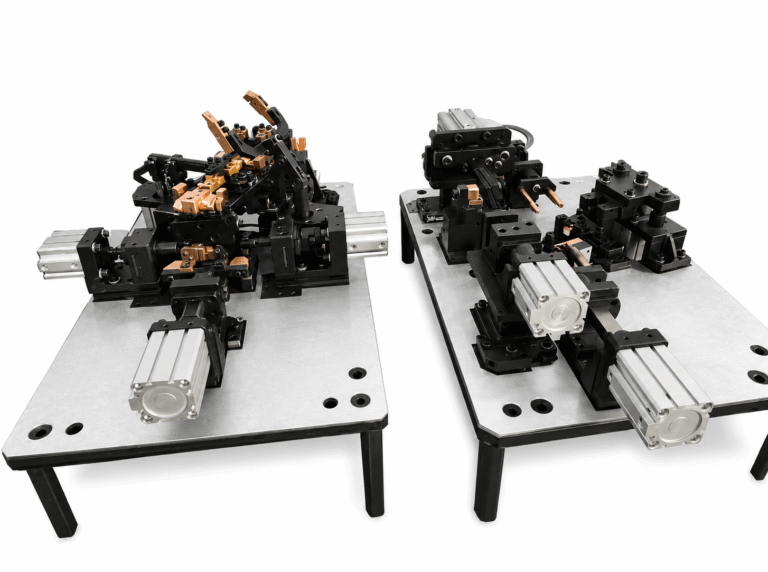
Welding And Robotic Fixtures
₹150,000.00
A welding and robotic fixture is a specialized workholding device that securely holds and precisely positions a workpiece for automated…
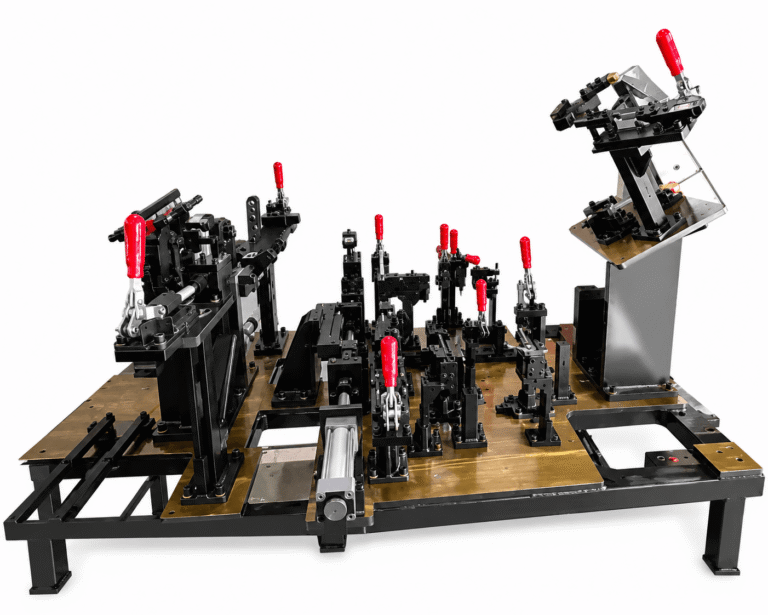
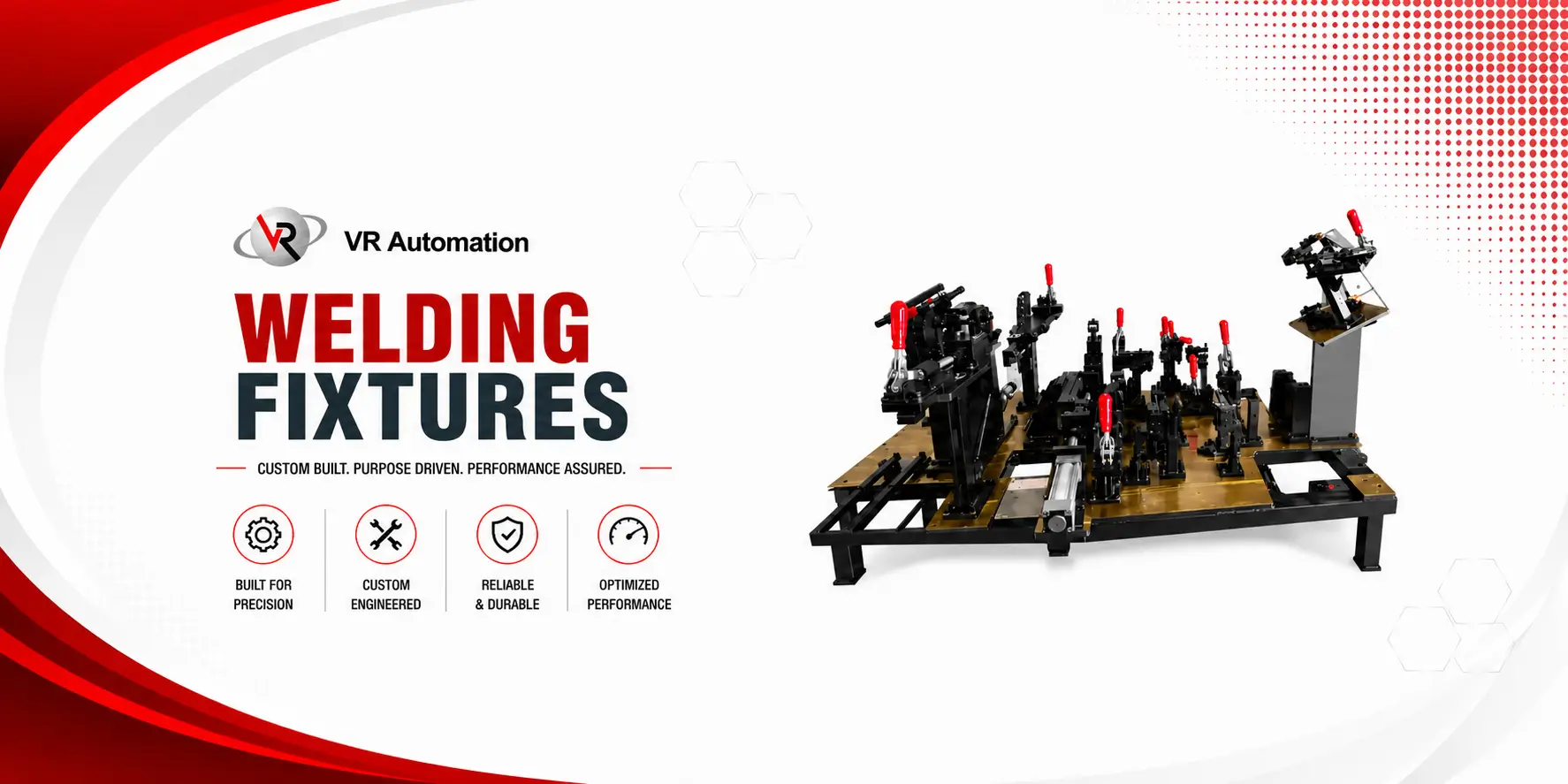
A welding fixture locates and clamps components in their correct relative position so the weld is made to drawing and distortion is controlled. VR Automation designs and manufactures MIG, TIG, manual and robotic cell welding fixtures at Bhosari, Pune, for automotive, chassis, sheet metal and structural fabrication.
A welding fixture carries four responsibilities at once, and a design that gets three right still fails on the shop floor.
A manual welding jig can rely on the welder to adapt — to nudge, to re-clamp, to weld a tack and check. A robotic welding fixture cannot. The robot welds the programmed path whether or not the part is where it should be, so the fixture must deliver repeatability the robot can assume. In practice that means tighter locating tolerances, positive part-presence and clamp-confirmation sensing fed back to the robot controller, and interference checking against the torch and cable package through the full programmed path.
Robotic cells also change the fixture’s geometry. Two-station and turntable arrangements let the operator load one side while the robot welds the other, so the fixture is duplicated and both halves must be identical within the robot’s tolerance. Positioner-mounted fixtures must additionally hold the part through rotation and tilt.
| Clamp type | Actuation | Where it fits |
|---|---|---|
| Toggle clamp | Manual | Low volume, prototype and repair fixtures; lowest cost |
| Pneumatic swing / power clamp | Shop air | Production fixtures; fast, repeatable, sequence-controllable |
| Hydraulic clamp | Power pack | High clamping force in a small envelope, heavy structures |
| Wedge and cam locators | Manual or powered | Taking up tolerance on formed and fabricated parts |
Automotive body and chassis welding fixtures, sheet metal welding jigs, pipe and tube welding fixtures, heavy structural welding fixtures, spot welding fixtures, robotic cell fixtures with sensing and interlocks, welding positioner fixtures, and rotary welding SPMs where the fixture and the welding motion are one machine. Fixtures are supplied with a layout drawing, datum scheme, clamping sequence and, where the customer requires it, a fixture qualification report against a master sample.
Related: jigs, workholding and inspection fixtures.
₹150,000.00
A welding and robotic fixture is a specialized workholding device that securely holds and precisely positions a workpiece for automated…
₹250,000.00
A welding and robotic fixture is a specialized workholding device that securely holds and precisely positions a workpiece for automated…
₹280,000.00
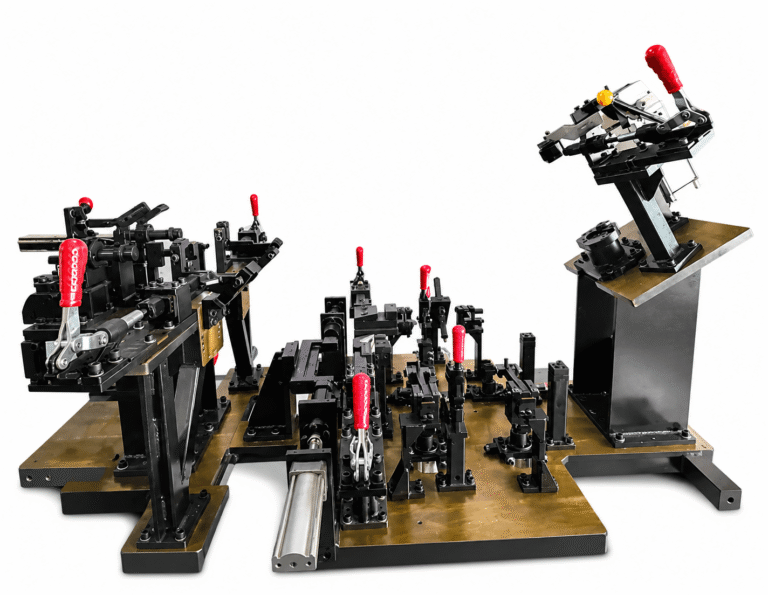
Welding fixtures designed for robotic cells, holding the component to the robot's programmed position with clear torch access.
₹70,000.00
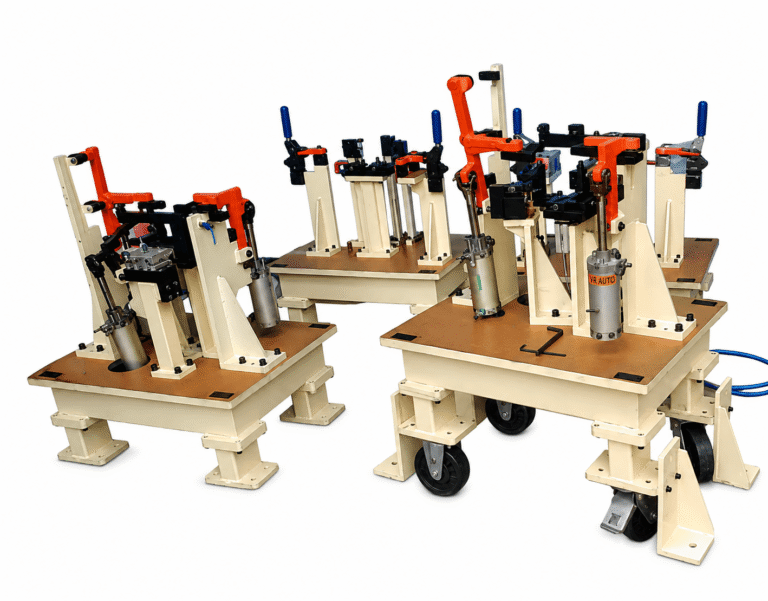
Welding jigs and fixtures that locate and clamp components accurately and hold them square against weld distortion.
₹240,000.00
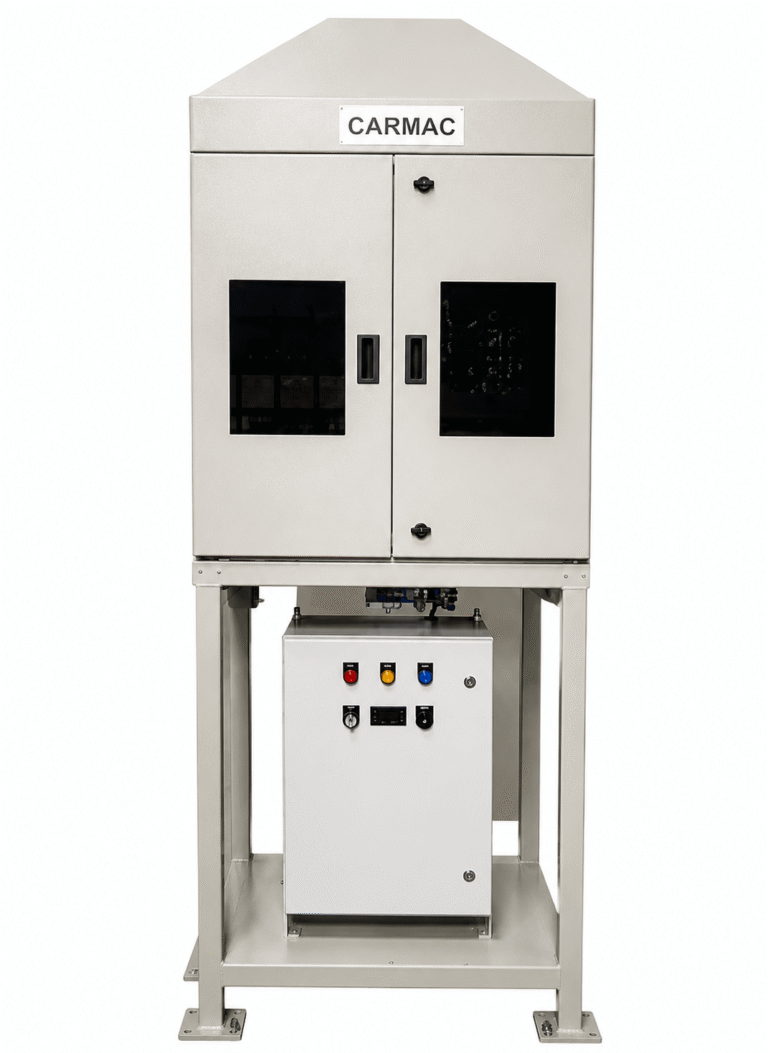
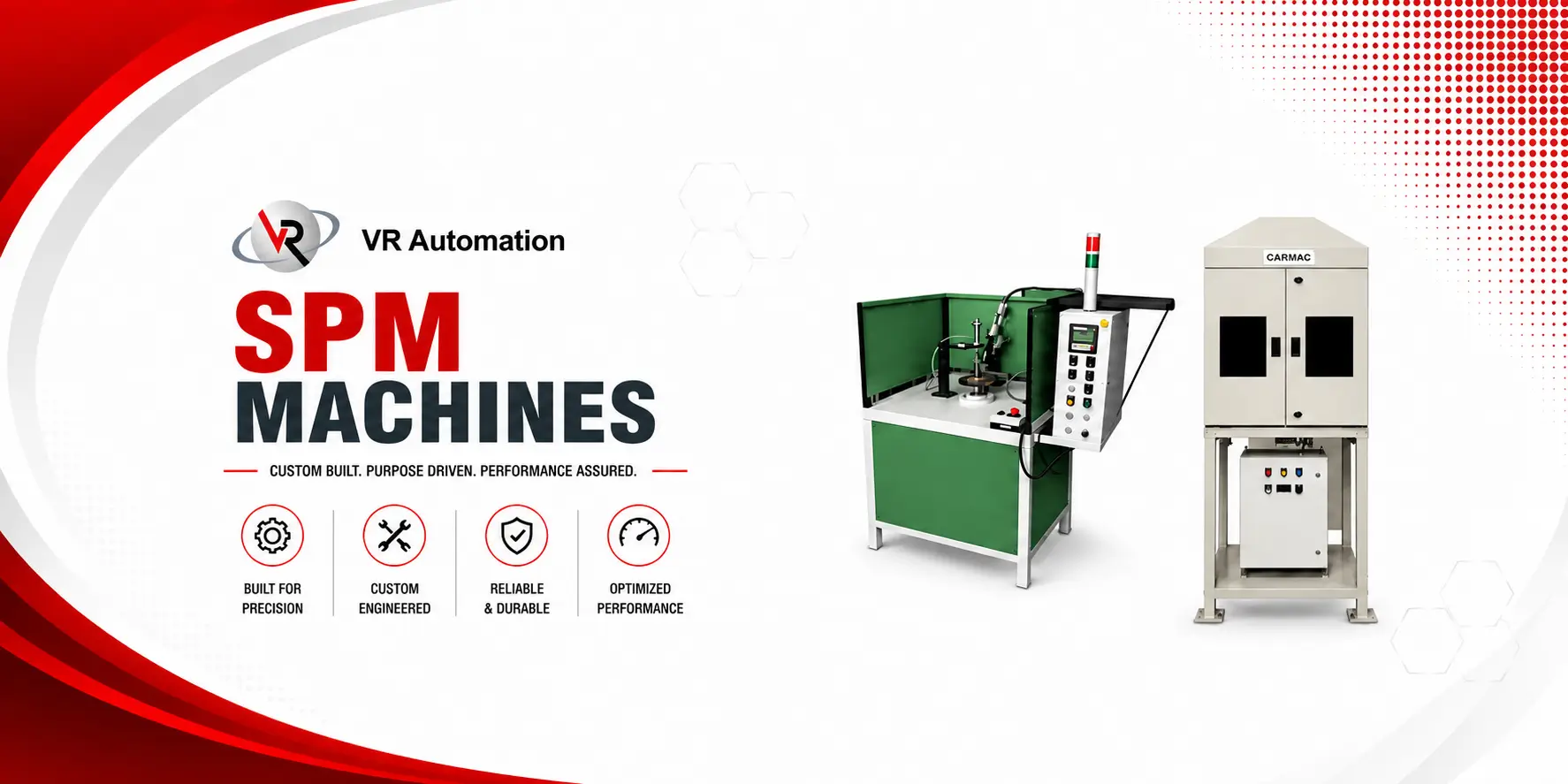
Rotary welding special purpose machine automating circumferential and multi-position welding to a fixed, repeatable program.
The terms are often used interchangeably in Indian industry. Strictly, a jig guides the tool as well as holding the work, while a fixture only locates and clamps the work. In welding practice almost all such tooling is a fixture, since the torch is guided by the welder or the robot rather than by the tooling.
VR Automation welding and robotic fixtures currently start at around ₹1,50,000 and rise with part size, station count, clamping type and sensing. A two-station robotic cell fixture with pneumatic clamping and part-presence sensing sits materially above a single manual jig — send the component drawing and cell layout for a firm figure.
Through a combination of clamping sequence, restraint placement and deliberate pre-set. We identify where heat input will pull the assembly, restrain the areas that must hold datum, and where restraint alone would lock in stress, pre-set the part in the opposite direction so it relaxes to drawing. On critical assemblies this is validated on trial parts before the fixture is signed off.
Yes. The fixture has to be designed against the actual robot reach envelope, torch and cable package, so we need the robot make and model, the positioner if any, and the cell layout. We build for the common industrial brands used in Indian automotive plants.
Yes. Where a customer PPAP or internal standard requires it, fixtures are supplied with a layout drawing, datum scheme, clamping sequence and a qualification report measured against a master sample or CMM data.
VR Automation, Bhosari, Pune — riveting, clinching, press and special purpose machines. We quote against your part, not a catalogue.
These products are limited, checkout within
Riveting, clinching, press & SPM machines — built in-house at Bhosari, Pune. Supplied PAN India since 2019.
Tell us about your component and joint. We quote against your part, not a catalogue.