
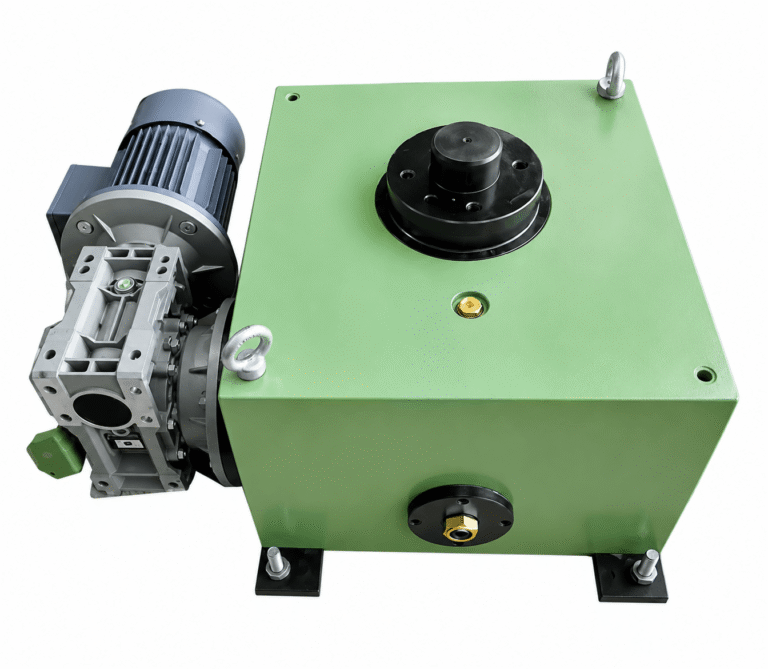
Cam Indexing Drive
₹105,000.00
Precision cam indexing drive providing accurate, backlash-free rotary positioning for automated assembly and SPM applications.
A cam indexing drive converts continuous input rotation into precise intermittent output motion with a defined dwell, using a globoidal or roller-gear cam. VR Automation supplies and integrates cam indexing drives and rotary indexing tables in 4, 6, 8 and 12 station configurations for special purpose machines and assembly automation, from Bhosari, Pune.
The input shaft carries a barrel cam with a helical rib machined into it; the output shaft carries a turret with cam followers around its circumference. As the input rotates, the rib engages successive followers and drives the turret through one station — then the rib runs flat and the turret dwells, held positively between followers, while the input keeps turning.
Two things follow from that, and they are why cam indexers remain standard in high-rate assembly despite servo alternatives. First, the motion profile is machined into the cam, so acceleration and deceleration are inherently smooth — no shock into the mechanism or the part. Second, the dwell is a mechanical lock, not a held servo position, so the table cannot be pushed off station by the force of a press or welding operation acting on it.
| Cam indexing drive | Servo indexing | |
|---|---|---|
| Station positions | Fixed by the cam | Freely programmable |
| Dwell | Mechanically locked | Held by the servo loop |
| Repeatability at high rate | Excellent, unaffected by cycle rate | Good, degrades as rate rises |
| Resistance to process force | High — positive lock | Depends on holding torque and brake |
| Changing station count | Requires a different cam | Software change |
| Control complexity | Single motor, no feedback loop | Drive, feedback, tuning |
The short version: choose a cam indexer when the station count is fixed, the cycle rate is high and the process pushes on the table. Choose servo when station positions must change between products.
| Stations | Index angle | Typical application |
|---|---|---|
| 4 station | 90° | Load, two operations, unload |
| 6 station | 60° | Assembly with in-process check and reject station |
| 8 station | 45° | Multi-operation assembly, higher output |
| 12 station | 30° | High station count, short dwell, packaging and high-rate assembly |
Beyond station count, sizing depends on the inertia of everything the table carries — dial plate, fixtures and components — the index time required, and the overhung and axial loads applied by the process stations. Under-sizing an indexer shows up as follower wear and position drift long before it shows as failure, so the inertia calculation is worth doing properly at design stage.
Cam indexing drives are integrated into our rotary SPM systems, index riveting machines and auto screwing cells.
₹105,000.00
Precision cam indexing drive providing accurate, backlash-free rotary positioning for automated assembly and SPM applications.
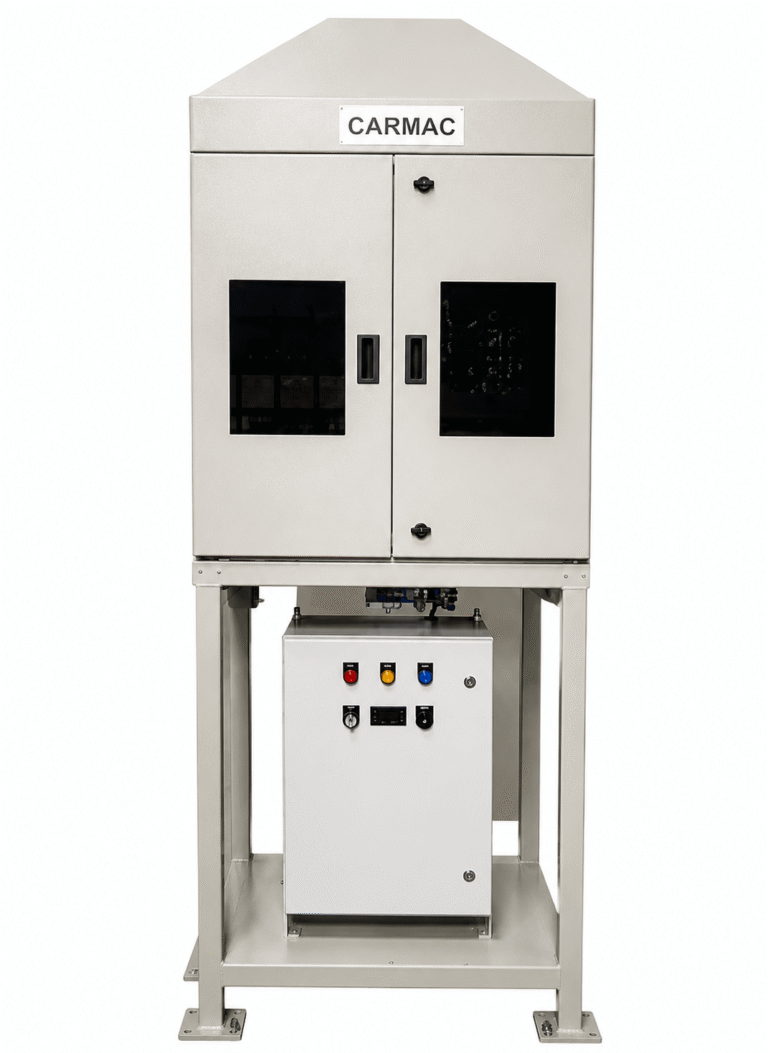
₹240,000.00
Rotary welding special purpose machine automating circumferential and multi-position welding to a fixed, repeatable program.
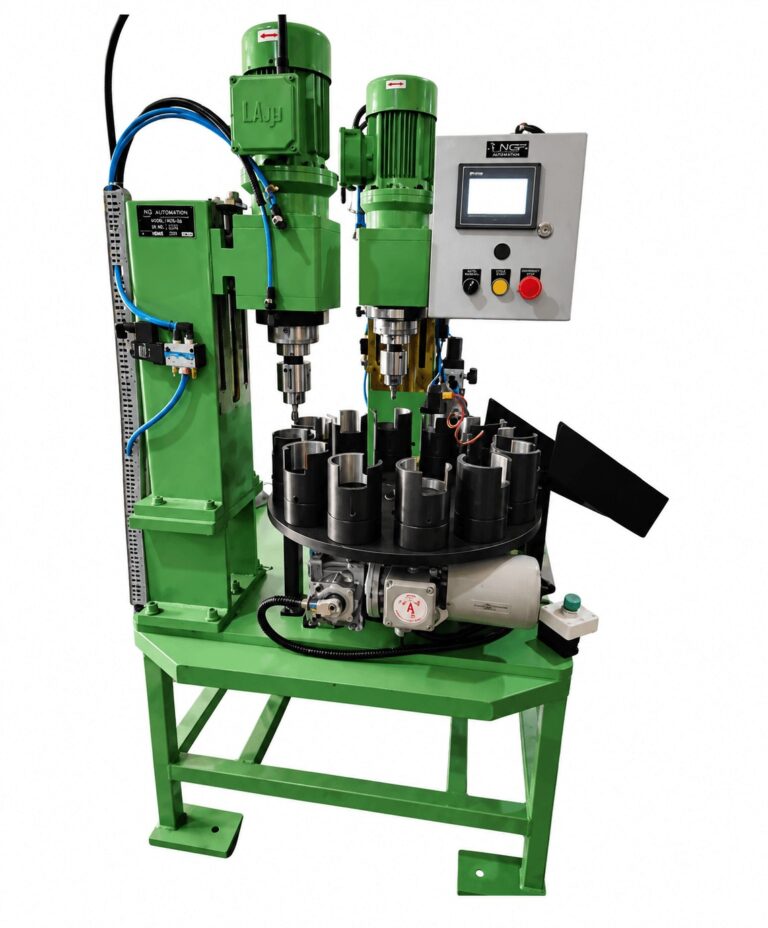
₹44,000.00
Rotary indexing riveting special purpose machine that carries the component through several stations in one automated cycle.
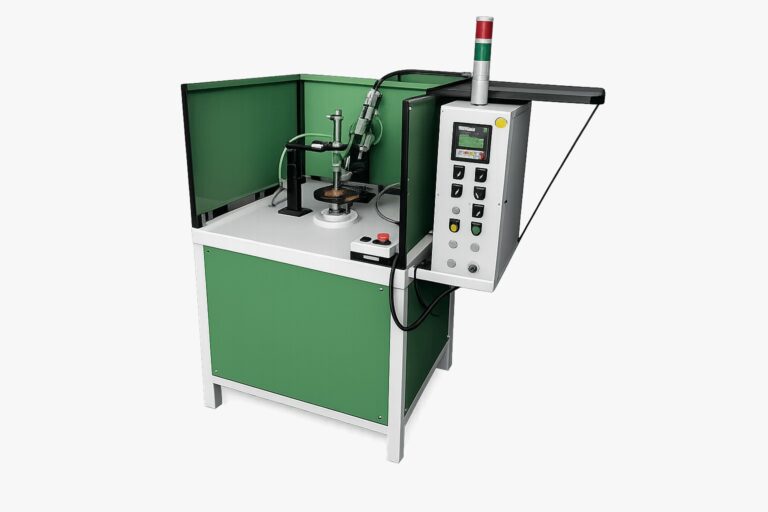
₹30,000.00
Rotary special purpose welding machine that carries components through indexed torch stations for repeatable, operator-independent welds.
A cam indexing drive produces precise intermittent rotary motion with a locked dwell period. It is the drive at the centre of rotary indexing tables in assembly automation, special purpose machines, packaging machinery and multi-station riveting, welding and screwing cells.
VR Automation cam indexing drives are currently listed from around ₹1,05,000, with price driven by unit size, station count, mounting style and the table inertia it must handle. Send your station count, index time and the mass and radius of gyration of the dial plate and fixtures for a firm quotation.
Both use a barrel cam driving follower rollers. In a globoidal indexer the cam rib envelopes the turret over a wide arc, engaging several followers for high rigidity. A roller gear indexer emphasises low-friction rolling contact for long life at high cycle rates. In practice most industrial indexers combine both principles, and selection is driven by load, speed and available envelope.
Count the operations in your sequence, then add a load station, an unload station and any inspection or reject station. Choose the next standard station count at or above that total. Adding a spare station is usually cheap at design stage and expensive to retrofit later.
Yes. Driving the cam input with a servo or a VFD-controlled motor keeps the mechanical dwell and motion profile while allowing the index time and cycle rate to be adjusted in software — a common arrangement on machines that run multiple products at different takt times.
VR Automation, Bhosari, Pune — riveting, clinching, press and special purpose machines. We quote against your part, not a catalogue.
These products are limited, checkout within
Riveting, clinching, press & SPM machines — built in-house at Bhosari, Pune. Supplied PAN India since 2019.
Tell us about your component and joint. We quote against your part, not a catalogue.