
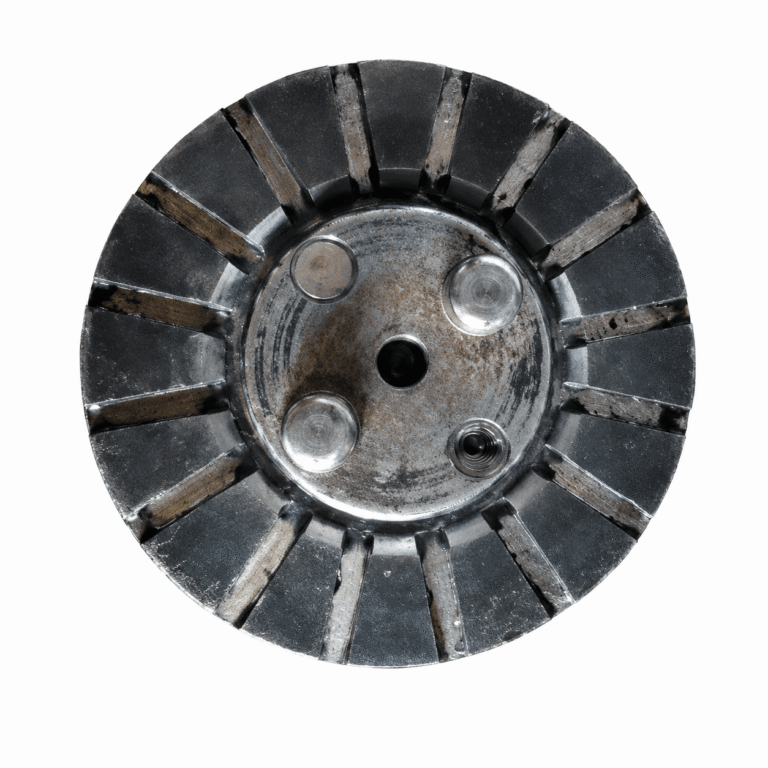
Crimping Machine Tool
₹45,000.00
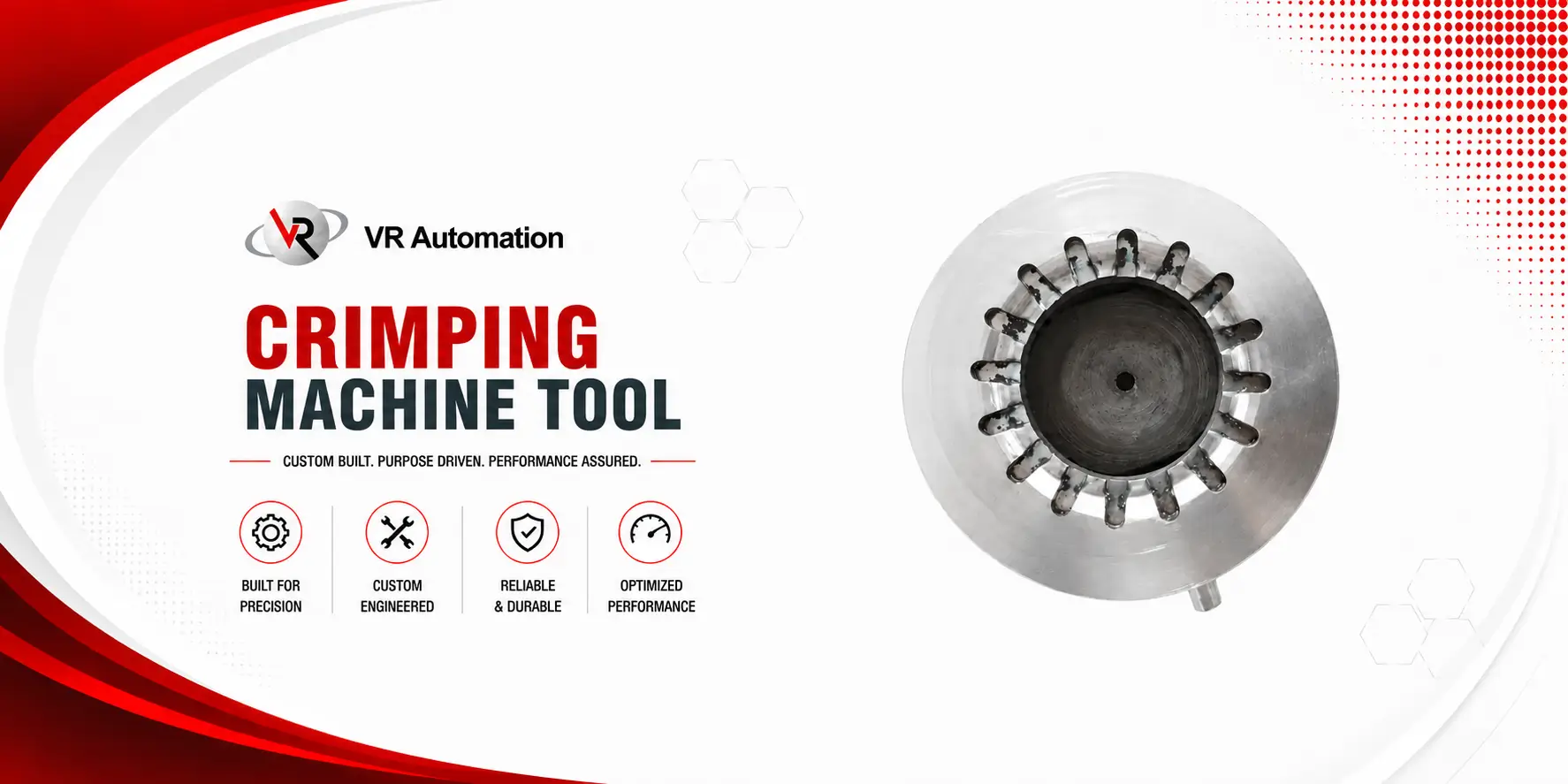
Crimping machine and tooling producing consistent, gas-tight crimped joints with repeatable compression on every cycle.
Tooling is what turns a press into a process: the punch, die, peen or applicator determines the joint, while the machine only supplies force and motion. VR Automation manufactures and reconditions clinching punch and die sets, orbital riveting peens, press tooling and toolroom components at Bhosari, Pune.
The clinch joint is defined entirely by the punch and die pair. Punch diameter sets the button size and therefore the minimum flange width and edge distance the designer must allow. Die geometry decides how the lower sheet is allowed to spread: a fixed round die with spring-loaded segments opens and re-closes, producing a clean circular button suited to most galvanised and mild steel work; a moving-blade die opens sideways, which suits thicker and harder stacks where a fixed die would not release the material.
Tooling is a wear item. Punches lose their edge geometry, die segments lose spring tension, and the first symptom is a joint whose neck thickness drifts out of tolerance while the machine settings have not changed. Monitoring neck thickness at a fixed interval is how tooling replacement gets scheduled instead of discovered.
The peen is the forming face of an orbital riveting machine, and its profile determines the finished head shape — flat, dome, countersunk or a custom cosmetic form. Peens are made in hardened tool steel for general work and in carbide where rivet material or volume would wear steel quickly. A worn peen produces heads that look acceptable but are under-formed, so peen re-grinding to the original profile is a routine service rather than a repair.
| Category | Items |
|---|---|
| Clinching tooling | Round-point and square-point punch and die sets, die blades, spring segments, tool holders |
| Riveting tooling | Orbital and radial peens (HSS and carbide), rivet snaps, holding fixtures, pressure pads, stroke limiters |
| Press tooling | Custom press tools and dies, forming tools, die sets for hydro-pneumatic presses, quick-change tool holders |
| Crimping tooling | Applicators and die sets matched to your terminal part number |
| Jig components | Drill bushes, locating pins, rest buttons, hydraulic and pneumatic clamping elements |
| Services | Peen re-grinding, clinching die reconditioning, seal kit replacement, tooling spares for machines in service |
We supply and recondition tooling for machines in service, including machines we did not build, provided the tool holder interface and force class can be established. Send photographs of the tool holder and the current tooling, the machine tonnage, and a sample of the joint or component, and we will confirm what can be made.
Where a press runs several products, changeover time is often a larger cost than cycle time. Quick-change tool holders with repeatable location let tooling be swapped without re-setting the press, turning a changeover measured in tens of minutes into one measured in minutes — usually the cheapest available capacity increase on a shared press.
Related: clinching presses, jigs and fixtures, inspection gauges.
₹45,000.00
Crimping machine and tooling producing consistent, gas-tight crimped joints with repeatable compression on every cycle.
₹15,000.00
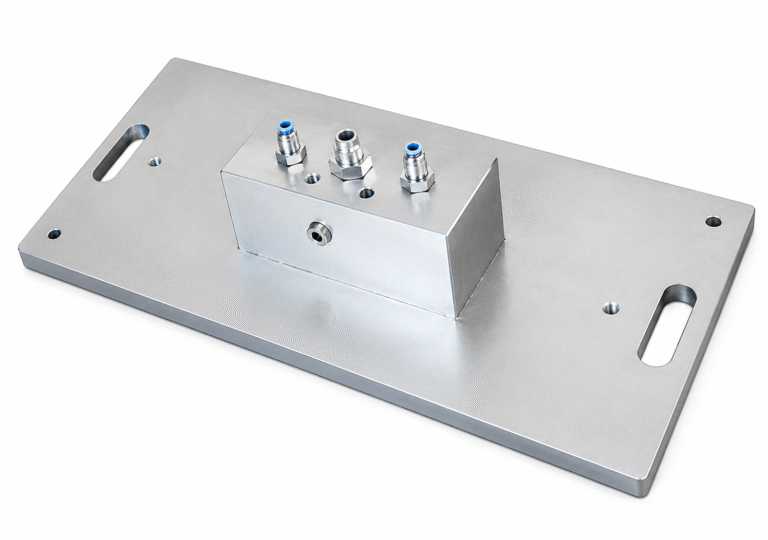
Riveting machine fixtures are used to position and rotate a fixture to set rivets at specific locations. They can be…
₹9,000.00
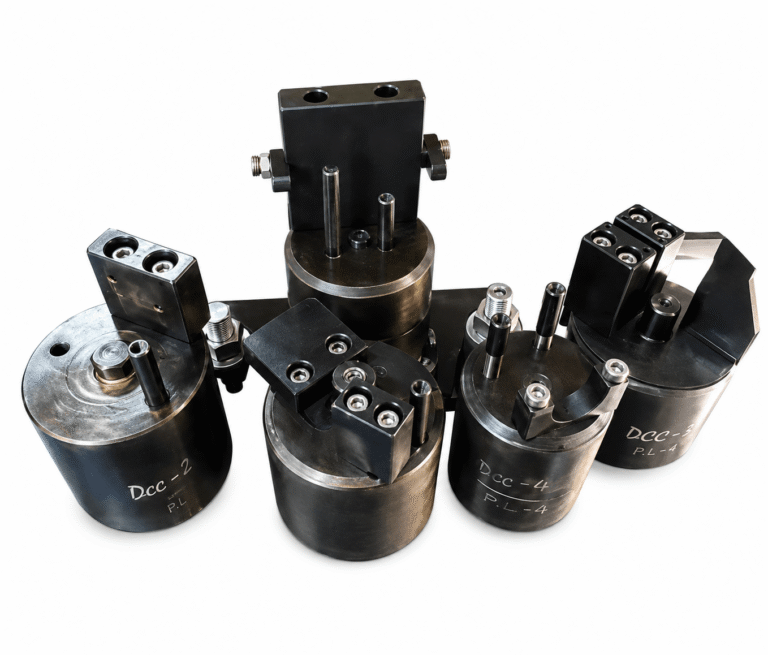
Component fixtures for riveting machines, locating the part accurately and repeatably beneath the riveting head.
₹18,000.00
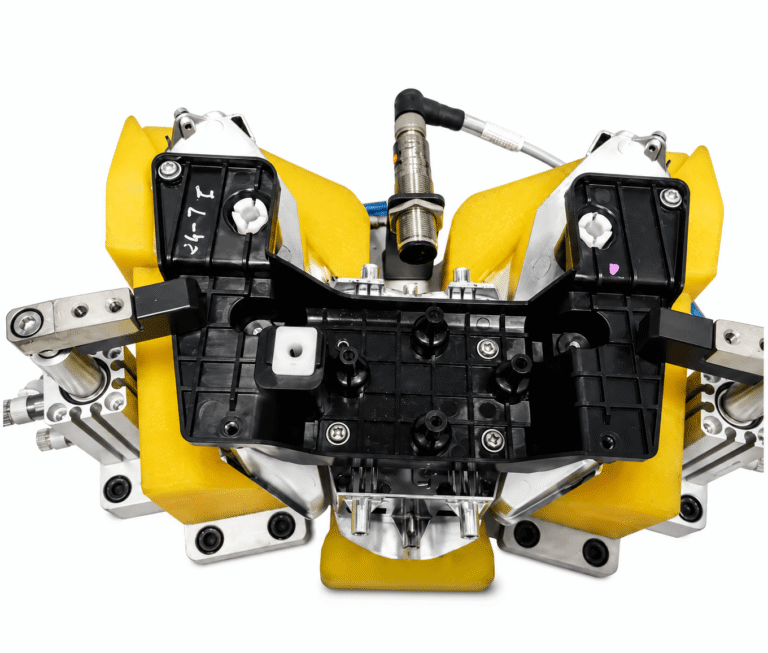
Component fixtures for screw driving stations, locating each screw position accurately under the driver.
₹25,001.00
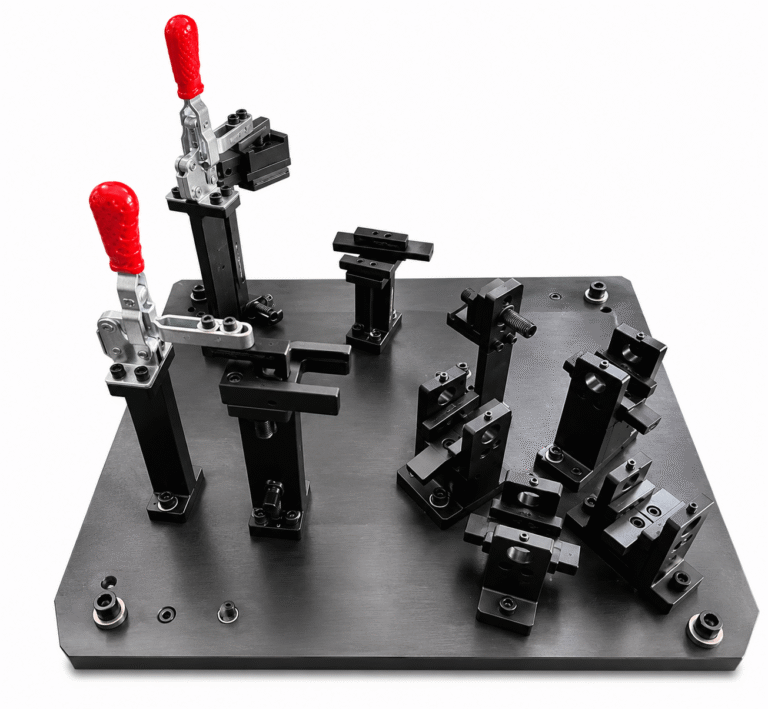
Inspection fixtures and relation gauges for quick go/no-go dimensional checks at the point of manufacture.
Clinching punch and die sets are quoted against the joint — stack thickness, material, required button diameter and whether a fixed round or moving-blade die is appropriate. Send a sample joint or the sheet specification and we will quote the matched pair rather than a generic size.
There is no fixed interval; it depends on stack material, hardness and volume. The reliable indicator is neck thickness on the finished joint. When it drifts toward the lower limit with no change in machine settings, the punch or die segments are worn. Measuring neck thickness at a set interval converts this from a breakdown into planned maintenance.
Yes. Peen re-grinding to the original forming profile is a routine service and is considerably cheaper than replacement. A worn peen produces heads that look acceptable but are under-formed, so re-grinding on a schedule is worth doing before joint quality is affected.
Yes, where the tool holder interface and force class can be established. Send photographs of the tool holder and existing tooling, the machine tonnage, and a sample joint or component, and we will confirm what can be manufactured.
Quick-change tooling uses a repeatable location interface so tools can be swapped without re-setting the press. On a press running several products it usually pays back quickly, because changeover time rather than cycle time is what limits available capacity on shared equipment.
VR Automation, Bhosari, Pune — riveting, clinching, press and special purpose machines. We quote against your part, not a catalogue.
These products are limited, checkout within
Riveting, clinching, press & SPM machines — built in-house at Bhosari, Pune. Supplied PAN India since 2019.
Tell us about your component and joint. We quote against your part, not a catalogue.