Clinching Machine
Rivetless Sheet Metal Joining
Clinching Machine Manufacturer in India
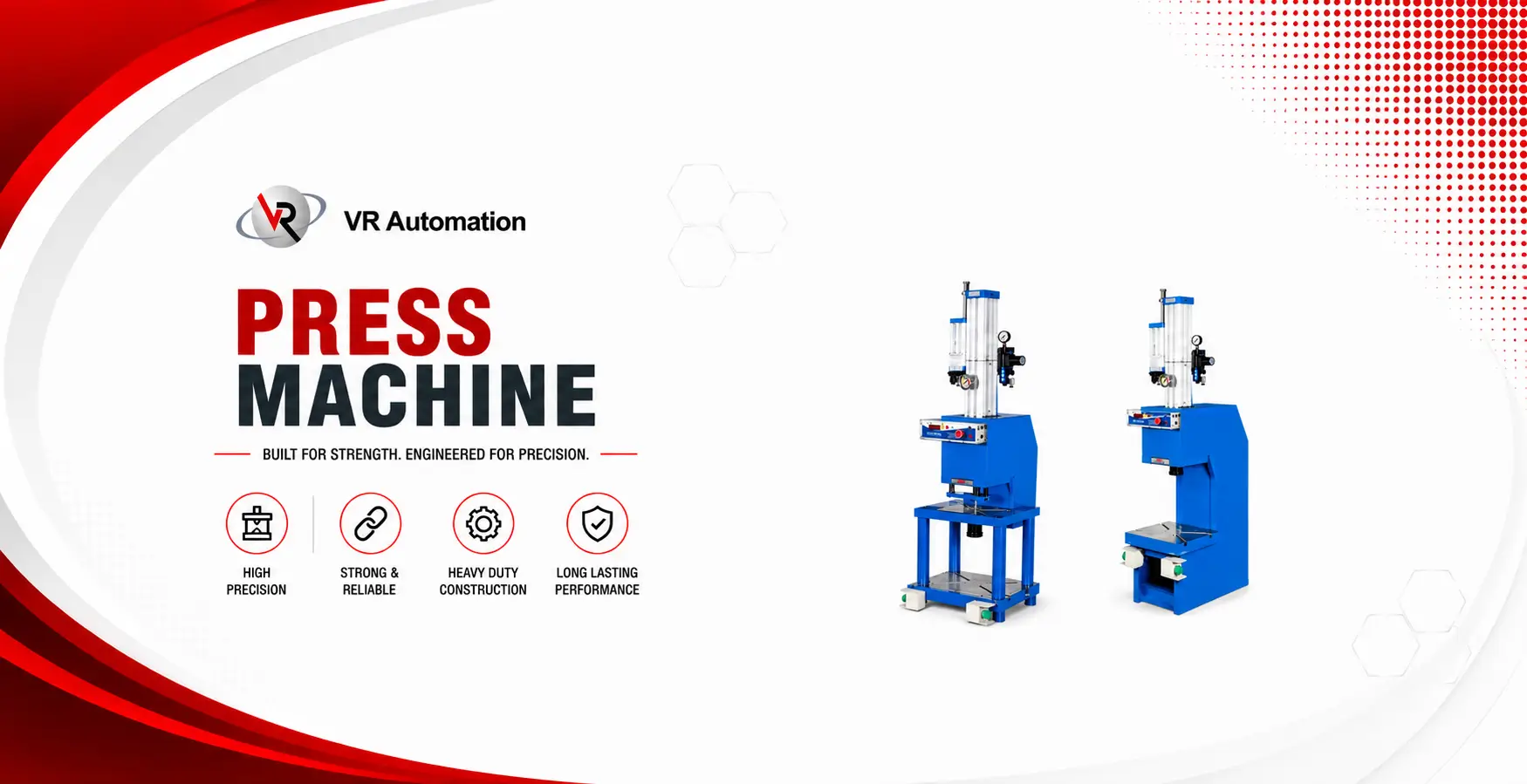
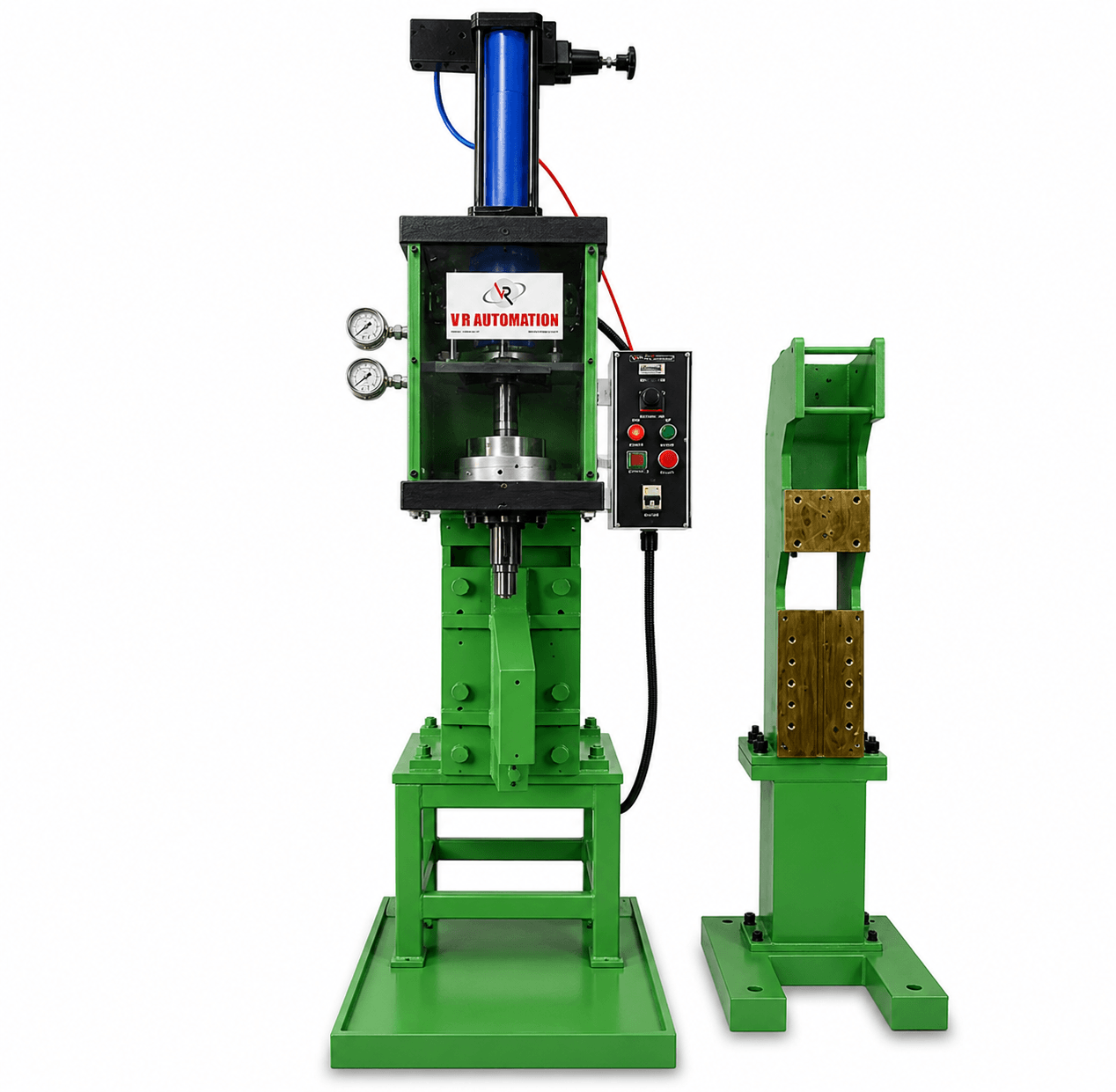
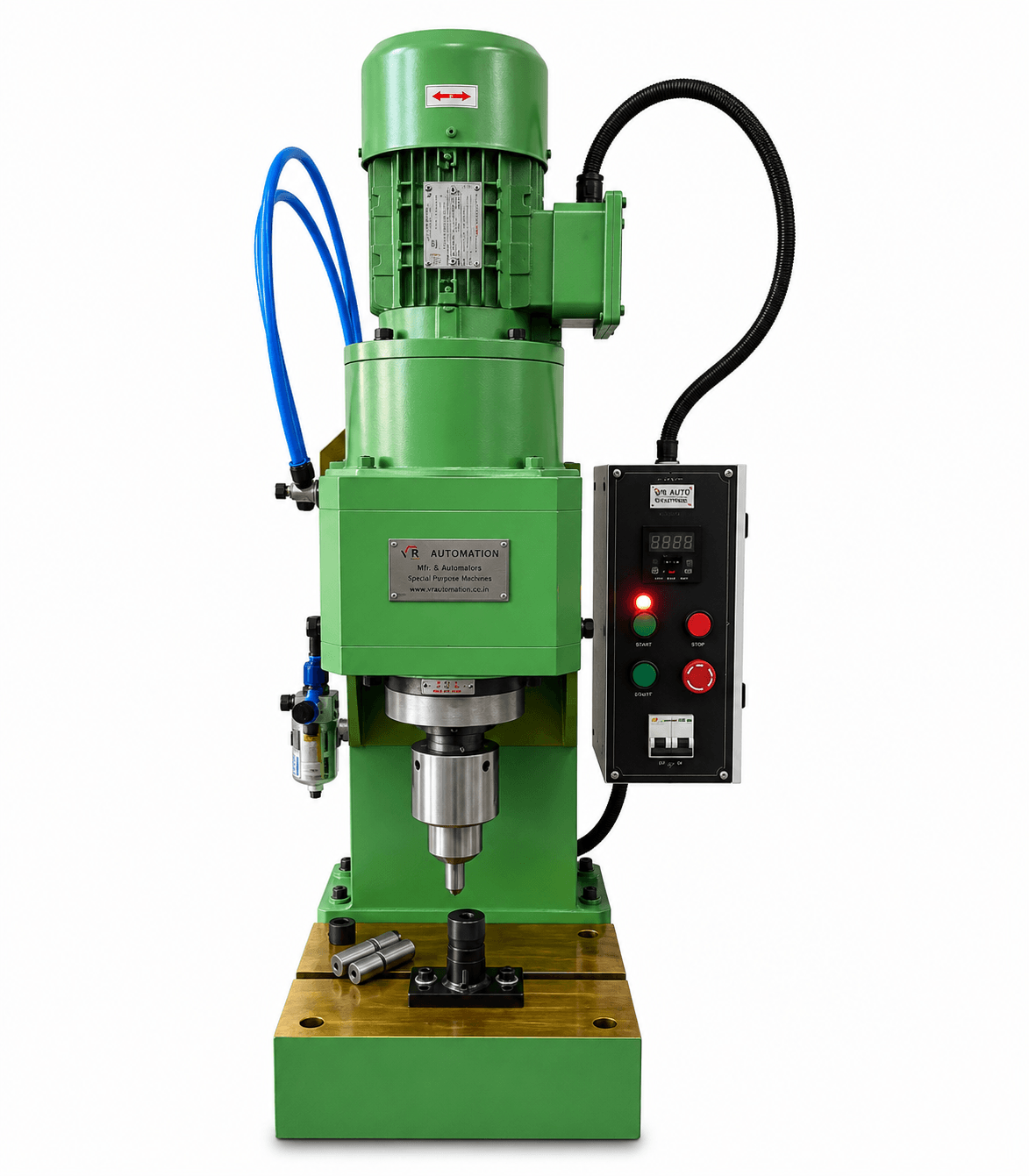
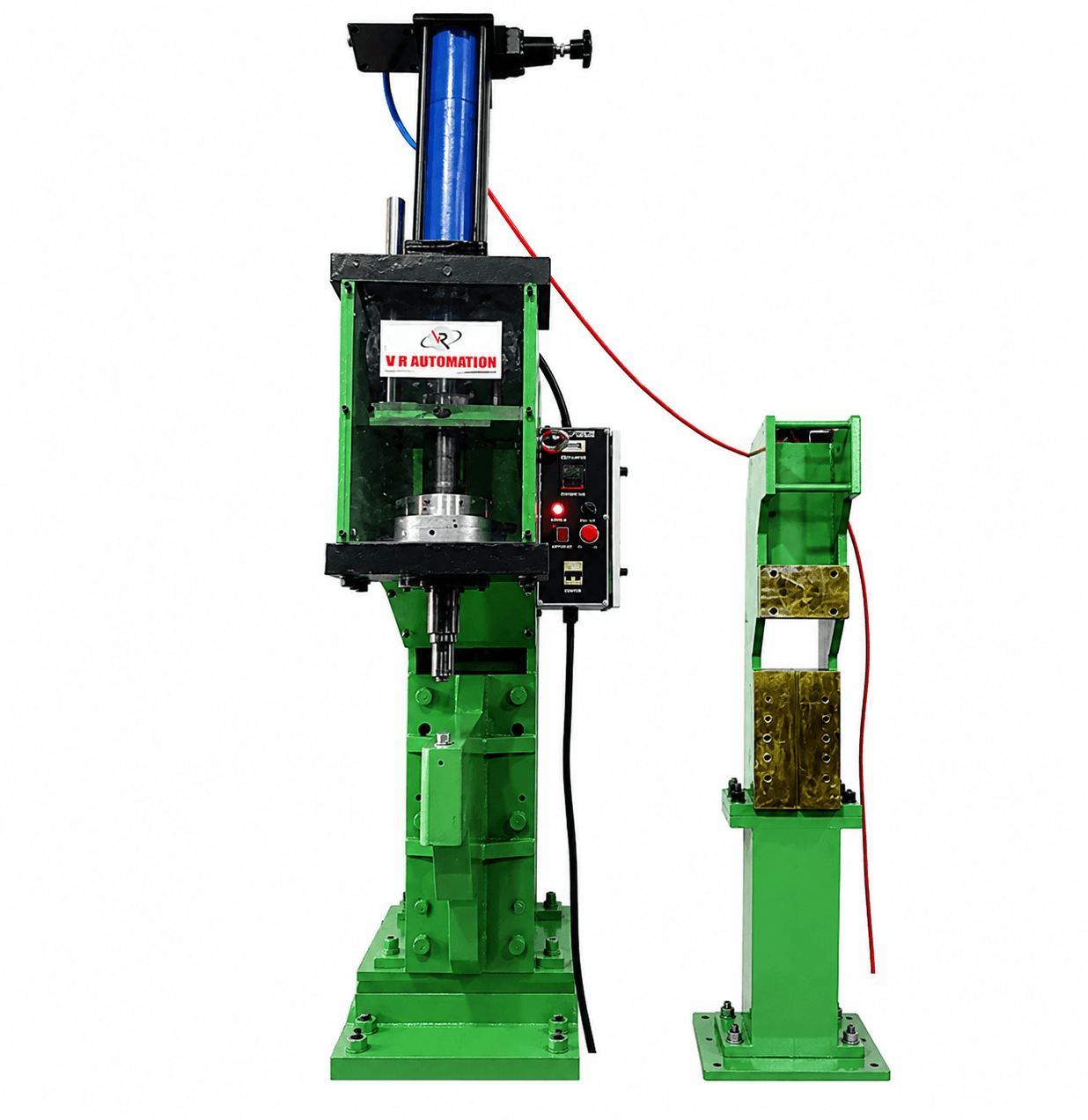
VR Automation manufactures clinching machines and clinching presses that join sheet metal with no rivet, no screw and no weld — pneumatic, hydro-pneumatic, C-frame, hand-operated and self-clinching fastener presses.
A clinching machine presses a punch into a die, cold-forming the sheets into an interlocking button made entirely from the parent material. There are no consumables to buy, no heat-affected zone, and zinc, paint and powder coating survive the operation intact.
7 ModelsAvailable in this range
₹1,20,000–₹2,50,000Indicative ex-works
Made in PuneBuilt in-house since 2019
PAN IndiaSupply & service
Machine Features & Types
Pneumatic Clinching
Runs on shop compressed air. No rivets, no welding wire, no shielding gas — running cost is close to zero.
Hydro-Pneumatic Clinching
An air-over-oil intensifier delivers hydraulic-level force from a standard air line, with no hydraulic power pack to maintain.
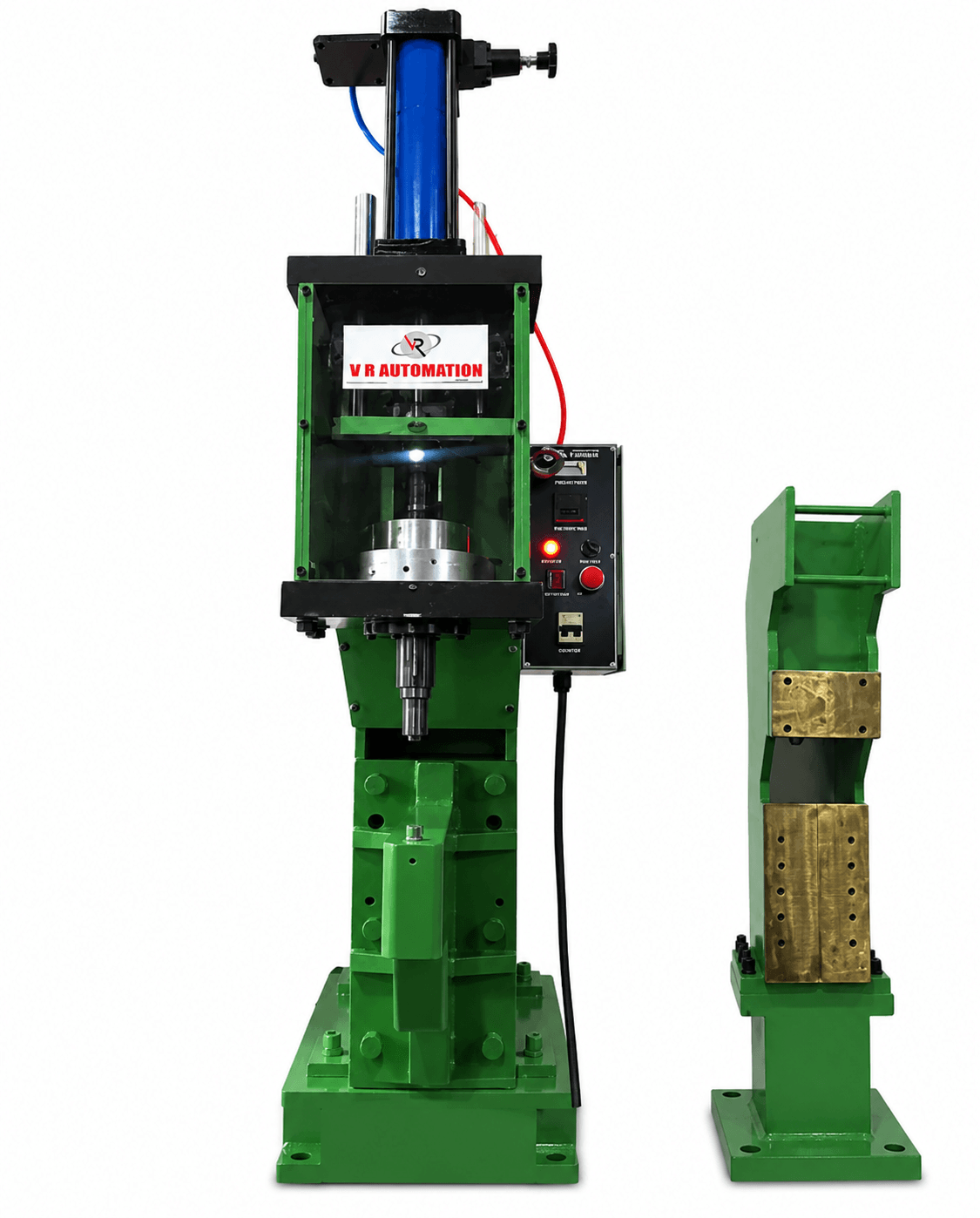
C-Frame & Toggle Press
The open C-frame reaches into the middle of a panel, so the joint goes where the design needs it rather than only along an edge.
Hand Clinching
Manual leverage for prototypes, repair, site work and low-volume batches — no air or power supply needed at the point of use.
Self-Clinching Fasteners
Presses PEM-style nuts, studs and standoffs into sheet, displacing material into an undercut so the fastener is permanently captive.
No Heat Distortion
Entirely cold. No spatter to dress off, no burnt coating, no distortion on thin gauge — parts go straight to assembly.
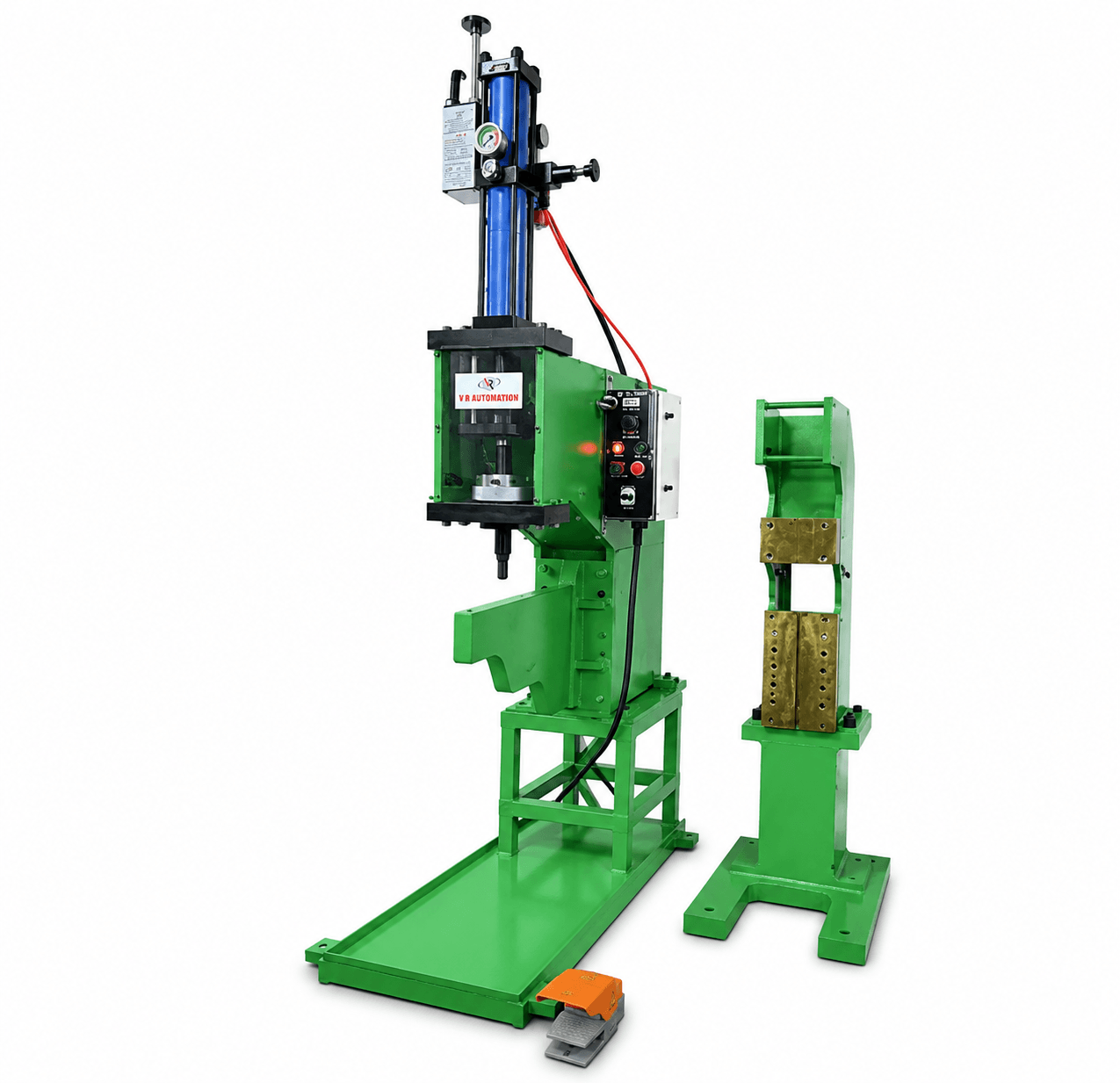
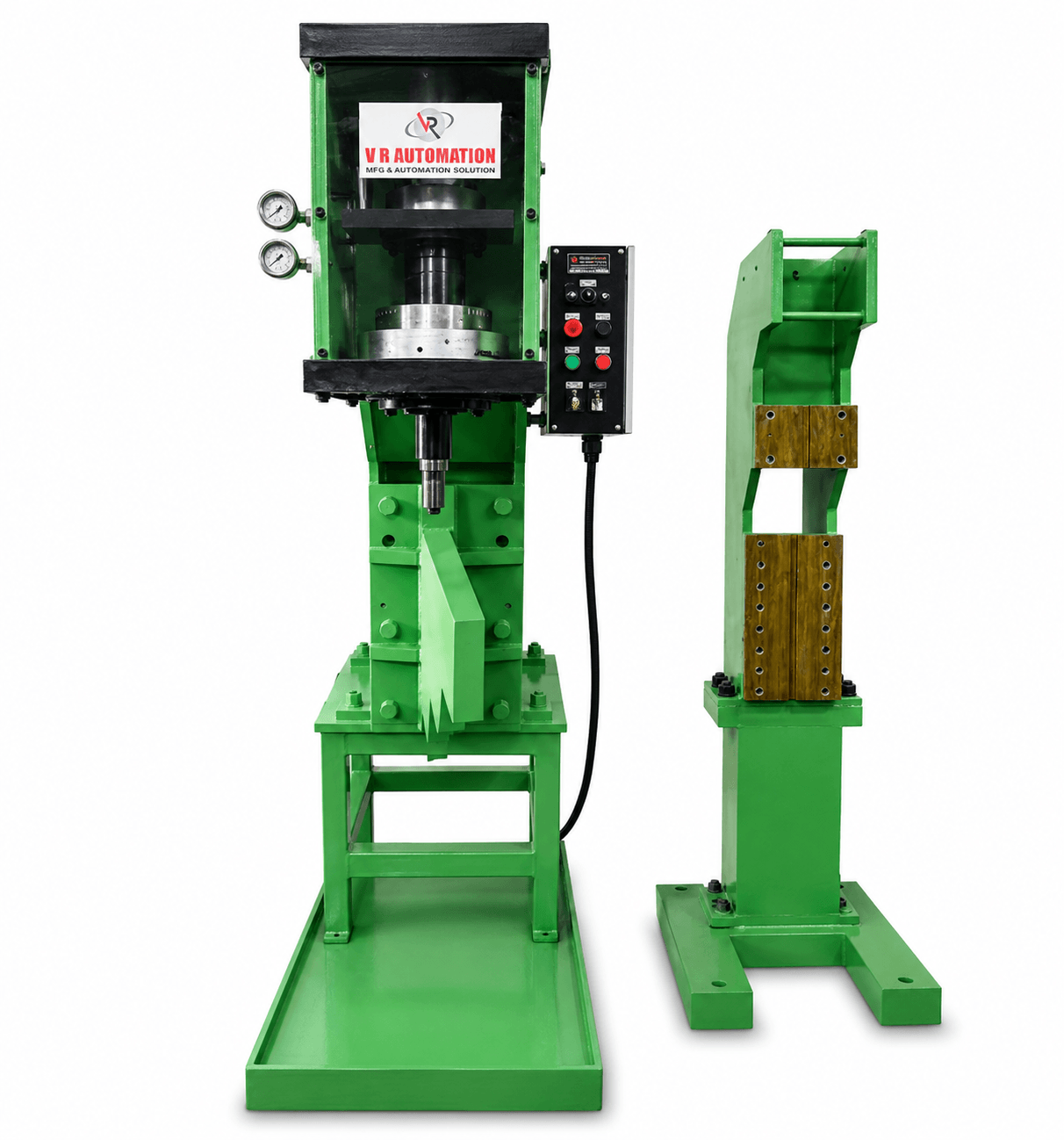
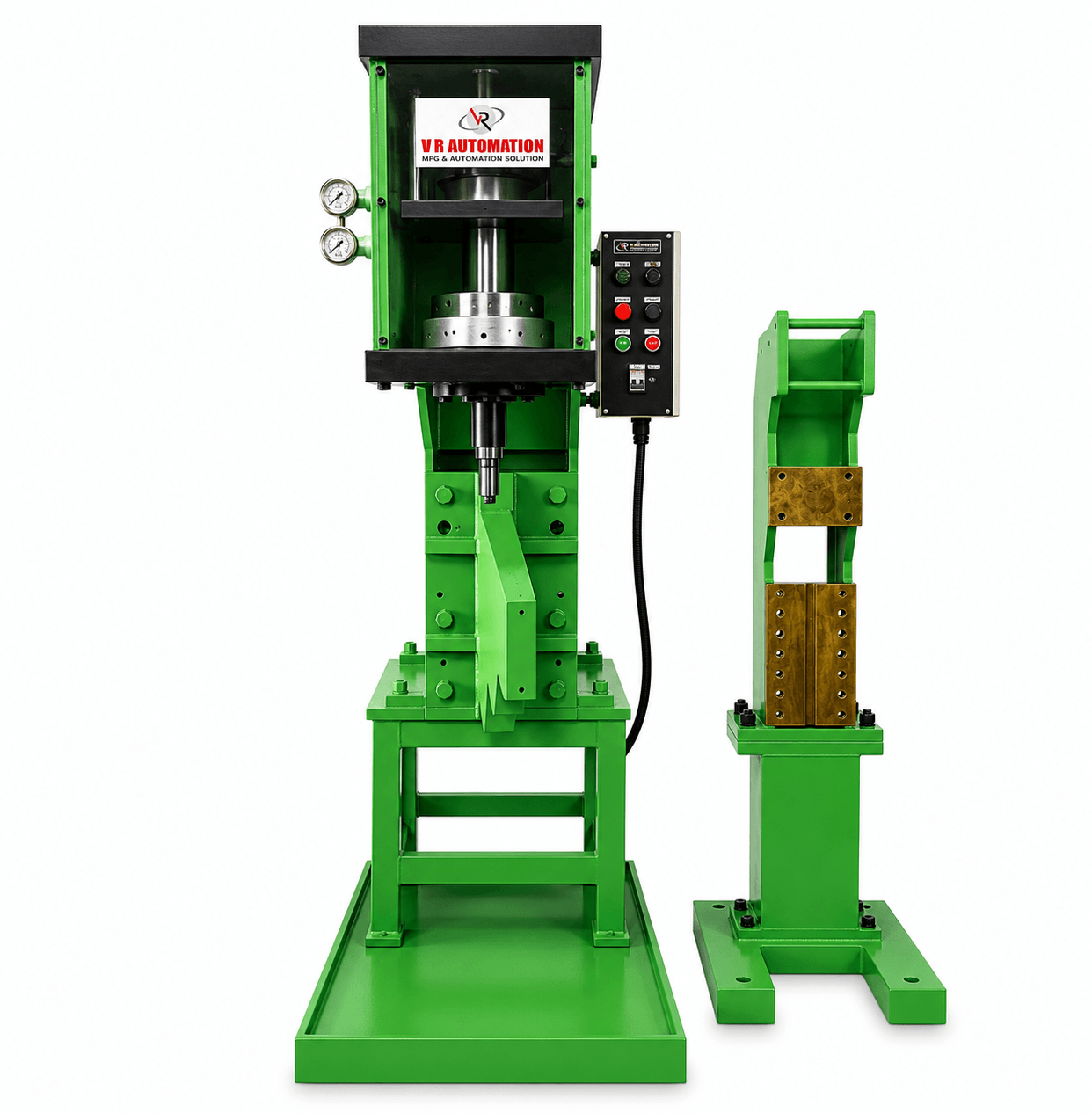
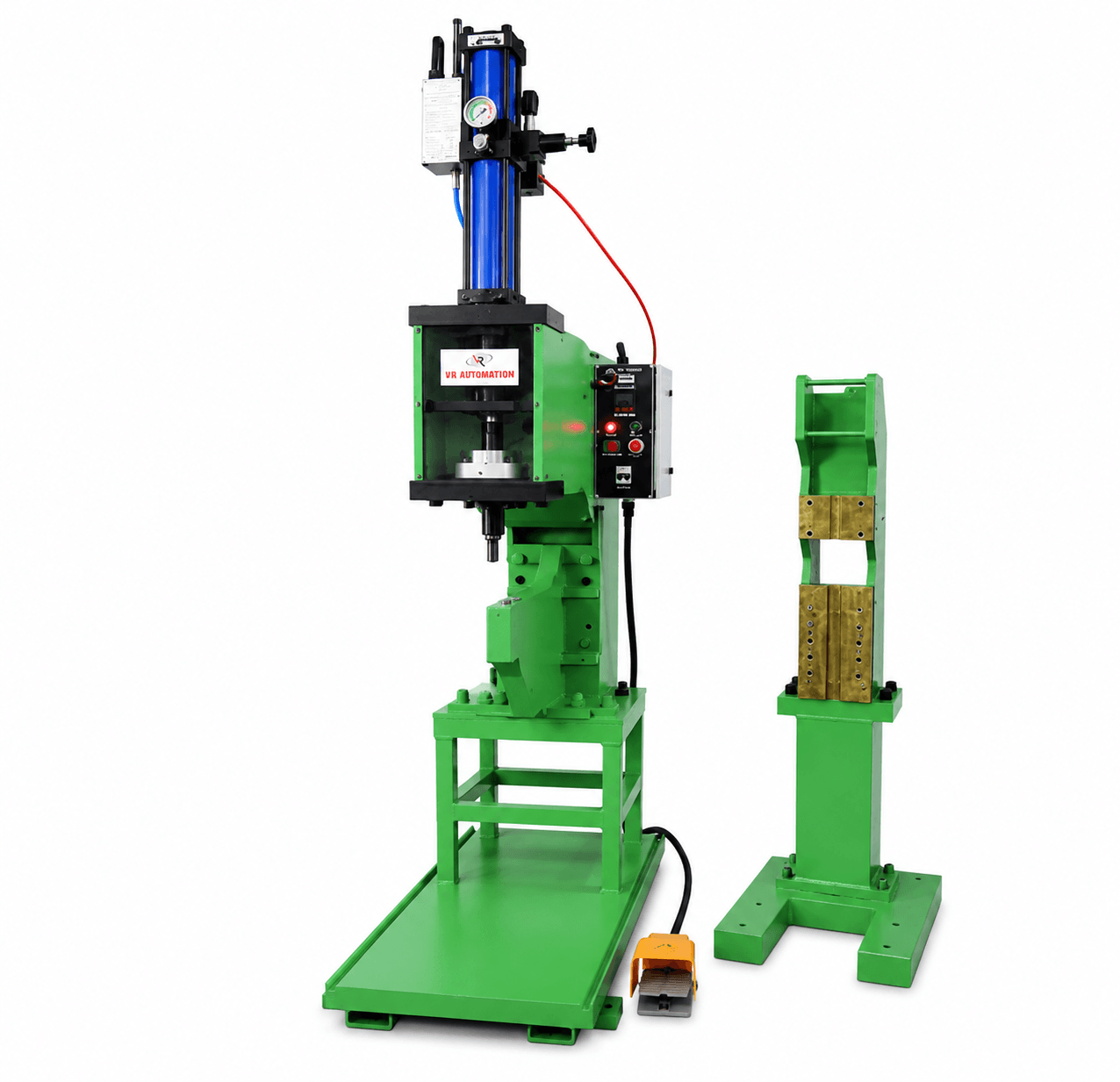
Our Clinching Machine Range
7 products in this category. Prices are indicative and ex-works — tooling and component fixture are quoted against your part.
How It Works
Position
Sheets are located between punch and die; the C-frame throat is built for your reach requirement.
Clamp
The blank holder grips the sheets so material flows into the die rather than lifting.
Form
The punch descends and the material is cold-formed into an interlocking button.
Release
A finished joint with no added fastener, no heat and no damage to the coating.
Industries We Serve
Electrical Enclosures
Panels, cabinets, switchgear housings and trunking in pre-galvanised sheet.
HVAC & Ducting
Duct sections and ventilation assemblies where speed per joint governs output.
Automotive Sheet Metal
Brackets, clips, heat shields and mounting plates, including coated and dissimilar metals.
White Goods
Appliance bodies and panels where spot welding would distort thin gauge.
Roofing & Cladding
Profile sheet and cladding assemblies joined without fasteners.
Electronics Housings
Self-clinching threaded hardware in sheet too thin to tap.
Applications & Components
Tooling and fixture are engineered per component. These are the applications we are asked for most often:
Galvanised sheetPre-painted sheetPowder-coated panelsAluminium to steelStainless steelElectrical cabinetsSwitchgear housingsHVAC ductingHeat shieldsMounting bracketsServer racksControl panelsPEM nutsSelf-clinching studsStandoffsAppliance bodiesCladding sheetCable trays
Why Buy From VR Automation
Built to Your Drawing
Tooling and component fixture are engineered around your part, so the machine arrives ready to run rather than needing development on your floor.
Repeatable Output
Force, stroke and cycle are set by the machine, so joint quality stops depending on operator strength or fatigue late in a shift.
Made in India
Locally engineered and locally supported, priced against Indian production cost rather than import landed cost.
Installation & Service
Commissioning, operator training, spares and service support across India, since 2019.
Designed, machined, assembled and tested in-house at our Bhosari, Pune facility. You deal with the engineers who build the machine, not a trading intermediary — which keeps lead times short and spares available for the working life of the machine.
Price & Quotation
Price depends on force, capacity, tooling, automation level and the component fixture, so a catalogue figure would be misleading. We quote against your actual part.
To receive a quotation, send us:
- Component drawing or sample details
- Material, thickness and joint or feature positions
- Target cycle time and production volume per shift
- Whether you need standalone, semi-automatic or fully inline operation
Frequently Asked Questions
What is the difference between clinching and riveting?
Riveting adds a fastener; clinching adds nothing. A clinching machine forms an interlocking button out of the sheets themselves, so there are no rivets to buy, store, feed or run out of — and no fastener head to corrode.
What are the advantages of clinching over spot welding?
No heat, so coatings survive and thin gauge does not distort. No electrodes to dress, no spatter to clean, no fume extraction, and dissimilar metals such as aluminium to steel can be joined — which spot welding struggles with.
How does a sheet metal clinching machine work?
A punch presses the sheets into a die. The material flows sideways under the punch and locks into an undercut in the die, forming a permanent mechanical interlock in a single stroke.
What sheet materials can be clinched?
Mild steel, stainless, aluminium, galvanised, pre-painted and powder-coated sheet, and dissimilar combinations. Achievable thickness depends on material and machine force — send your stack-up and we will confirm.
What is a clinching machine price in India?
Our clinching range runs roughly ₹ 1.2 lakh to ₹ 2.5 lakh depending on force, frame type, throat depth and automation. Prices shown are indicative and ex-works.
Do you supply self-clinching fastener insertion machines?
Yes. We build presses for inserting self-clinching nuts, studs and standoffs into sheet metal with repeatable seating depth so the fastener finishes flush.
Get a Quotation
Send your component drawing and requirement. Our engineers will recommend a configuration and quote a price.