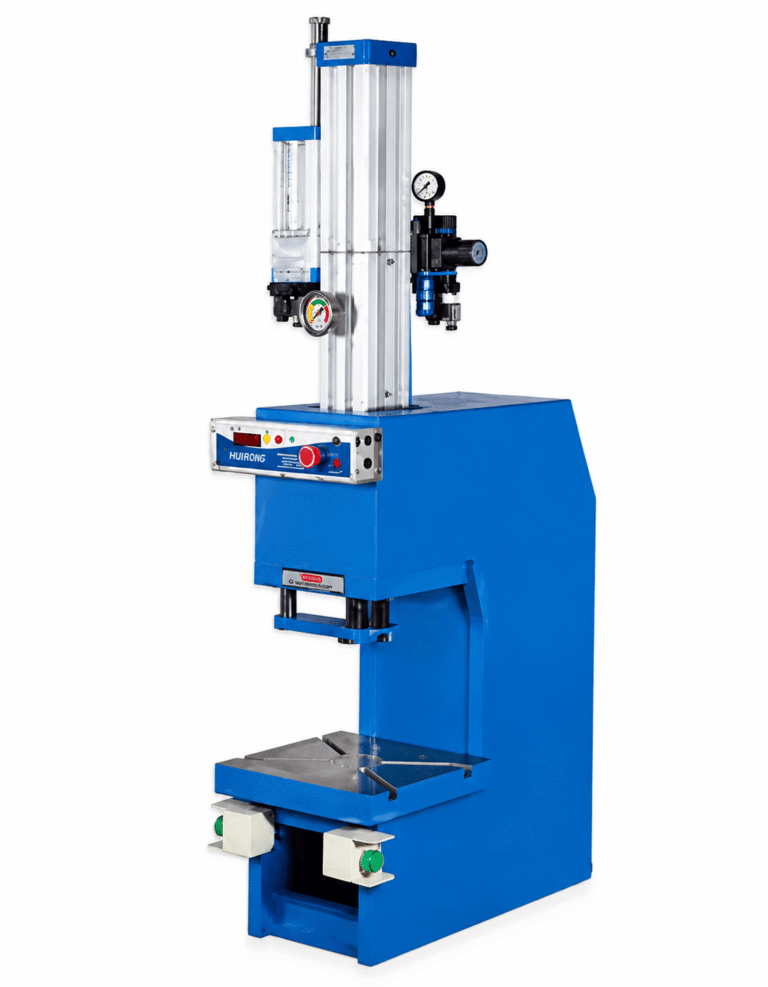
Hydro Pneumatic Presses
₹175,000.00
Air-over-oil press delivering high force from a standard compressed air supply, with no hydraulic power pack required.
A hydro-pneumatic press uses shop compressed air to drive an oil intensifier, multiplying pressure so a compact cylinder delivers press-shop force without a hydraulic power pack. VR Automation manufactures hydro-pneumatic presses, C-frame and portal-frame pneumatic press machines in Bhosari, Pune, for assembly, stamping, clinching and riveting duties.
The cycle has two distinct phases, and that is the whole point of the design. In the approach phase air drives the ram down quickly over the long, unloaded part of the stroke — fast, and costing almost no energy. When the tool meets the work, a booster engages: air acting on a large piston pressurises oil behind a much smaller one, and the ratio of those two areas multiplies the pressure. The working phase is then short, slow and very high in force.
Compared with a full hydraulic press, the practical differences matter on an Indian shop floor. There is no motor-pump unit running continuously, so no standing power draw and far less heat and noise. There is no large oil reservoir to maintain. The only utility needed is the air line that already exists. And because force only appears at the end of the stroke, the machine is inherently safer to tool up than a flywheel power press.
| Pneumatic press | Hydro-pneumatic press | Hydraulic press | |
|---|---|---|---|
| Typical force band | Up to about 3 t | 2 t to 20 t | 10 t upward |
| Utility required | Shop air | Shop air | Air plus electrical power pack |
| Standing energy cost | Nil | Nil | Continuous pump running |
| Approach speed | Fast | Fast | Slower |
| Force control through stroke | Constant | Two-stage | Fully controllable |
| Maintenance | Lowest | Low — seal kits | Highest — oil, filters, cooling |
Press-fitting bearings, bushes and dowels; staking and swaging; riveting; clinching; marking and coining; assembly of ball joints and control arm bushes; light stamping and blanking of sheet metal; and as the force unit inside a larger special purpose machine or rotary index cell. Because the press is compact and needs only air, it is often the cleanest way to add force to an existing assembly line without re-doing the electrics.
₹175,000.00
Air-over-oil press delivering high force from a standard compressed air supply, with no hydraulic power pack required.
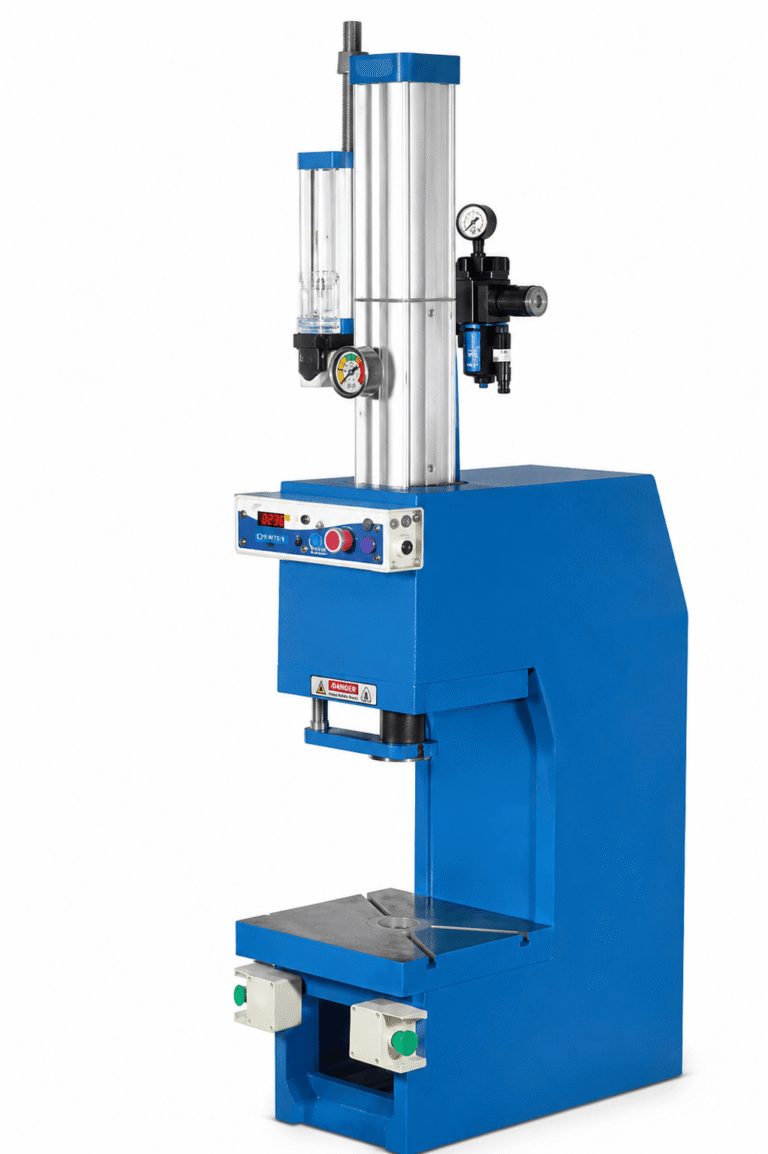
₹125,000.00
Compressed-air press for pressing, staking, marking and light forming, with fast cycling and low running cost.
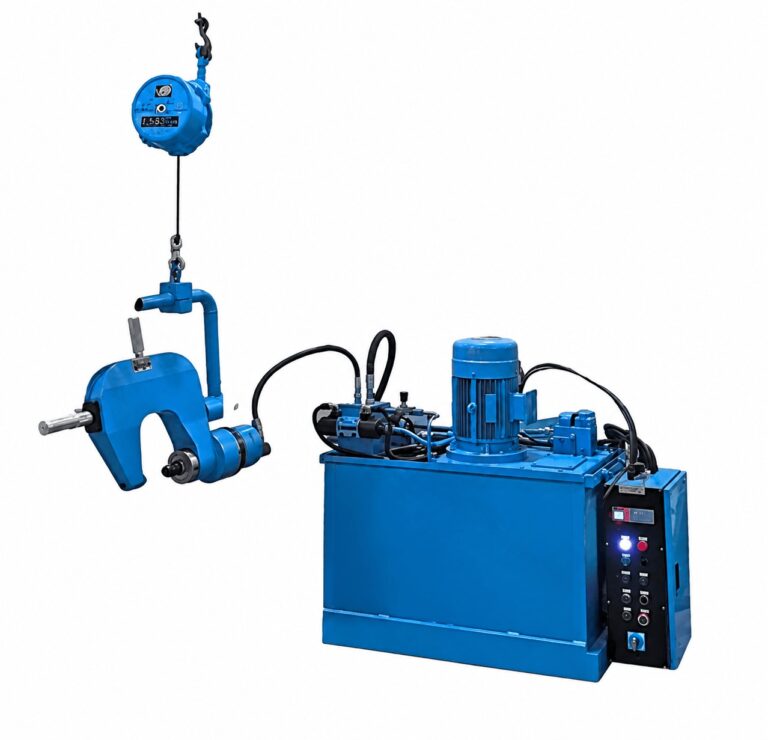
₹50,000.00
Portal and C-frame press structures built for stiffness under load, so tooling alignment holds across the full stroke.
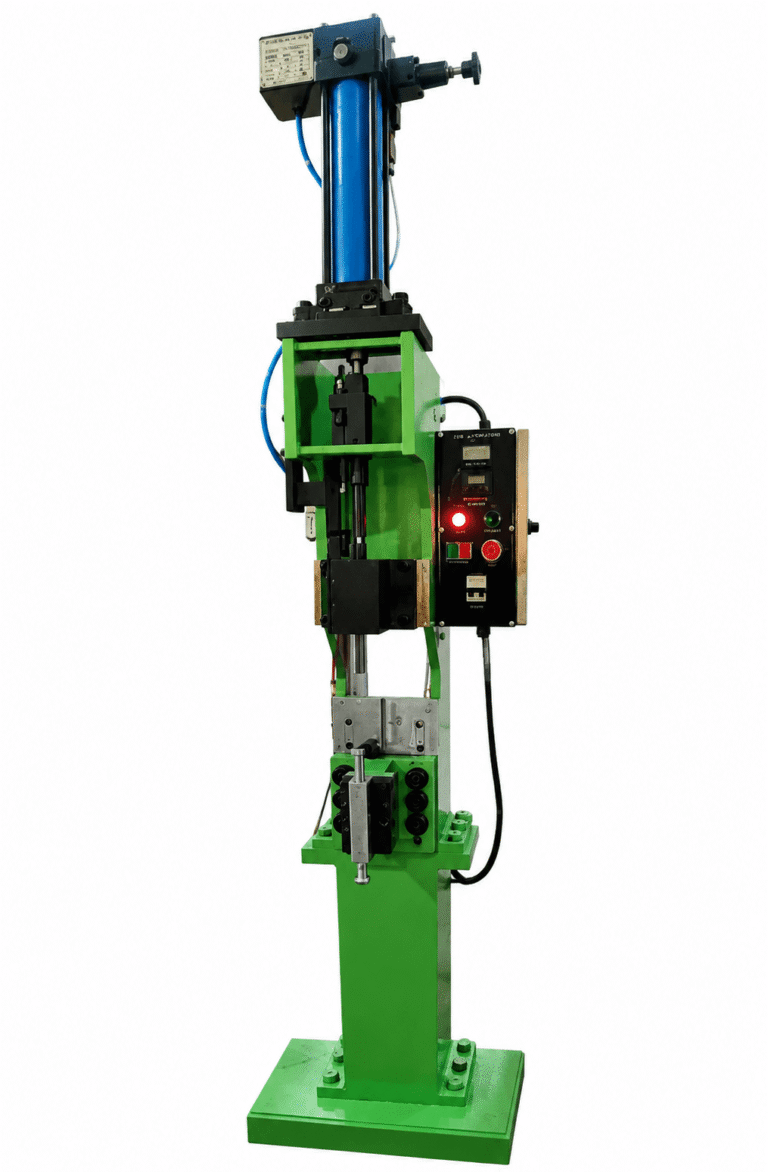
₹150,000.00
Hydro-pneumatic riveting machine using an air-over-oil intensifier to deliver hydraulic-level force from a standard shop air supply.
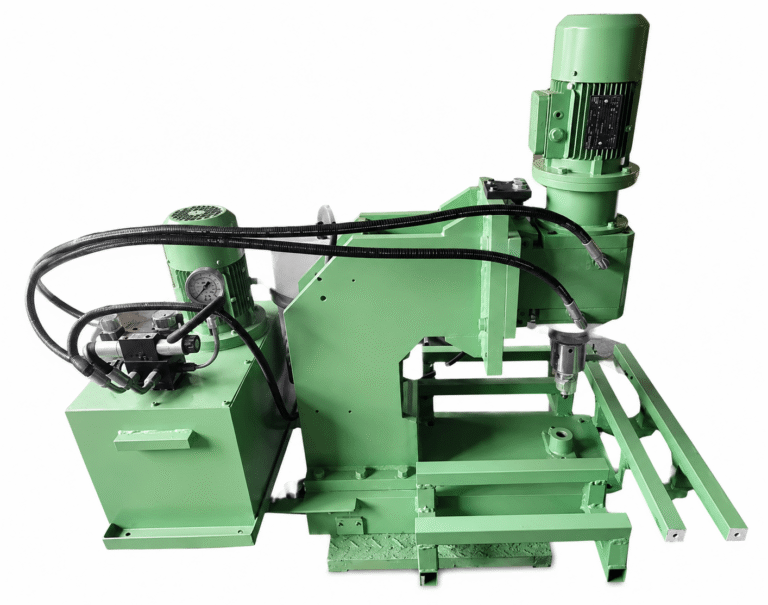
₹175,000.00
Hydraulic riveting machine for large-diameter rivets and heavy sections, delivering high force with a controlled, steady stroke.
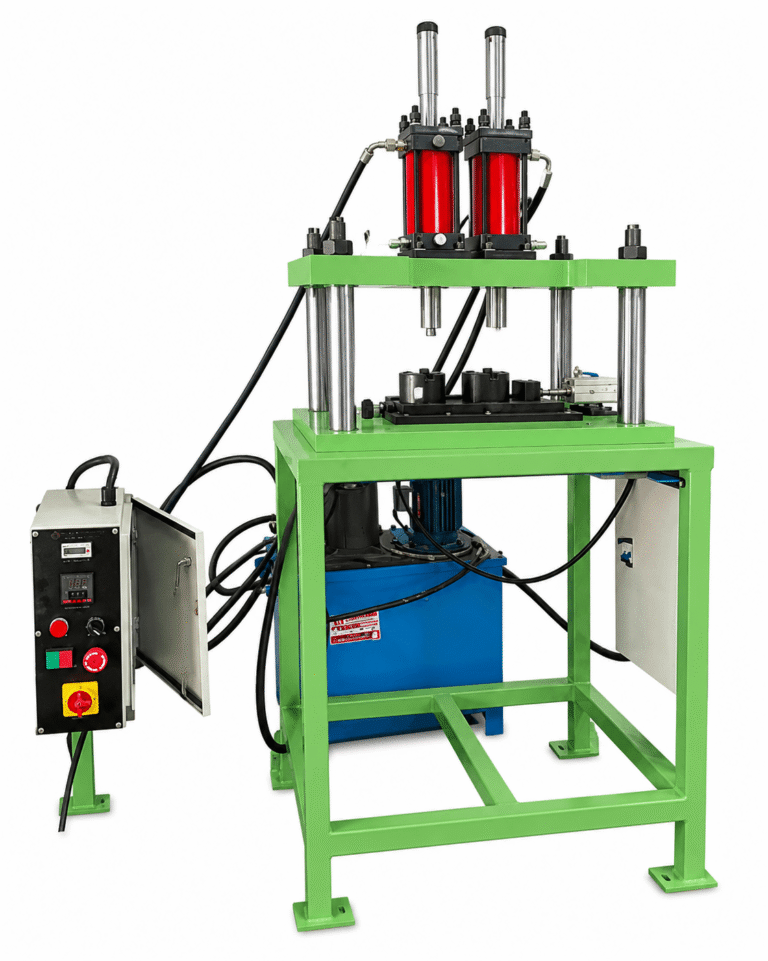
₹195,000.00
An automatic riveting machine is an industrial device that semi-automates the process of joining materials with rivets, improving efficiency and…
VR Automation hydro-pneumatic presses are currently listed from about ₹1,75,000, and standard pneumatic press machines from about ₹1,25,000. Price moves with tonnage, frame style, stroke and controls — a 2 tonne benchtop unit and a 10 tonne portal-frame press are very different machines.
A hydro-pneumatic press generates its force from shop compressed air through an oil intensifier, and only pressurises oil during the short working stroke. A hydraulic press runs a motor-driven pump continuously. The hydro-pneumatic press has no standing power draw, no large oil reservoir and a much faster approach stroke, but less control over force through the full stroke.
Consumption depends on cylinder bore, total stroke and cycles per minute, and the intensifier stage draws air only during the working portion of the stroke. We calculate the free-air delivery required for your duty cycle at quotation stage so the press does not starve your existing compressor.
Yes — it is the standard power unit for clinching in the 4 to 20 tonne band. The press provides the force and the clinching punch and die set defines the joint. See our clinching press machines.
Yes. Frame style, throat depth, daylight, stroke and tonnage are all specified to the application, and we regularly build non-standard frames where a catalogue press cannot reach the joint.
VR Automation, Bhosari, Pune — riveting, clinching, press and special purpose machines. We quote against your part, not a catalogue.
These products are limited, checkout within
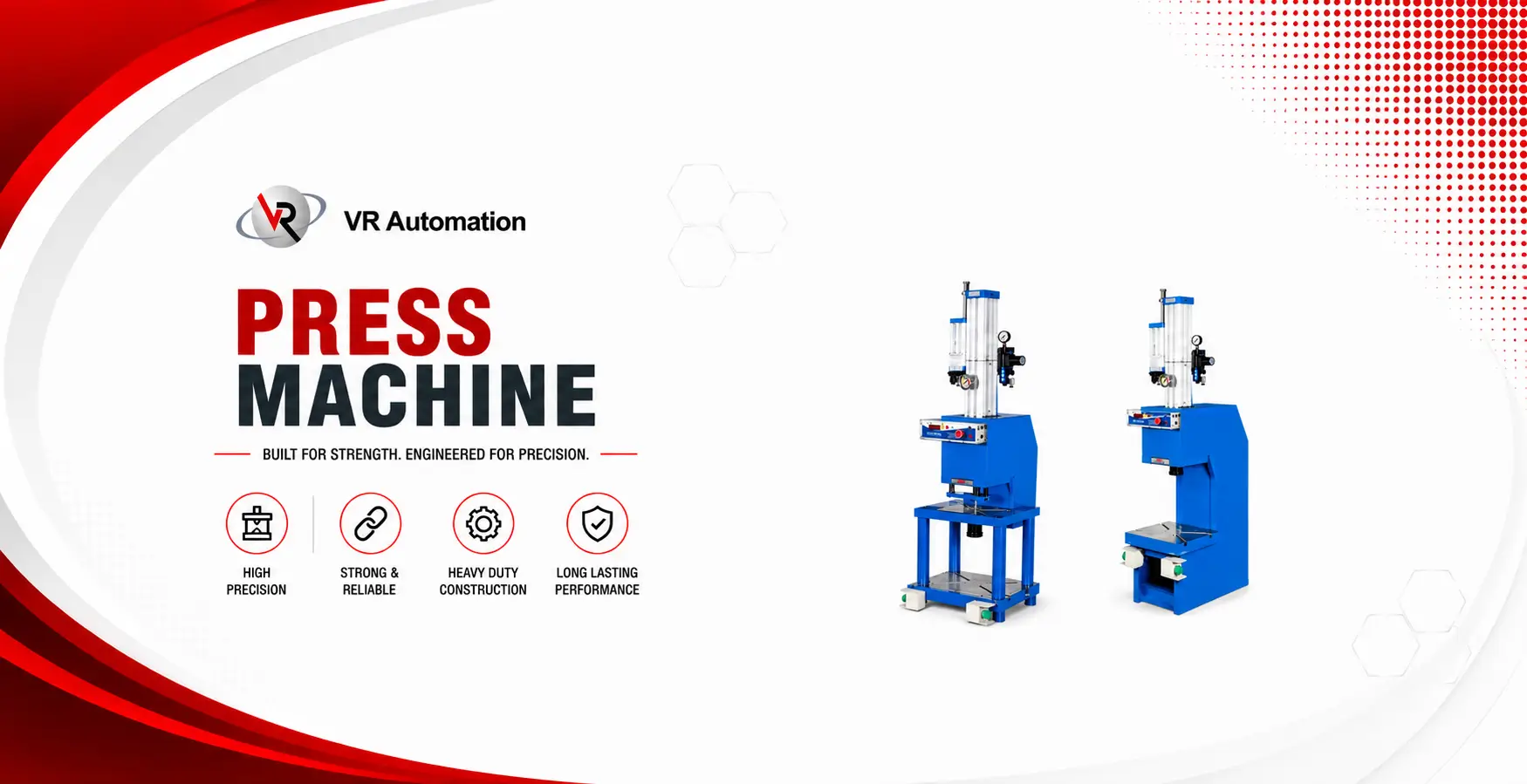
Riveting, clinching, press & SPM machines — built in-house at Bhosari, Pune. Supplied PAN India since 2019.
Tell us about your component and joint. We quote against your part, not a catalogue.