
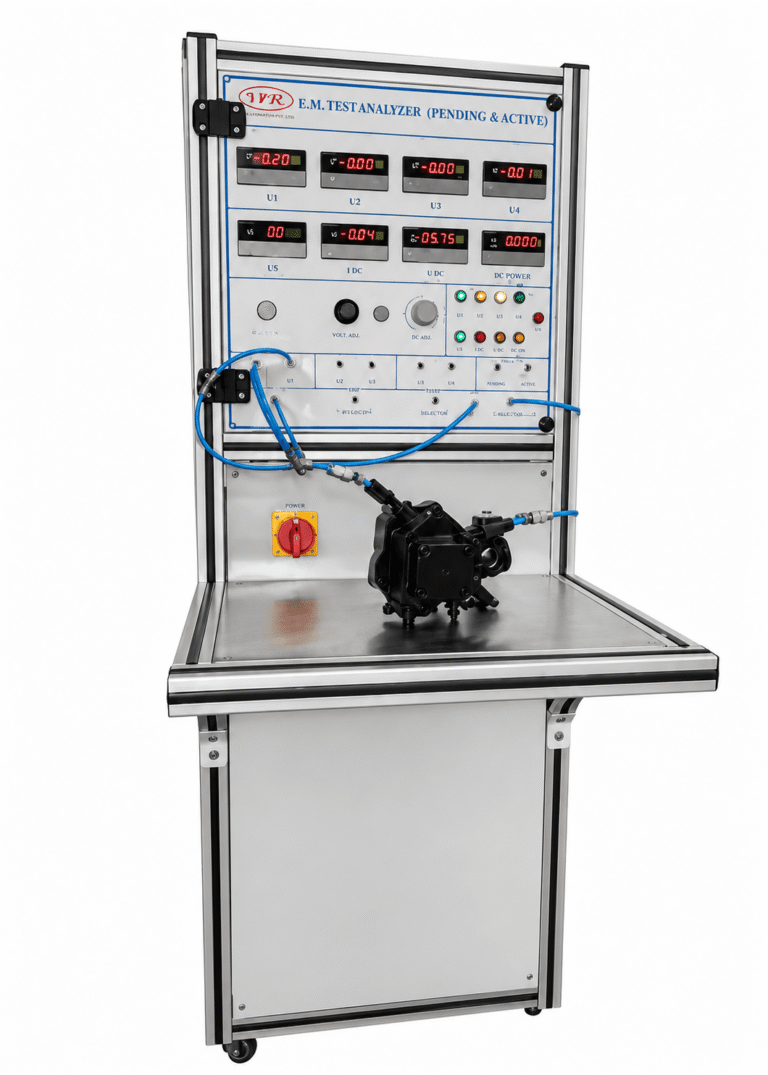
Leak Testing Machine
₹150,000.00
Air pressure decay leak testing machine giving objective, repeatable pass/fail results with no operator judgement involved.
A leak testing machine seals a component, pressurises it, and measures whether pressure holds — quantifying a leak rate instead of relying on a bubble test. VR Automation builds air pressure-decay leak testing machines, test rigs and sealing fixtures at Bhosari, Pune, for automotive castings, housings and assemblies.
The component is sealed by a fixture, filled with air to a set test pressure, then isolated. The cycle has three timed phases, and getting them right is most of what separates a reliable rig from a noisy one:
A differential pressure arrangement improves resolution considerably: the part is measured against a sealed reference volume of similar size, so ambient temperature drift affects both sides equally and cancels out. This is how small leak rates on large-volume parts are detected repeatably on a shop floor that is not temperature-controlled.
| Method | What it measures | Sensitivity | Notes |
|---|---|---|---|
| Bubble / water immersion | Visible bubble emission | Low | Operator-dependent, gives no leak rate, wets the part |
| Air pressure decay | Pressure drop over time | Medium | The production standard: dry, fast, quantified, easily automated |
| Differential pressure decay | Pressure drop against a reference volume | Medium–high | Cancels ambient drift; better on large-volume parts |
| Vacuum decay | Pressure rise under vacuum | Medium–high | For parts that cannot be pressurised, or to detect ingress |
| Mass flow | Air flow into the part at steady pressure | Medium | Reads directly in flow units; less sensitive to part volume |
| Helium / tracer gas | Tracer concentration escaping | Highest | Specialist equipment and gas handling; used for very fine leaks |
VR Automation builds air pressure-decay and differential pressure-decay machines, together with the sealing fixtures. For fine-leak tracer gas applications we will tell you plainly that a dedicated tracer-gas system is the right tool.
Most leak test failures are fixture failures, not instrument failures. The fixture has to seal every opening in the component repeatably without distorting it, hold that seal against test pressure, and present the same internal volume on every cycle — because leak rate is calculated from volume. Sealing plugs and expanding seals are wear items, so the fixture is designed for quick seal replacement, and the machine is proven with a calibrated master leak so the whole system, fixture included, is verified rather than just the instrument.
Automotive castings and housings, cylinder heads and blocks, oil pans and covers, water pumps, intake manifolds, fuel and brake components, radiators and heat exchangers, gearbox and axle housings, valve bodies, and sealed electrical enclosures and connectors. A leak testing station is also frequently built into an assembly special purpose machine, so the part is tested in sequence rather than batched off-line.
₹150,000.00
Air pressure decay leak testing machine giving objective, repeatable pass/fail results with no operator judgement involved.
₹25,001.00
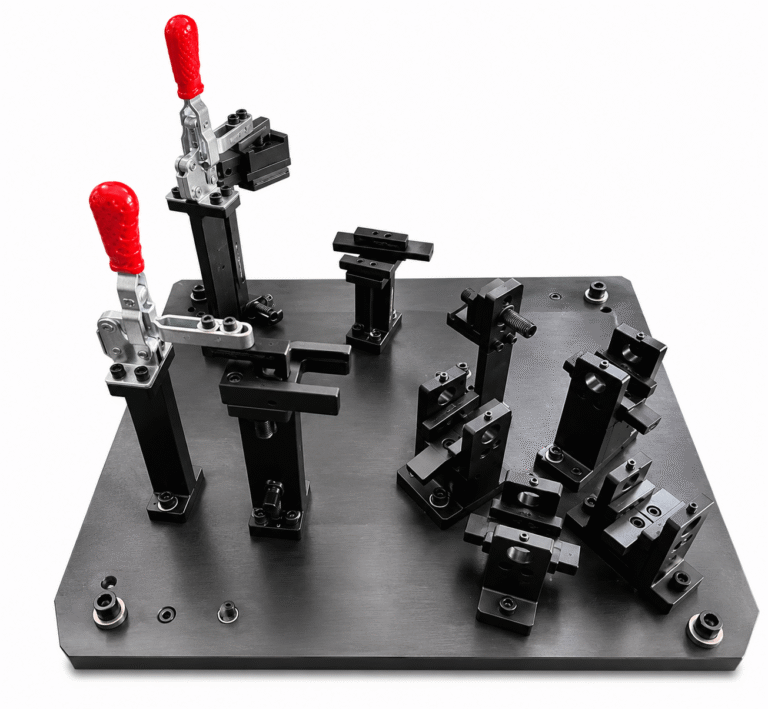
Inspection fixtures and relation gauges for quick go/no-go dimensional checks at the point of manufacture.
₹240,000.00
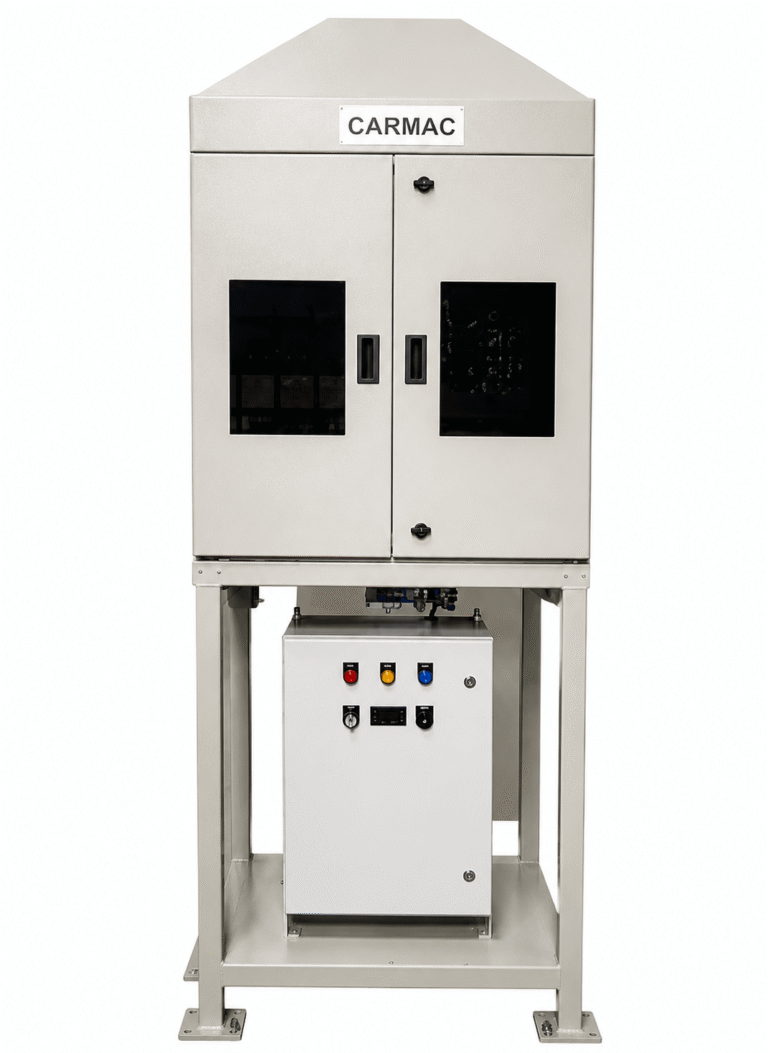
Rotary welding special purpose machine automating circumferential and multi-position welding to a fixed, repeatable program.
VR Automation leak testing machines are currently listed from around ₹1,50,000. The instrument is often a smaller share of the cost than the sealing fixture and the automation around it, so a firm price needs the component drawing, test pressure, reject leak rate and required cycle time.
Pressure decay testing seals and pressurises a component with air, allows it to stabilise, then measures how far pressure falls over a fixed window. That drop, combined with the part internal volume, is converted to a leak rate in cc/min. It is the standard production method because it is dry, fast, quantified and easily automated.
Filling a part with air compresses and warms it, and that heat then dissipates into the component walls, causing pressure to fall for reasons unrelated to any leak. The stabilisation phase lets that thermal transient settle before measurement begins. Cutting stabilisation to save cycle time is the most common cause of good parts being rejected.
With a calibrated master leak — a reference orifice of known leak rate fitted to a good part or a master component. Running it verifies the entire system including the sealing fixture, not just the instrument, and it is normally run at shift start and after any fixture seal change.
Yes, and it usually should be. Integrating the leak test as a station in a rotary index or in-line assembly SPM means every part is tested in sequence, failures are detected before further value is added, and the result is logged against the part rather than against a batch.
VR Automation, Bhosari, Pune — riveting, clinching, press and special purpose machines. We quote against your part, not a catalogue.
These products are limited, checkout within
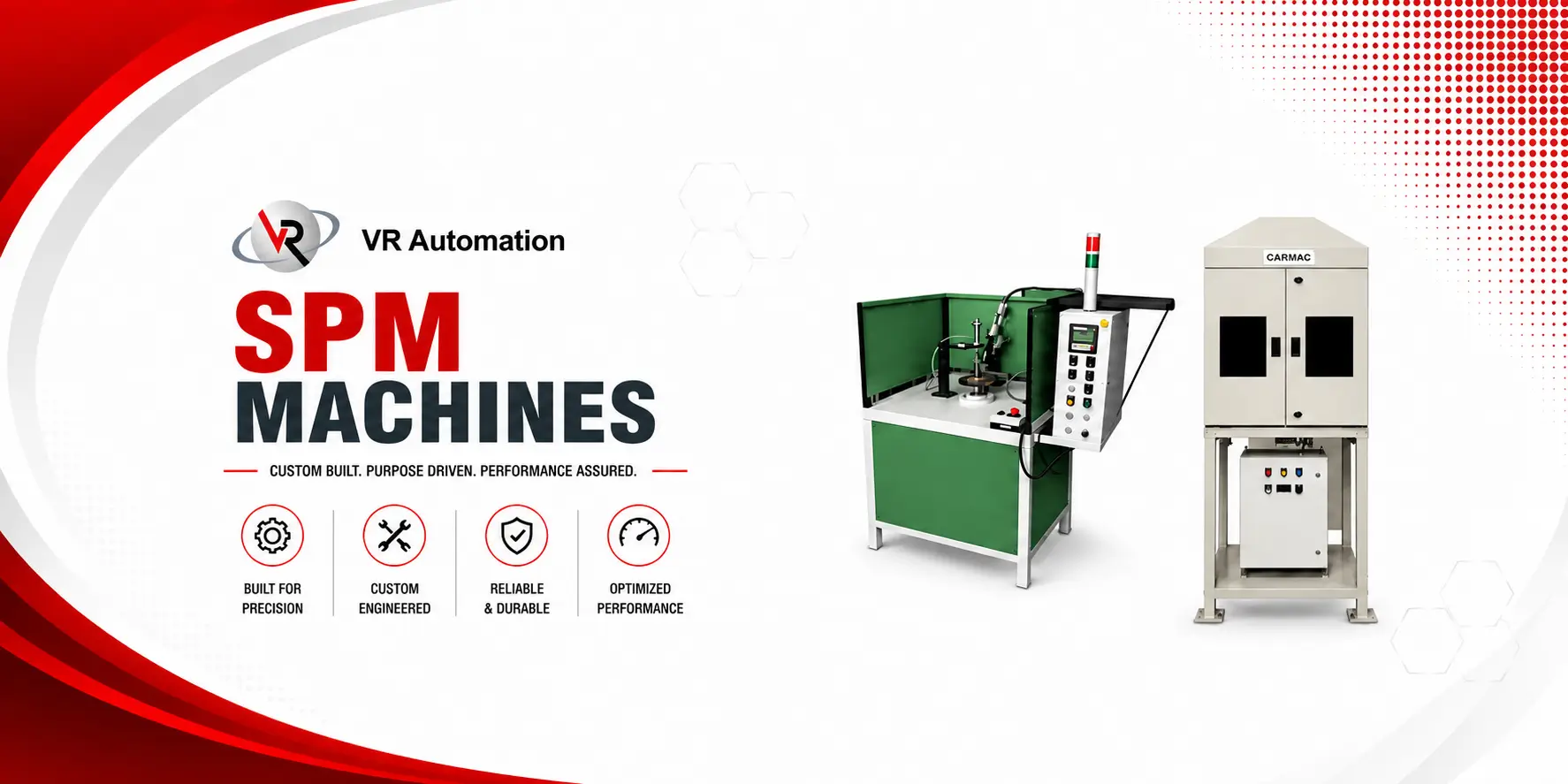
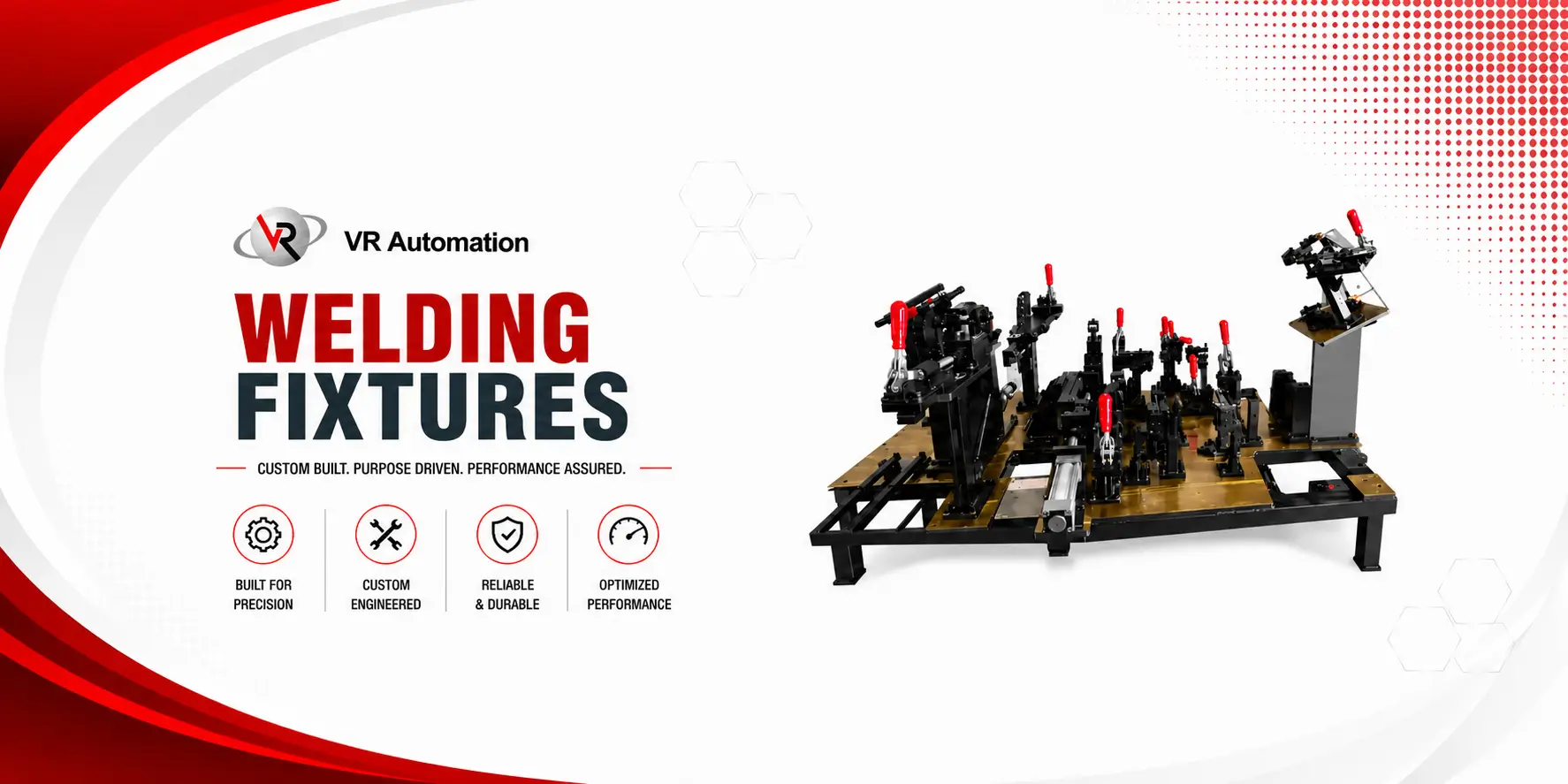
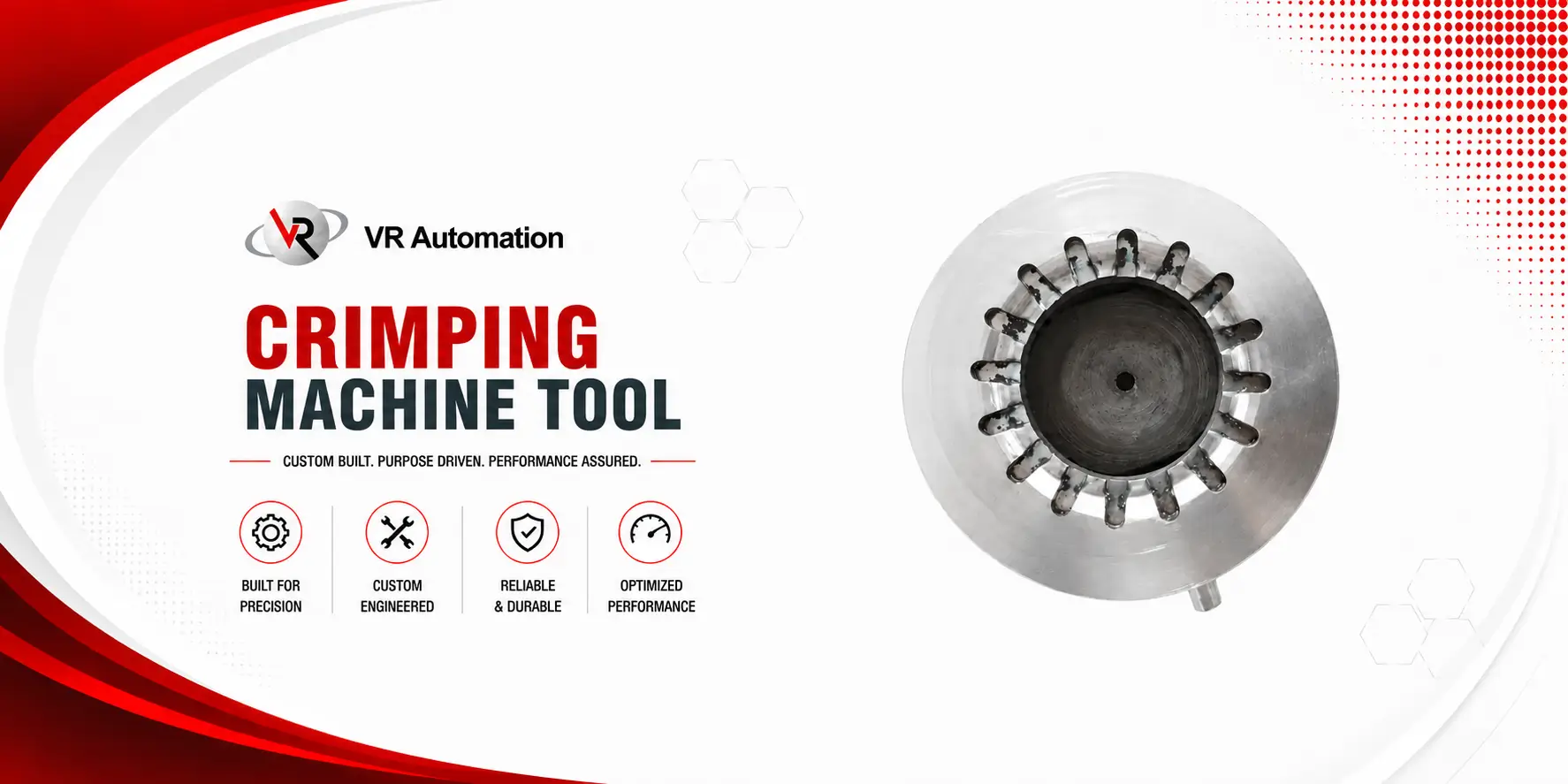
Riveting, clinching, press & SPM machines — built in-house at Bhosari, Pune. Supplied PAN India since 2019.
Tell us about your component and joint. We quote against your part, not a catalogue.