
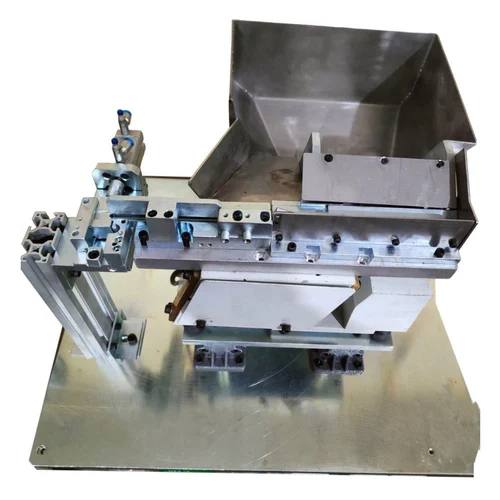
Auto Screwing Machine
₹90,000.00
Automatic screw feeding and driving machine with controlled torque, removing missed and under-torqued screws from assembly.
An auto screwing machine feeds, presents and drives screws automatically to a set torque, removing the pick-and-place time and the missed-screw defect from manual assembly. VR Automation builds auto screwing machines, screwing fixtures, multi-spindle and PLC-controlled screw driving automation at Bhosari, Pune.
Every automatic screwing machine is built from the same three subsystems, and most integration problems come from one of them being specified in isolation.
| Pneumatic clutch | Electric (transducerless) | Servo / DC with transducer | |
|---|---|---|---|
| Torque control | Mechanical clutch shut-off | Current-based | Measured torque and angle |
| Fault detection | Minimal | Basic | Cross-thread, float, high/low torque, missing screw |
| Data recording | None | Limited | Full per-joint traceability |
| Typical use | General assembly | Electronics, light assembly | Safety-critical and traceable joints |
Electronics and electrical assembly, switchgear and control panels, automotive interior and under-bonnet components, appliance assembly, sheet metal enclosures and server chassis, and any line where a missing or under-torqued screw is a field failure rather than a cosmetic defect.
Related: special purpose machines, assembly fixtures.
₹90,000.00
Automatic screw feeding and driving machine with controlled torque, removing missed and under-torqued screws from assembly.
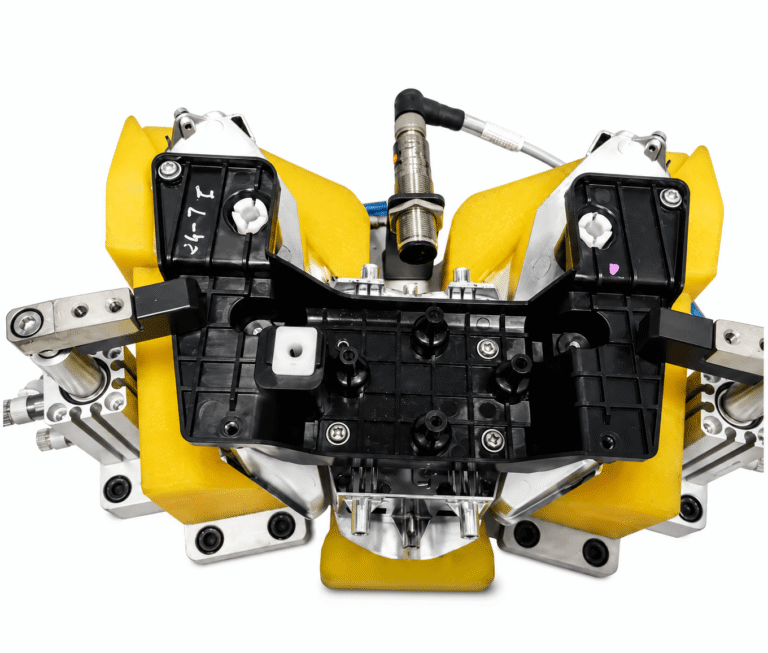
₹18,000.00
Component fixtures for screw driving stations, locating each screw position accurately under the driver.
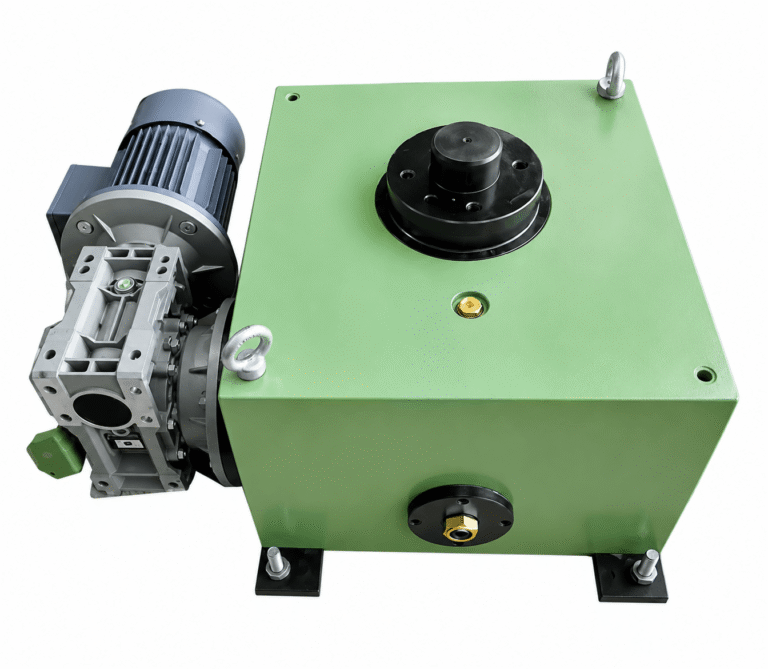
₹105,000.00
Precision cam indexing drive providing accurate, backlash-free rotary positioning for automated assembly and SPM applications.
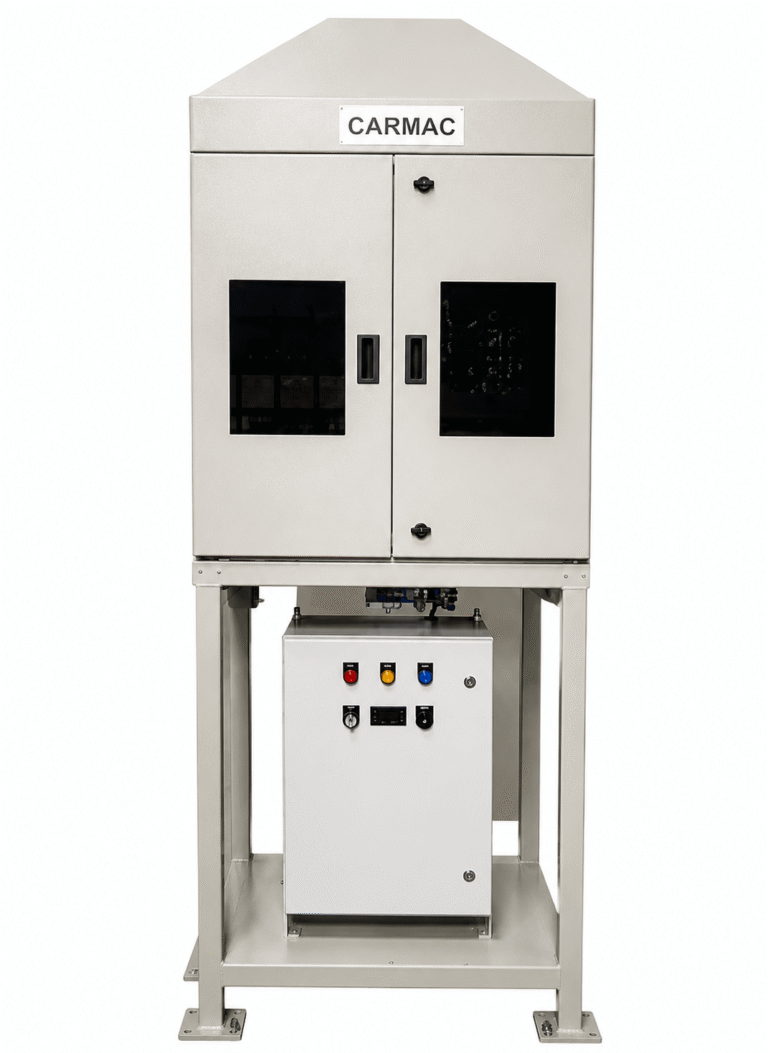
₹240,000.00
Rotary welding special purpose machine automating circumferential and multi-position welding to a fixed, repeatable program.
VR Automation auto screwing machines are currently listed from about ₹90,000, and screwing fixtures from about ₹18,000. Price depends on spindle count, feeder tooling, driver type and whether torque and angle data must be recorded — a transducer-equipped servo driving system costs materially more than a pneumatic clutch driver.
In blow feed, compressed air blows the screw down a tube directly to a holder at the driver bit — fast, and suited to screws with a length at least twice the head diameter. In pick-up feeding, the driver bit travels to a presenting jaw and collects the screw magnetically or by vacuum — slower, but it handles short screws, large heads and non-magnetic fasteners that will not fly down a tube.
With a transducer-equipped electric or servo driver, yes. The system monitors torque against angle through the whole run-down, so a cross-thread (torque rising too early), a stripped or missing thread (torque never reaching target), and a floating screw are each detectable and can be rejected and logged. A pneumatic clutch driver cannot distinguish these.
Yes. The bowl and its tooling are designed around your specific screw, so we need a sample or full drawing. A bowl tooled for one screw will not orient a different head style or length-to-diameter ratio reliably, which is why the screw specification is the first thing we ask for.
Yes. Screw driving stations are regularly added to existing rotary index or in-line assembly cells, sharing the machine PLC and safety circuit. We also build standalone screwing fixtures that a line can adopt without re-engineering the rest of the process.
VR Automation, Bhosari, Pune — riveting, clinching, press and special purpose machines. We quote against your part, not a catalogue.
These products are limited, checkout within
Riveting, clinching, press & SPM machines — built in-house at Bhosari, Pune. Supplied PAN India since 2019.
Tell us about your component and joint. We quote against your part, not a catalogue.