
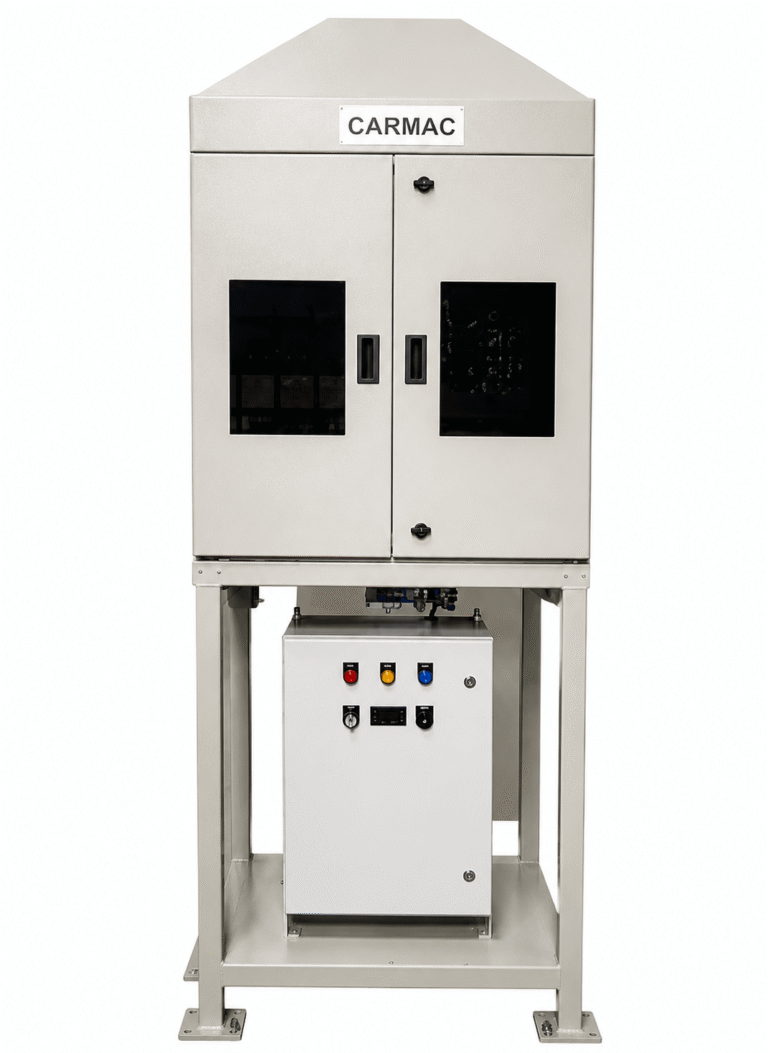
Rotary Welding SPM Machine
₹240,000.00
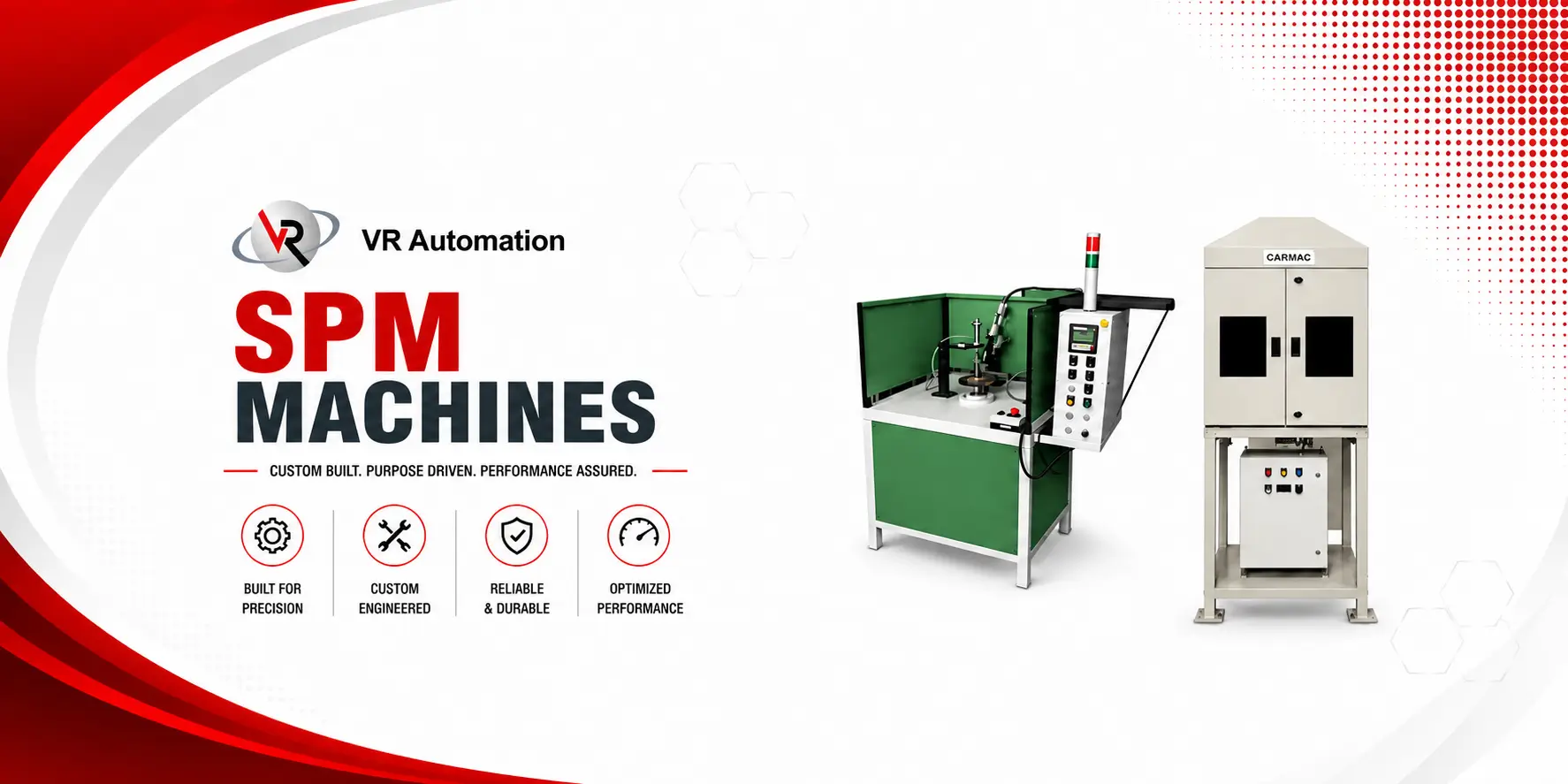
Rotary welding special purpose machine automating circumferential and multi-position welding to a fixed, repeatable program.
A special purpose machine (SPM) is built for one component and one sequence rather than bought from a catalogue. VR Automation designs and manufactures rotary welding SPMs, torch rotary SPMs, index and invert riveting SPMs and multi-station rotary indexing systems at Bhosari, Pune, for automotive and sheet metal component makers across India.
A special purpose machine earns its cost in one of three situations. The cycle time a standard machine gives cannot meet takt, and the only way forward is to run several operations in parallel on an indexing table. The sequence involves operations no single catalogue machine performs — load, orient, rivet, weld, test, unload. Or the quality requirement demands that every part be positively located, processed and verified with the data recorded, which a hand-loaded bench machine cannot guarantee.
Where none of those apply, a standard machine plus a good fixture is nearly always the cheaper and more maintainable choice, and we will say so.
The rotary index table is the workhorse of assembly automation. Stations are arranged around a circular table; the table indexes, and every station performs its operation simultaneously during dwell. Cycle time becomes the time of the slowest station plus index time, not the sum of all operations — which is where the throughput gain comes from.
Indexing motion comes from a cam indexing drive, a globoidal or roller-gear unit that converts continuous input rotation into precise, shock-free intermittent output with a defined dwell. It is mechanically repeatable to a degree servo indexing struggles to match at high cycle rates, and it needs no position feedback loop.
| Stations | Index angle | Typical layout |
|---|---|---|
| 4 | 90° | Load → operate → operate → unload |
| 6 | 60° | Load → two operations → inspect → reject → unload |
| 8 | 45° | Multi-operation assembly with in-process gauging |
| 12 | 30° | High-station-count assembly; short dwell, high output |
₹240,000.00
Rotary welding special purpose machine automating circumferential and multi-position welding to a fixed, repeatable program.
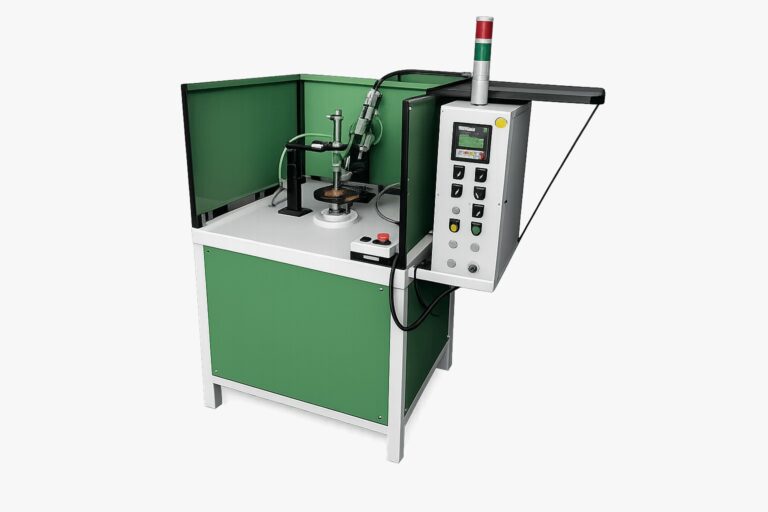
₹30,000.00
Rotary special purpose welding machine that carries components through indexed torch stations for repeatable, operator-independent welds.
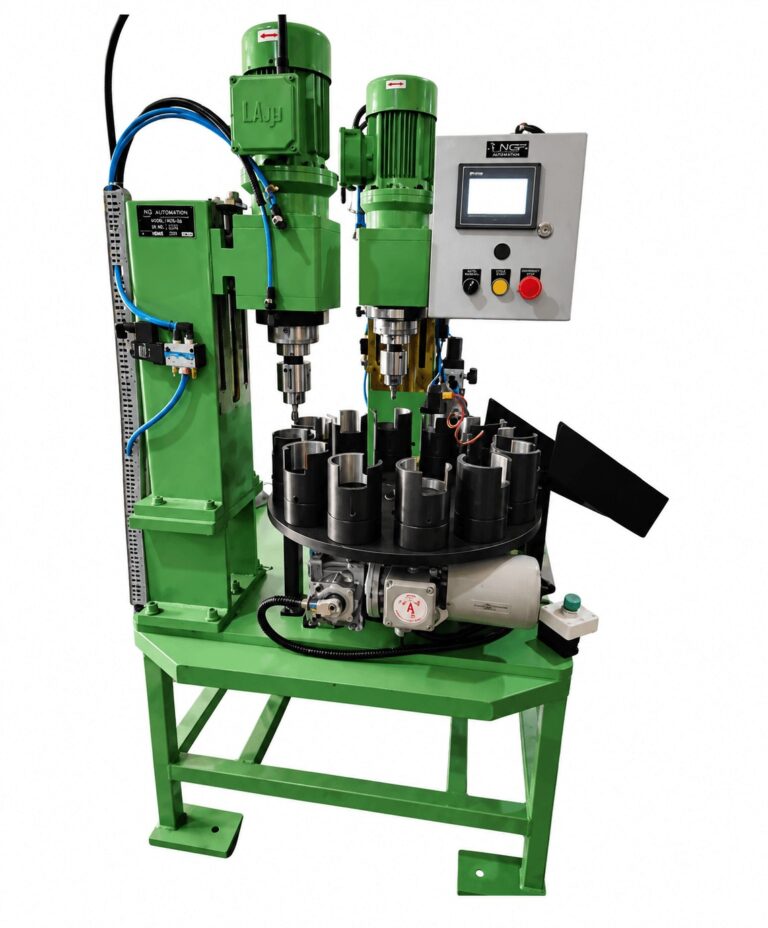
₹44,000.00
Rotary indexing riveting special purpose machine that carries the component through several stations in one automated cycle.
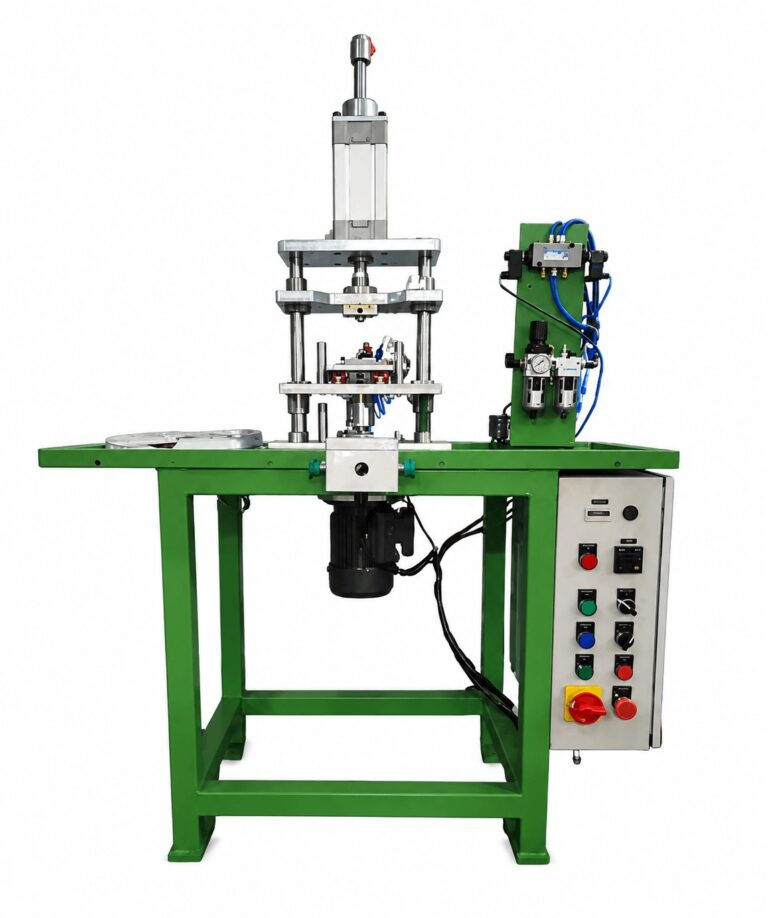
₹45,000.00
Inverted riveting special purpose machine, setting rivets from below where the assembly cannot be approached from above.
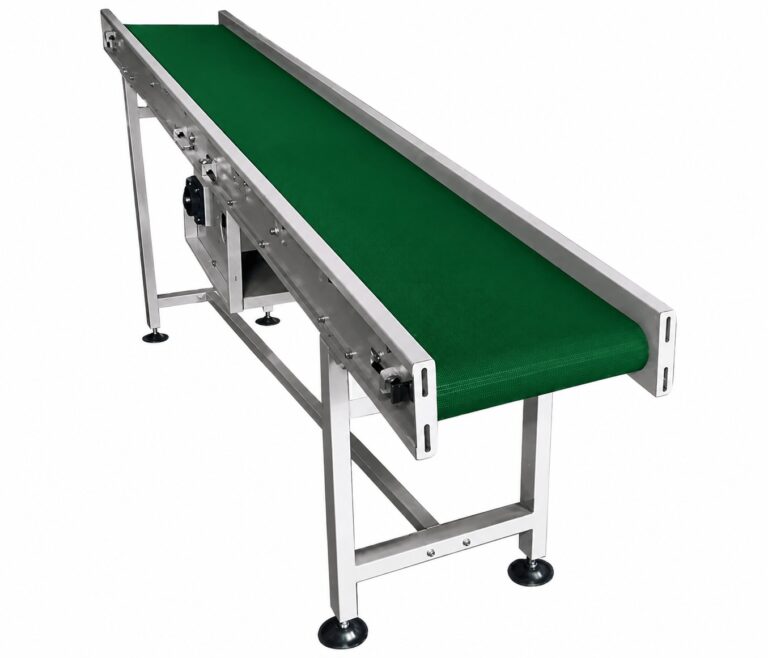
₹90,000.00
Custom-built conveyor systems linking assembly, riveting, clinching and inspection stations into a continuous production line.
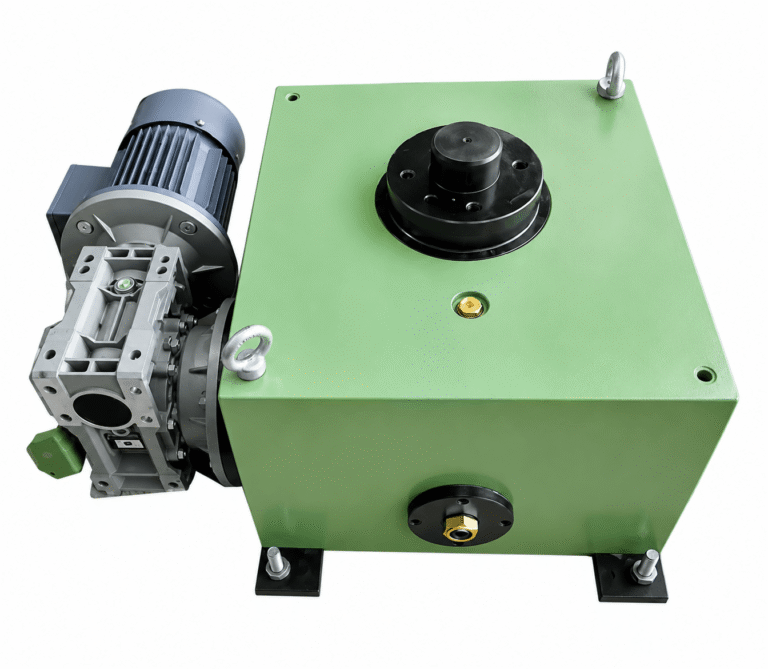
₹105,000.00
Precision cam indexing drive providing accurate, backlash-free rotary positioning for automated assembly and SPM applications.
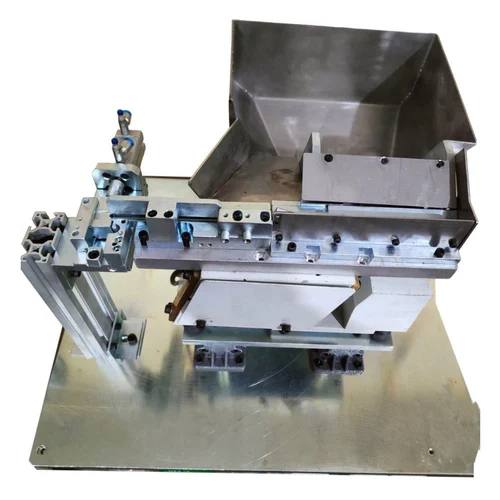
₹90,000.00
Automatic screw feeding and driving machine with controlled torque, removing missed and under-torqued screws from assembly.
SPM stands for Special Purpose Machine — a machine designed and built for one specific component and process sequence, rather than a general-purpose machine bought from a catalogue. SPMs are used where cycle time, operation sequence or quality verification cannot be met by standard equipment.
A straightforward single-station SPM typically runs eight to twelve weeks from approved concept to run-off. A multi-station rotary indexing machine with integrated testing usually runs longer, driven mainly by bought-out drive and control lead times. We commit to a dated schedule at order stage.
A rotary welding SPM makes circumferential welds by rotating the component under a fixed torch (or rotating the torch around a fixed component) at a controlled speed. It is used for pipe joints, cylindrical housings, flanges and any circular seam where consistent penetration and concentricity matter more than a welder could hold by hand.
Yes. We regularly design cells around equipment a customer already owns — presses, riveting heads, welding sets — adding the indexing, fixturing, feeding, sequencing and safety to turn standalone machines into a line.
Yes. Machines are supplied with PLC-based sequencing and HMI where the application warrants it, and with guarding, interlocks, light curtains and two-hand controls specified against the machine risk assessment.
VR Automation, Bhosari, Pune — riveting, clinching, press and special purpose machines. We quote against your part, not a catalogue.
These products are limited, checkout within
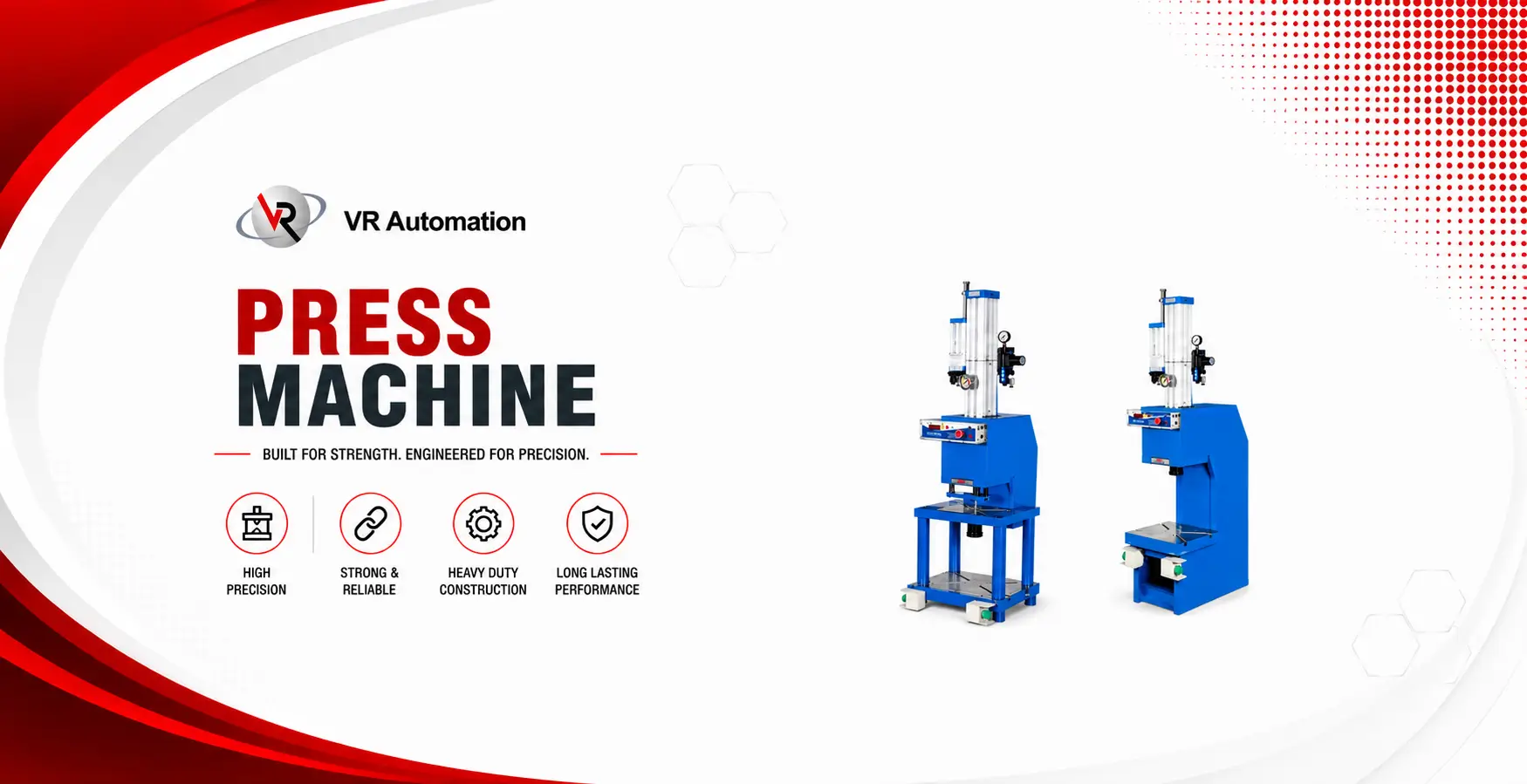
Riveting, clinching, press & SPM machines — built in-house at Bhosari, Pune. Supplied PAN India since 2019.
Tell us about your component and joint. We quote against your part, not a catalogue.