
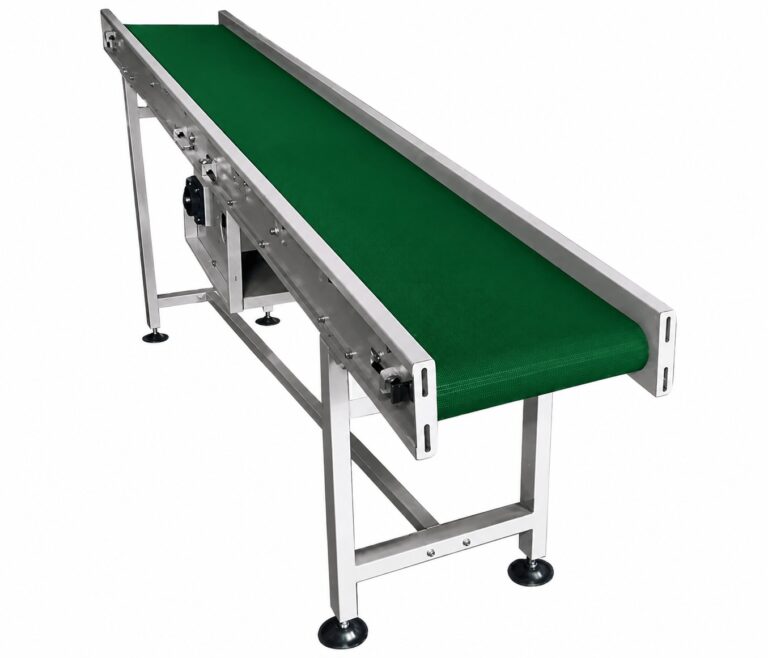
conveyer system
₹90,000.00
Custom-built conveyor systems linking assembly, riveting, clinching and inspection stations into a continuous production line.
A conveyor system moves components between operations at a controlled rate, setting the rhythm of an assembly line rather than merely transporting parts. VR Automation designs and manufactures belt, roller, slat chain, pallet and indexing conveyor systems at Bhosari, Pune, for automotive and general engineering assembly lines.
The component decides the conveyor, not the other way round. A flat-bottomed carton and an oily machined casting need different surfaces; a part that must be worked on in transit needs a different system again from one that is merely being moved.
| Type | Carries | Chosen when |
|---|---|---|
| Flat belt conveyor | Small, light or irregular parts | The part has no flat rigid base, or must not be marked |
| Modular belt conveyor | Wet, oily or hot parts | The belt must be washed down, or run round curves and inclines |
| Gravity roller conveyor | Cartons, totes, rigid-based parts | There is fall available and no drive is needed |
| Powered / motorised roller conveyor | Totes, pallets, heavier loads | Accumulation without back pressure is required |
| Slat chain conveyor | Heavy or hot components | A belt would not survive the load, temperature or swarf |
| Pallet conveyor | Parts on fixtured pallets | The part must be located precisely at each workstation |
| Overhead chain conveyor | Hanging parts | Paint, plating and finishing lines; floor space is at a premium |
| Indexing / line transfer conveyor | Parts at fixed pitch | Operations must happen at defined stations, in step with takt |
A continuous conveyor moves parts past operators; an indexing conveyor advances a fixed pitch and stops, so every station has an identical dwell in which to work. That distinction matters when operations are automated, because a machine station needs the part stationary and precisely located, which a continuously moving belt cannot give.
For rotary rather than linear station layouts, the equivalent is a cam indexing drive turning a dial plate — generally the better choice when the station count is small and the cycle rate high. Linear indexing conveyors take over when parts are large, station count is high, or the line must be extended later.
Complete assembly line conveyors, inter-machine transfer conveyors, indexing and line transfer systems, conveyors integrated into special purpose machines, and the guarding, sensing and PLC control that make a conveyor part of a line rather than a standalone belt. Frames are built in mild steel or stainless as the environment requires.
₹90,000.00
Custom-built conveyor systems linking assembly, riveting, clinching and inspection stations into a continuous production line.
₹50,000.00
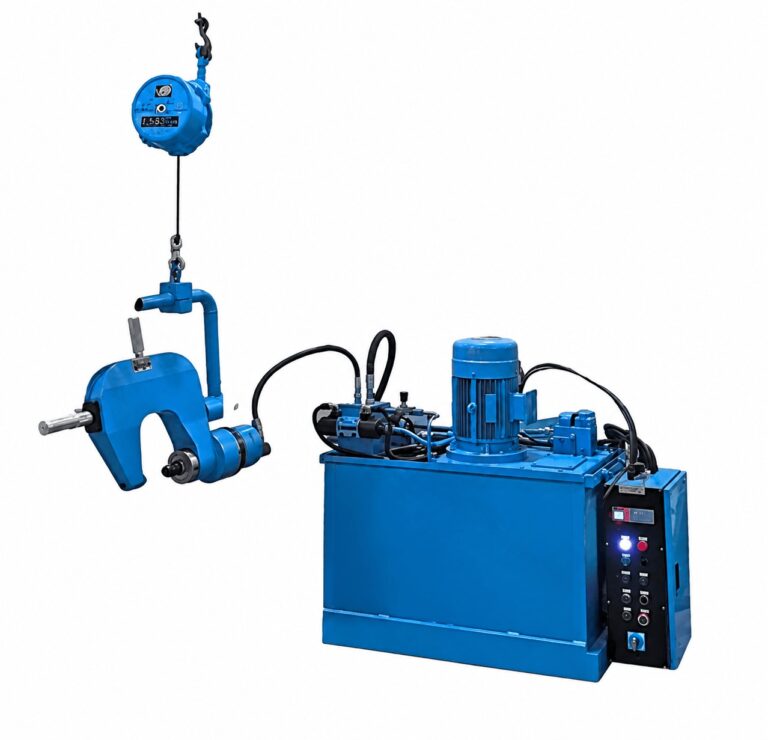
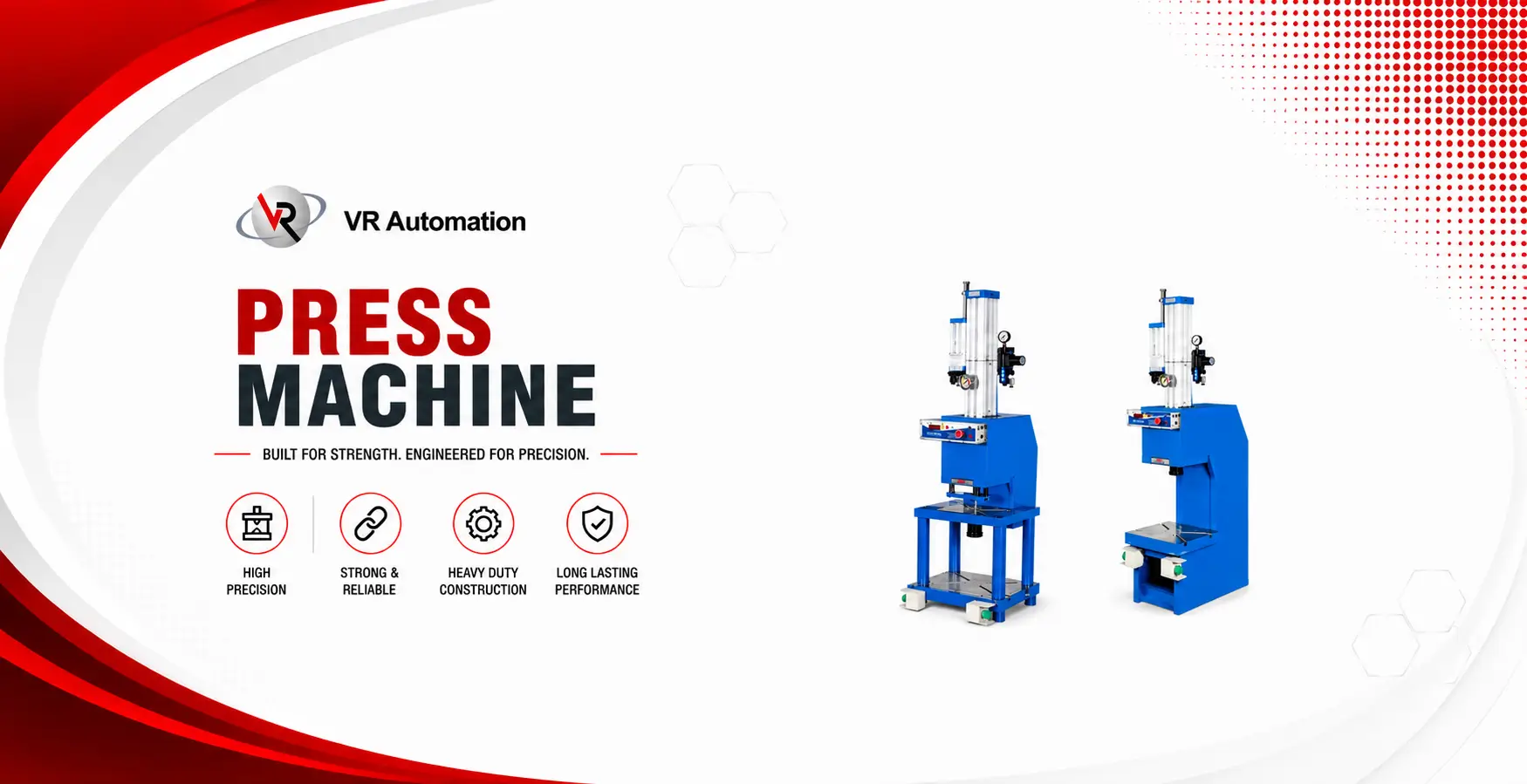
Portal and C-frame press structures built for stiffness under load, so tooling alignment holds across the full stroke.
₹105,000.00
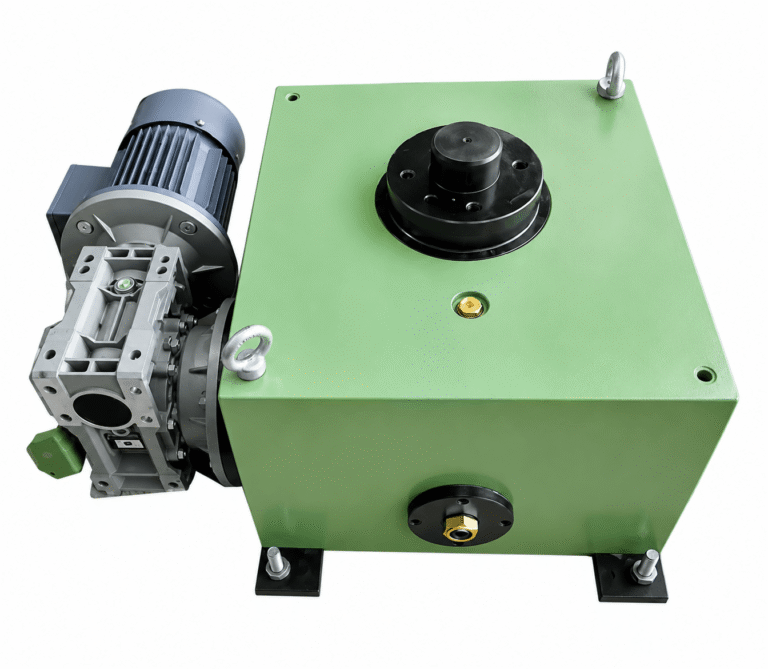
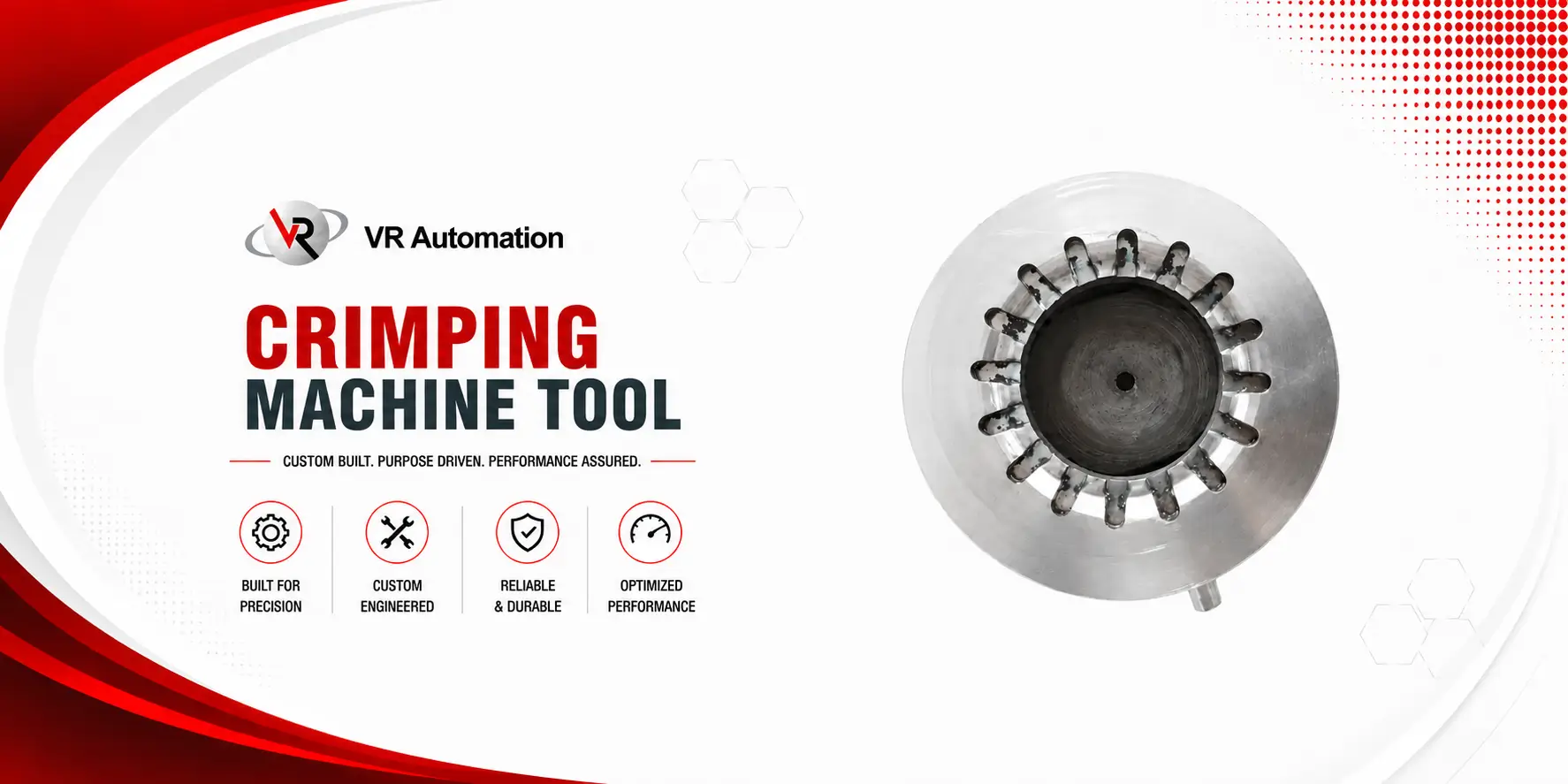
Precision cam indexing drive providing accurate, backlash-free rotary positioning for automated assembly and SPM applications.
₹240,000.00
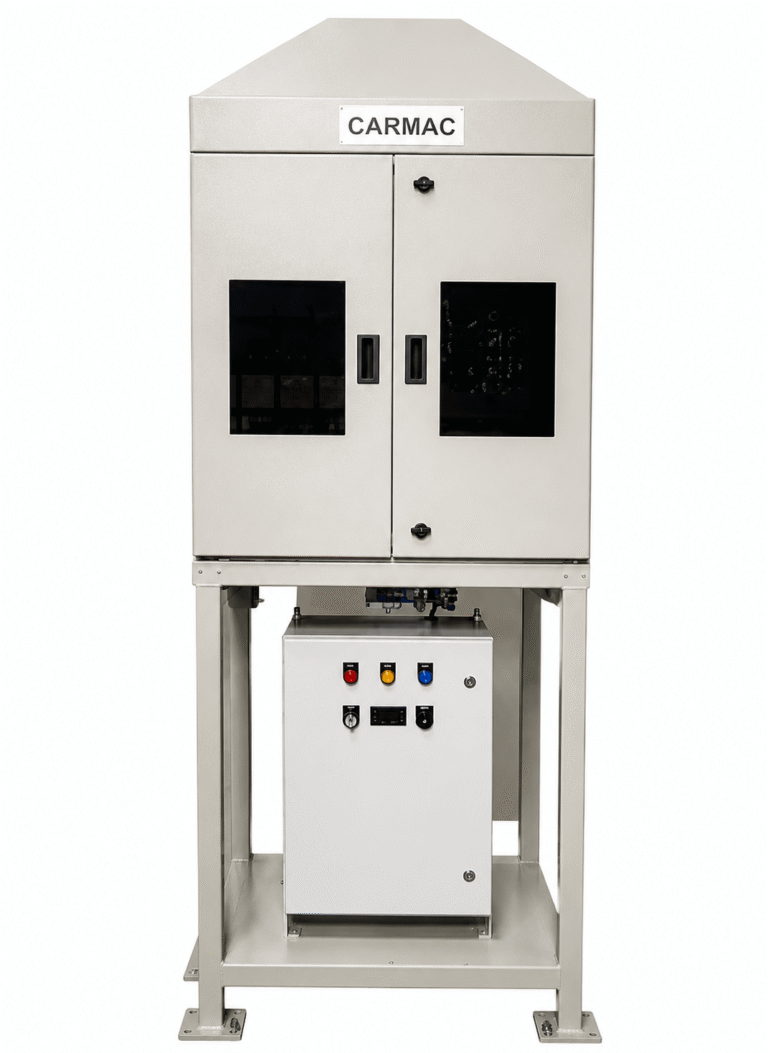
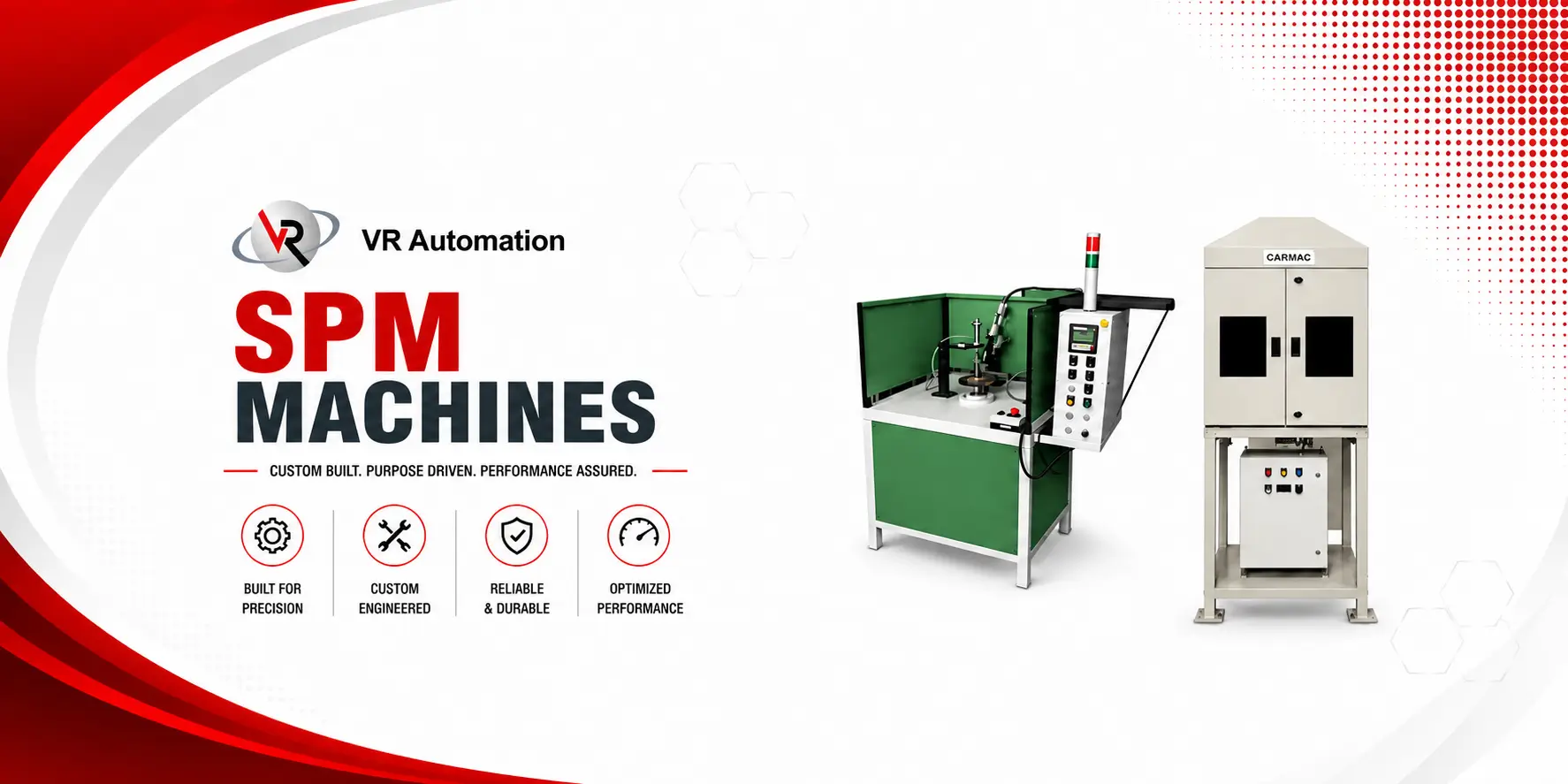
Rotary welding special purpose machine automating circumferential and multi-position welding to a fixed, repeatable program.
VR Automation conveyor systems are currently listed from about ₹90,000 for a standard unit, but conveyors are quoted by the metre and by configuration — length, width, drive, frame material, elevation change and controls all move the figure. Send your layout and part details for a firm quotation.
A belt conveyor carries the part on a continuous surface, so it suits small, light, irregular or unstable parts and can run inclines. A roller conveyor supports the part on rollers, which requires a rigid flat base of sufficient length to span at least three rollers, but allows accumulation and handles heavier loads with less drive power.
An indexing conveyor advances a fixed pitch then stops, giving every workstation an identical dwell period with the part stationary and located. It is used where operations are automated or where takt time must be enforced, as opposed to a continuous conveyor that simply moves parts past operators.
Yes. Most of our conveyor work is line integration — feeding and unloading presses, riveting machines, welding cells and test stations, with the sensing, interlocks and PLC handshaking needed for the machines to run as a line rather than as islands.
Yes, where the environment requires it — wash-down areas, coolant exposure, or corrosive process conditions. Frame material, belt type and bearing selection are all specified against the operating environment.
VR Automation, Bhosari, Pune — riveting, clinching, press and special purpose machines. We quote against your part, not a catalogue.
These products are limited, checkout within
Riveting, clinching, press & SPM machines — built in-house at Bhosari, Pune. Supplied PAN India since 2019.
Tell us about your component and joint. We quote against your part, not a catalogue.