Riveting Machine
Manufacturer · Bhosari, Pune
Riveting Machine Manufacturer in India
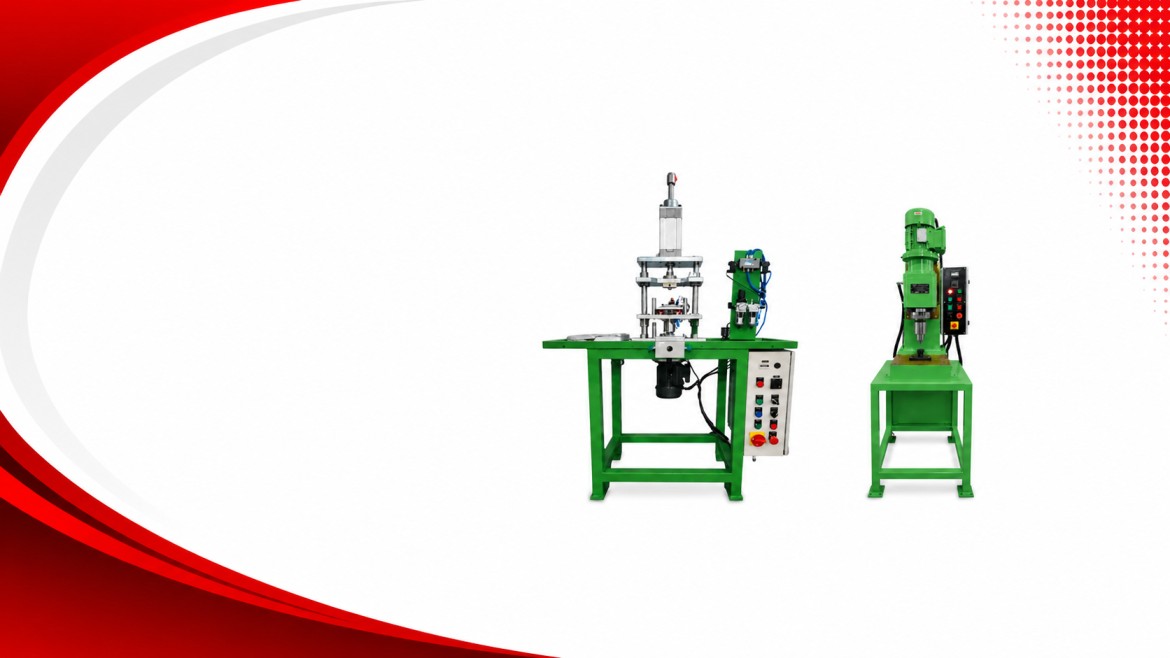
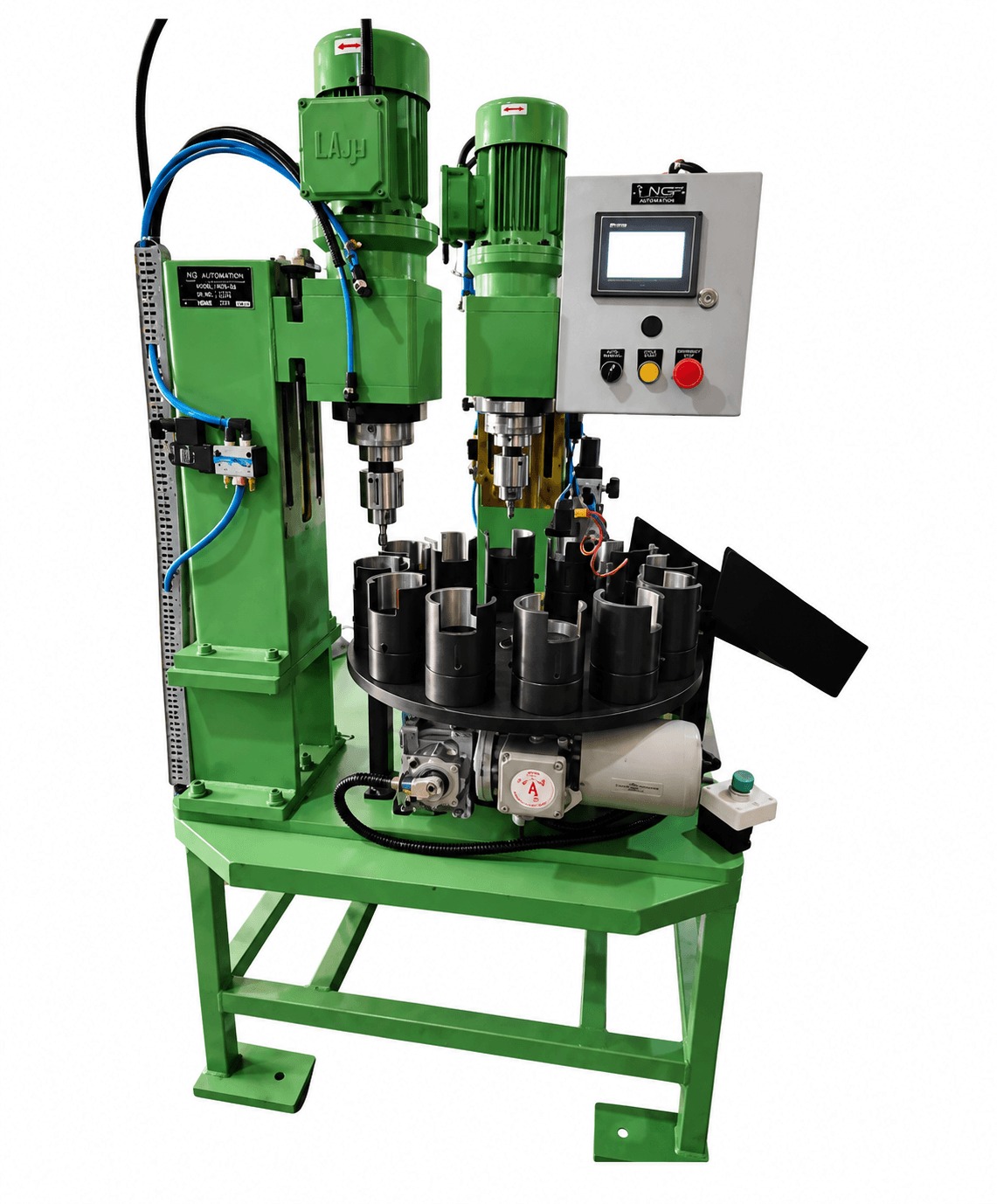
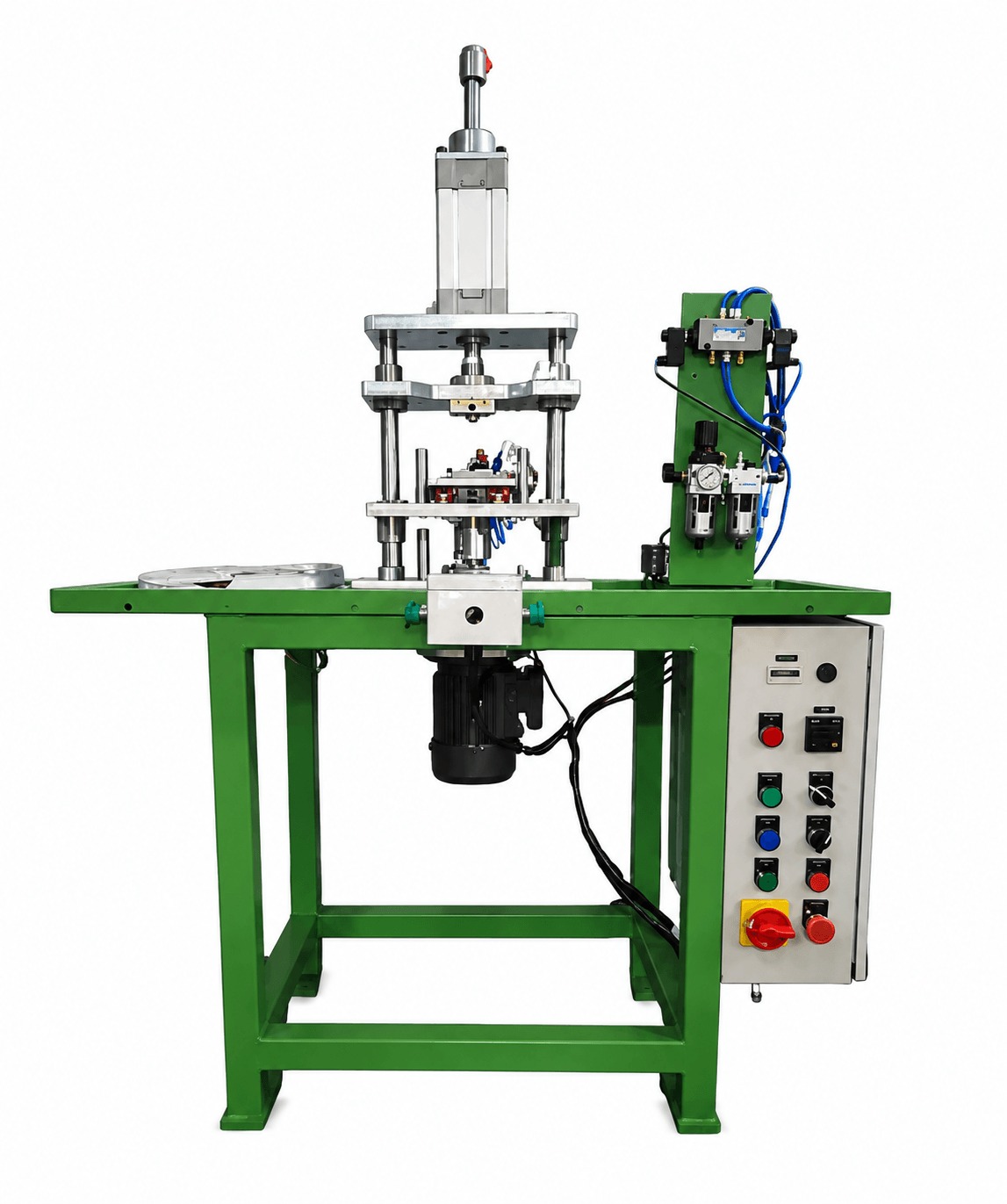
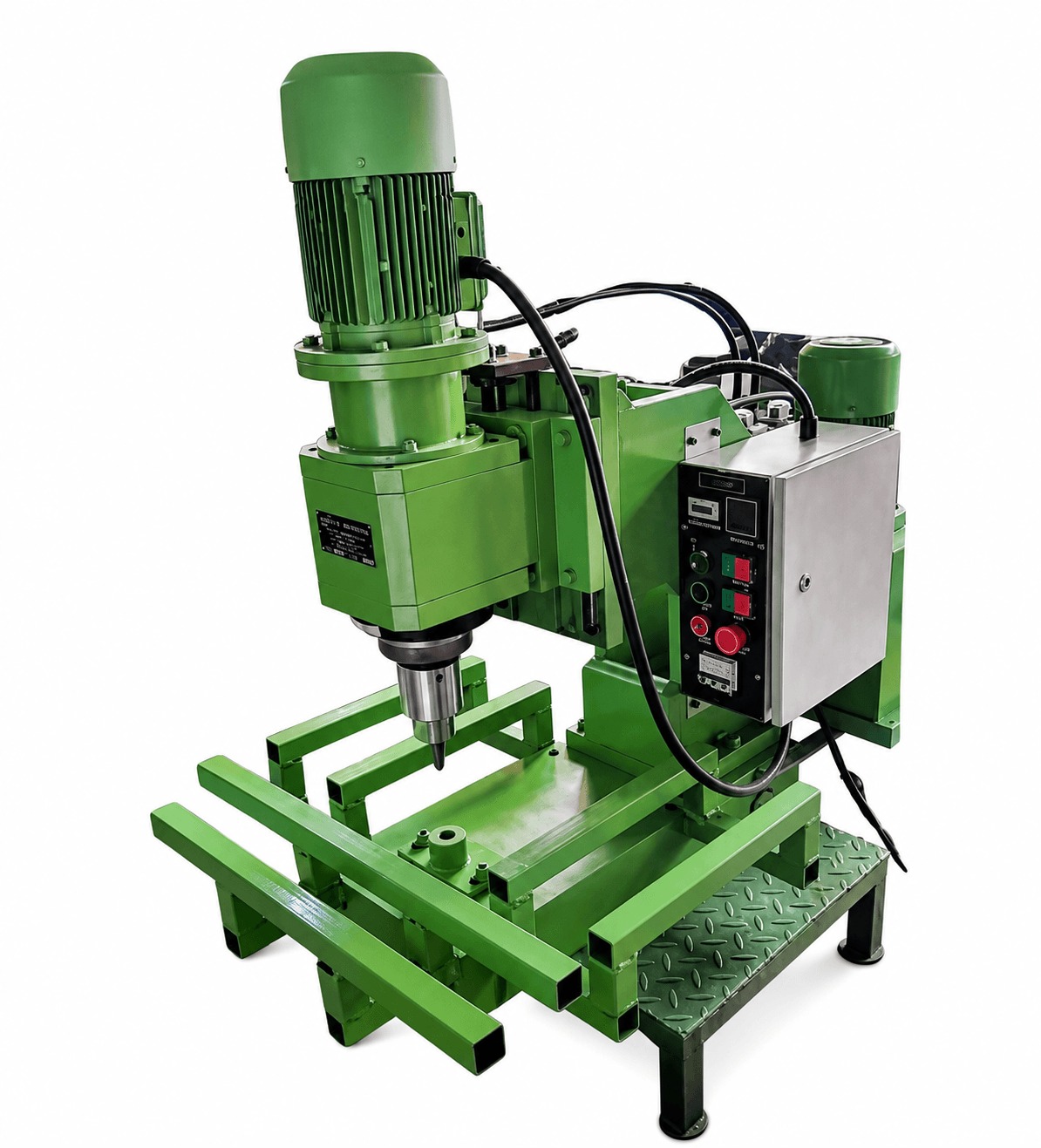
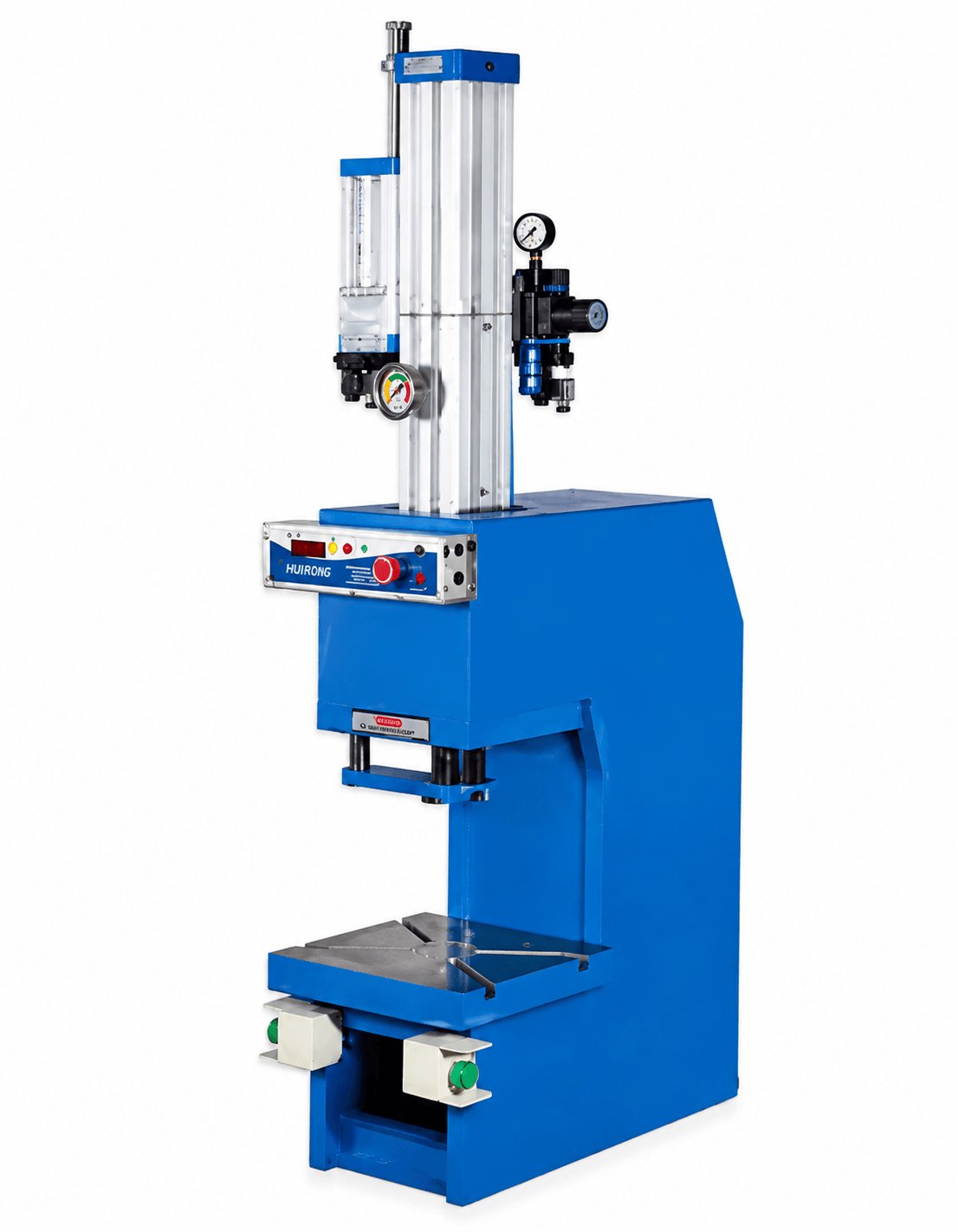
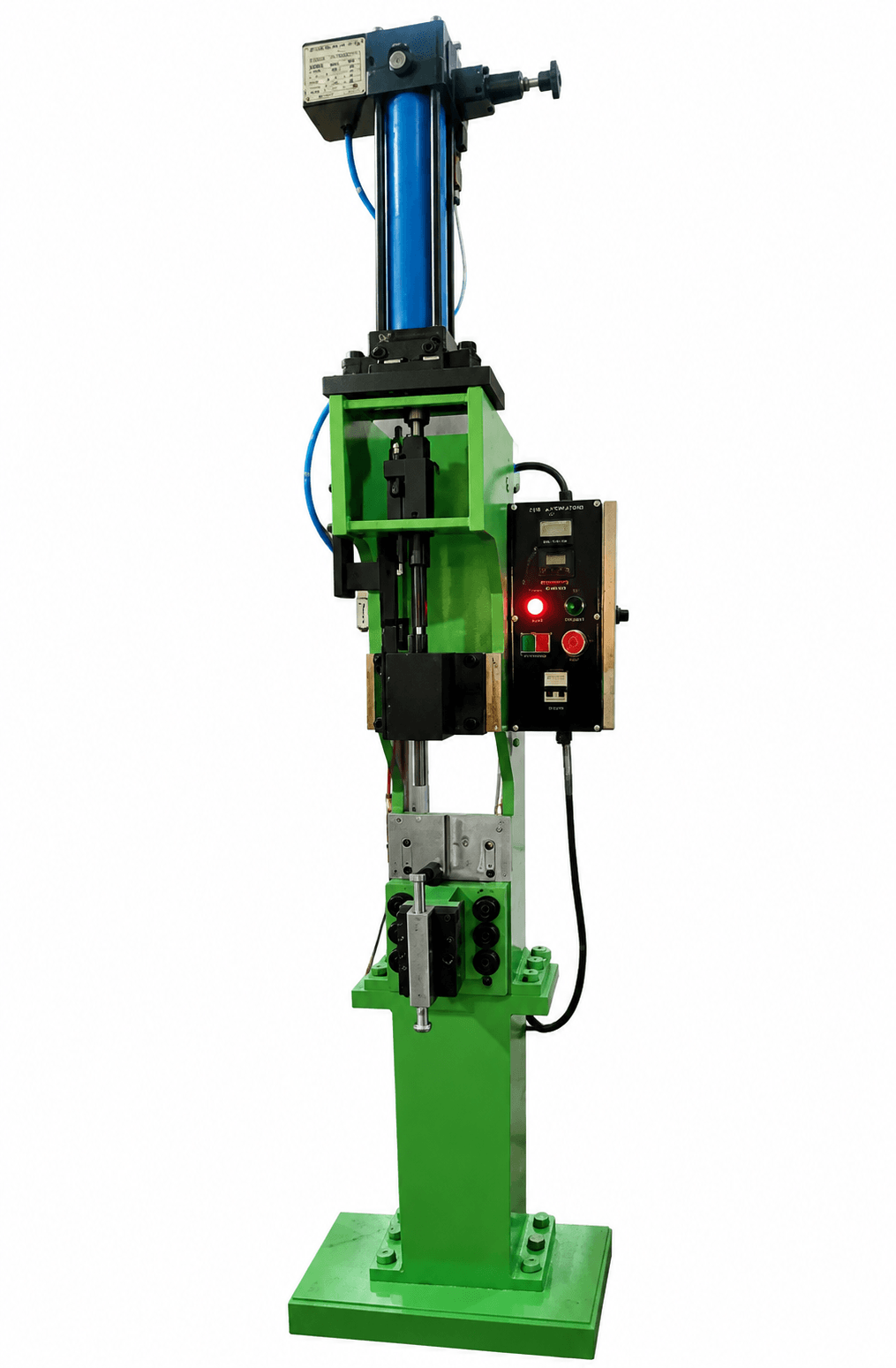
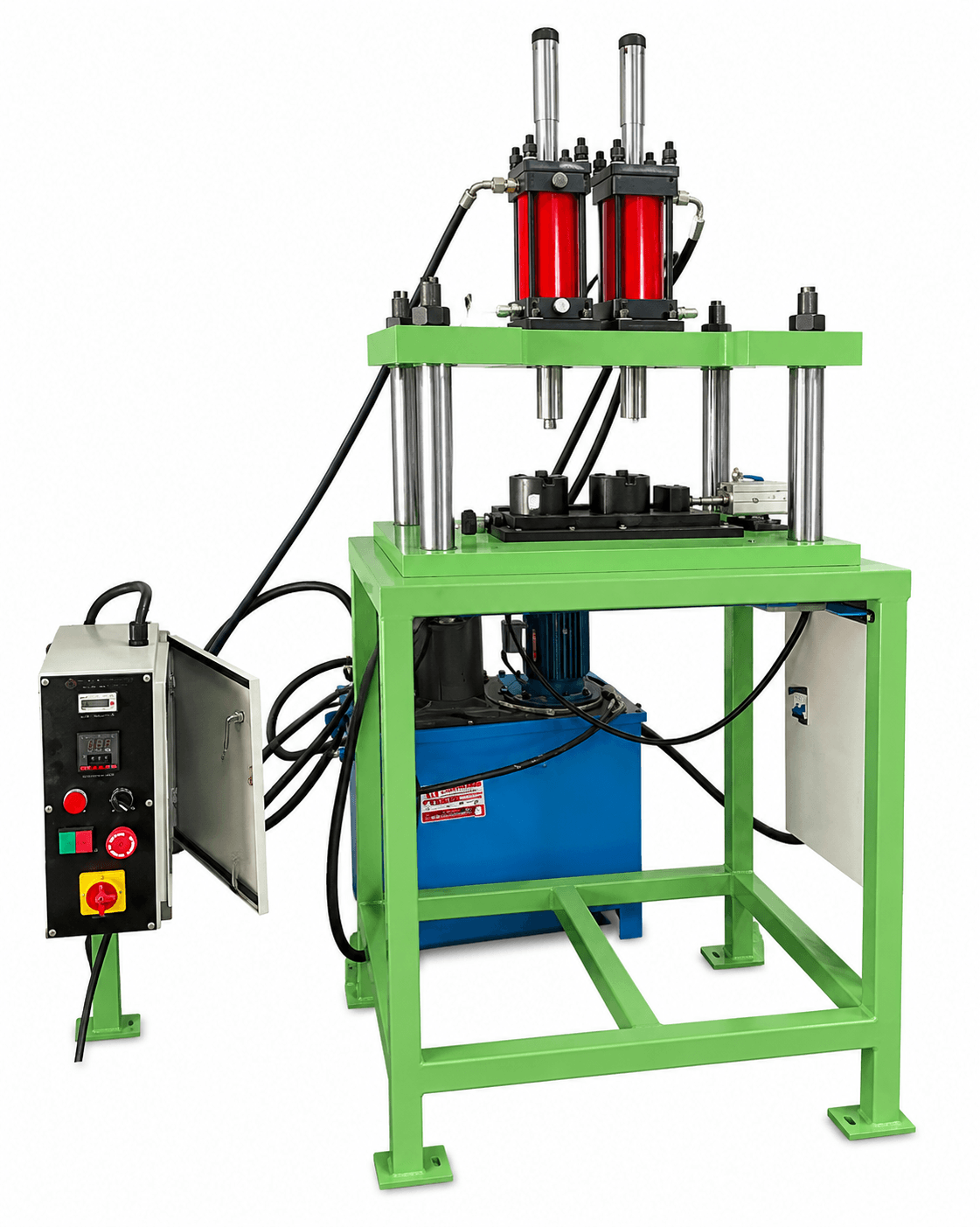
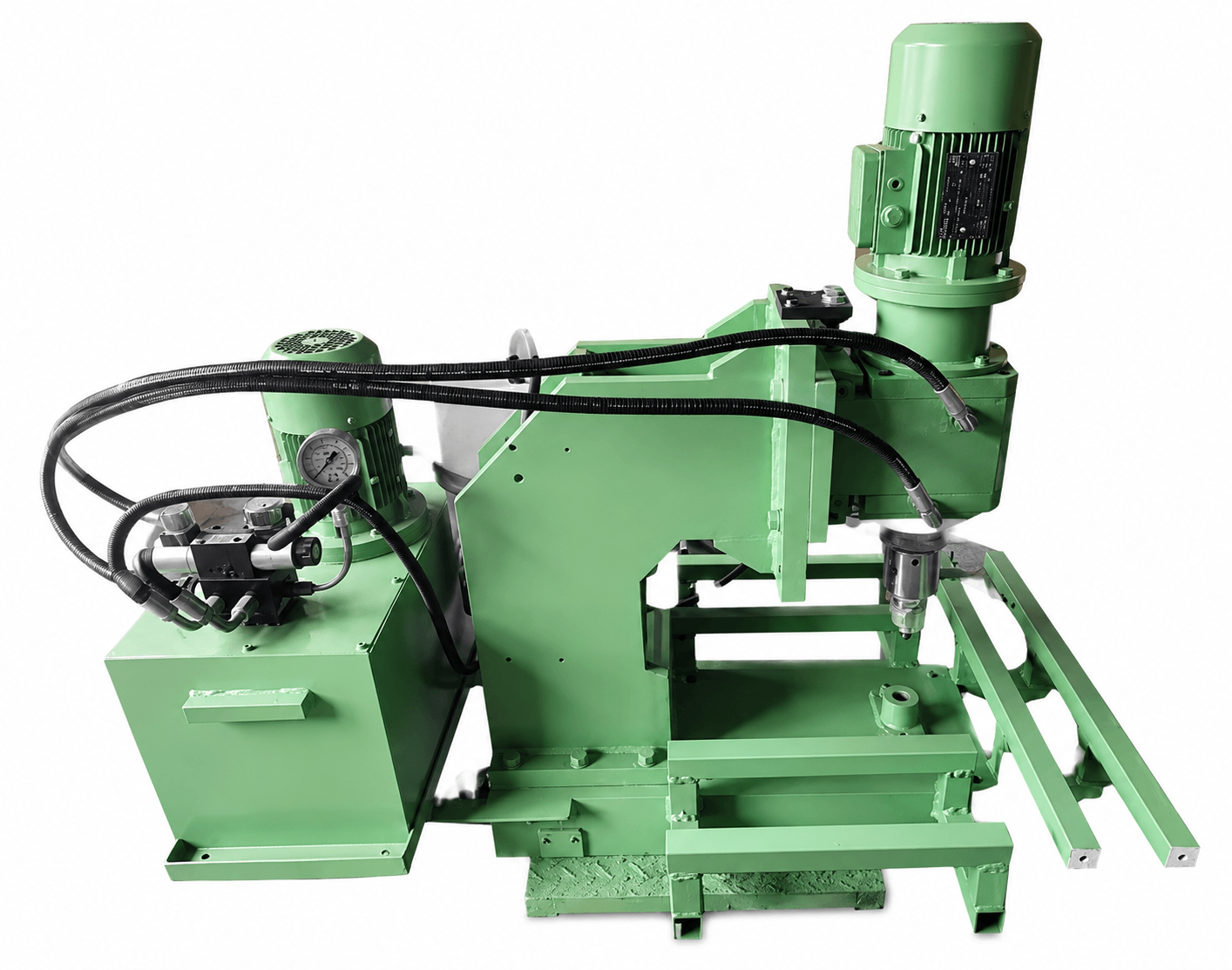
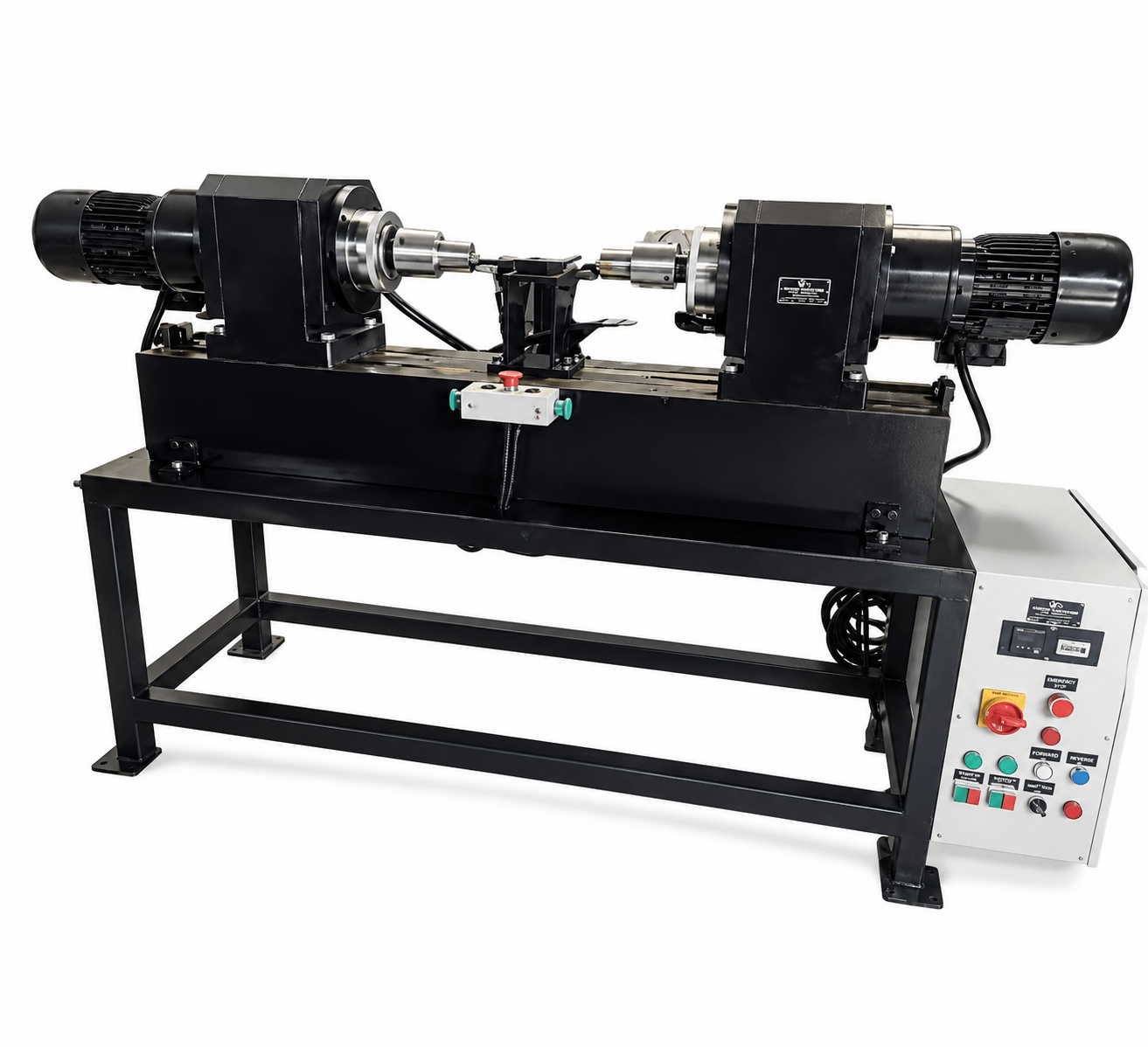
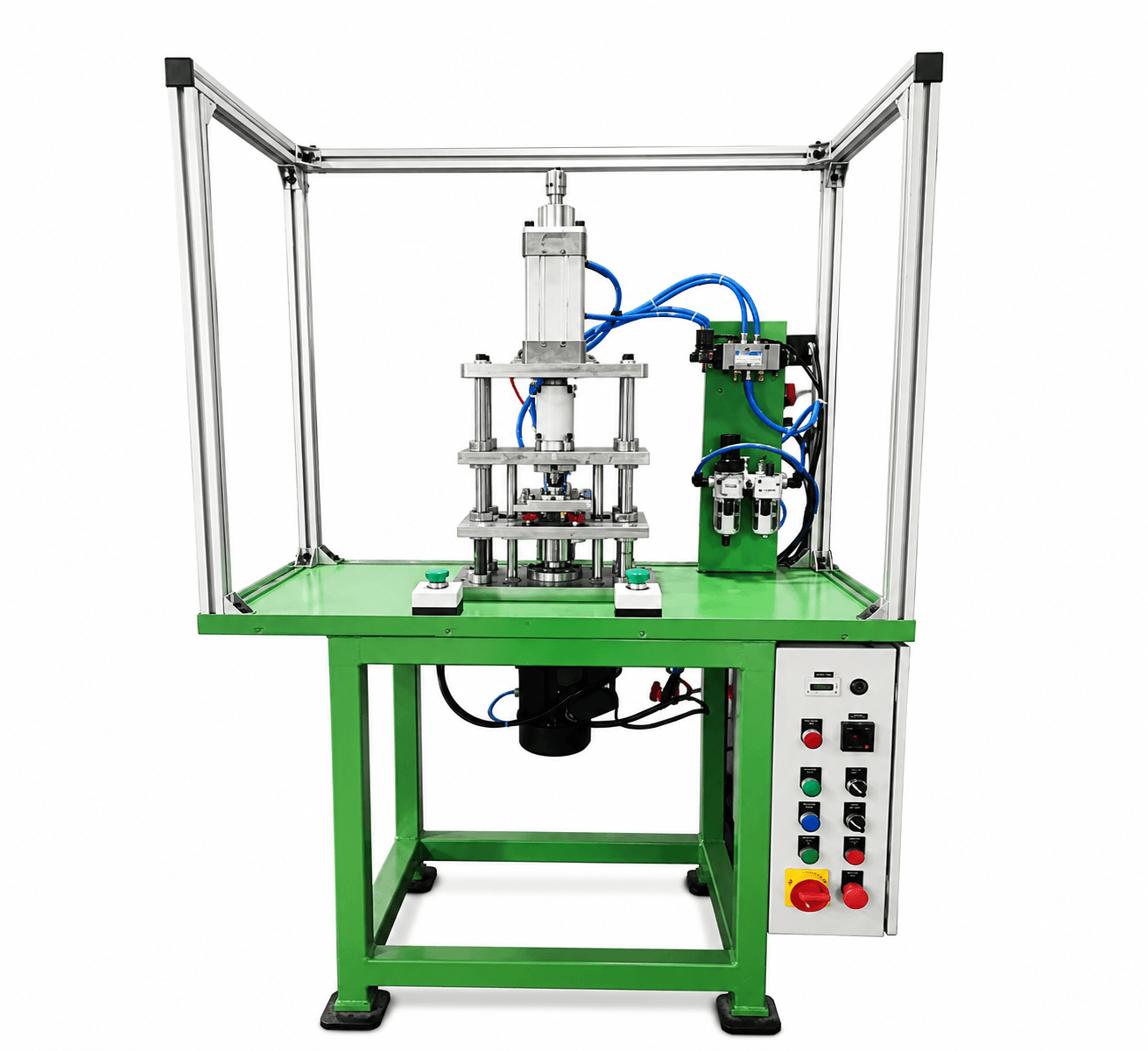
VR Automation manufactures the full range of industrial riveting machines — orbital, radial, spin, pneumatic, hydraulic, hydro-pneumatic and auto-feed — along with custom riveting SPMs built around a single component.
A riveting machine sets rivets with the same force on every stroke. That is the whole point of moving off hammer and manual riveting: the joint stops varying with operator strength, and a missed or under-set rivet stops being a routine defect.
20 ModelsAvailable in this range
₹44,000–₹3,70,000Indicative ex-works
Made in PuneBuilt in-house since 2019
PAN IndiaSupply & service
Machine Features & Types
Orbital & Radial Riveting
The peening tool sweeps in an orbit, displacing material progressively. Forming force drops sharply, so brittle, thin and plastic parts survive the operation.
Spin Riveting
A rotating tool under steady axial pressure gives a burnished head and fine control of joint tightness — the standard choice for swivel and pivot joints.
Pneumatic Riveting
Runs on shop compressed air with consistent force per stroke. Foot operation frees both hands to locate the component.
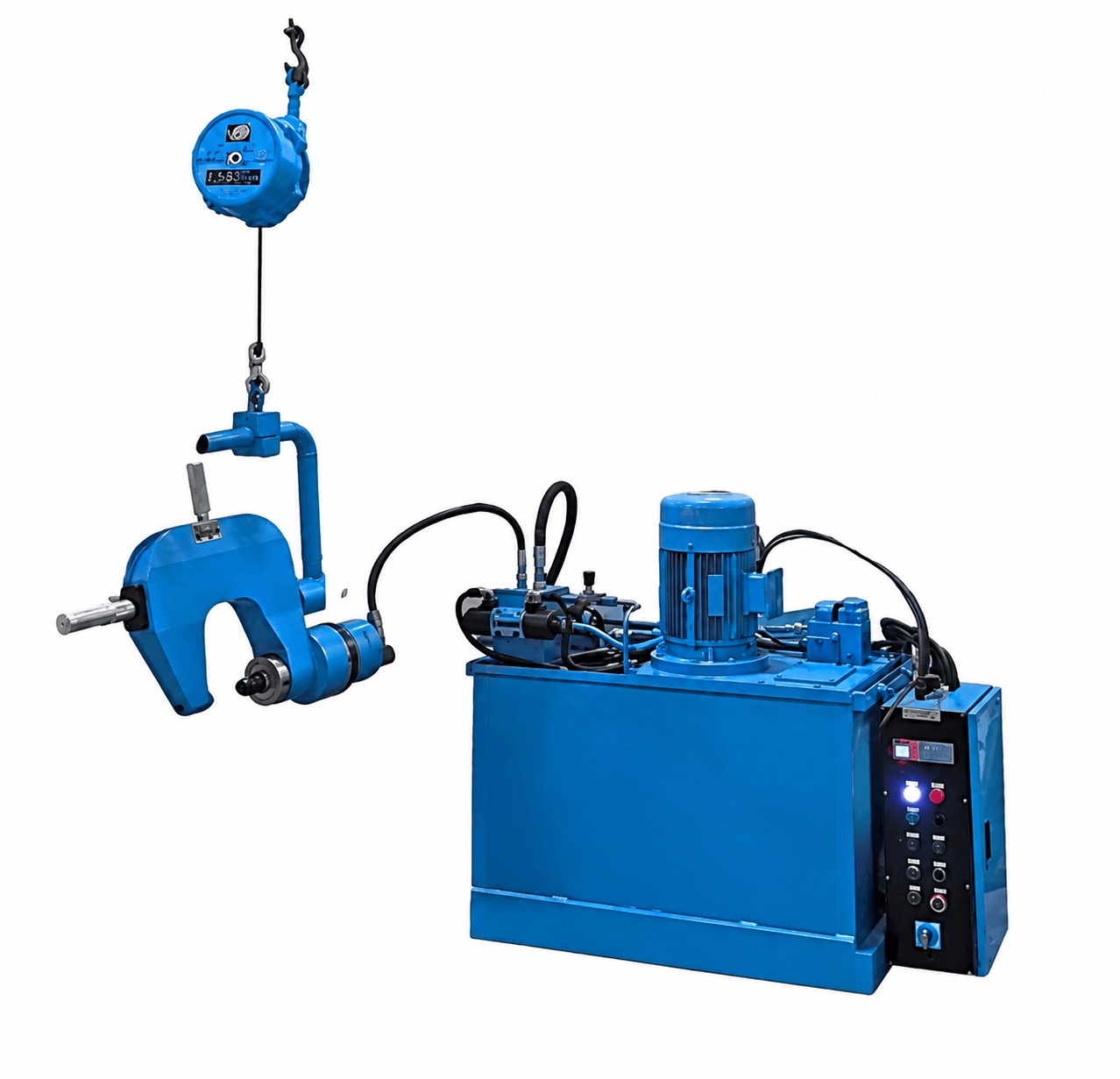
Hydraulic & Hydro-Pneumatic
For larger rivet diameters and thicker stack-ups, where air alone cannot supply the force. Steady stroke, not impact.
Auto-Feed Riveting
Rivets are presented automatically from a bowl feeder. The operator never handles a loose rivet, removing the slowest step and the commonest defect.
Riveting SPMs
Index, invert, dual-head and non-standard machines built when no catalogue machine can reach or cycle fast enough for the part.
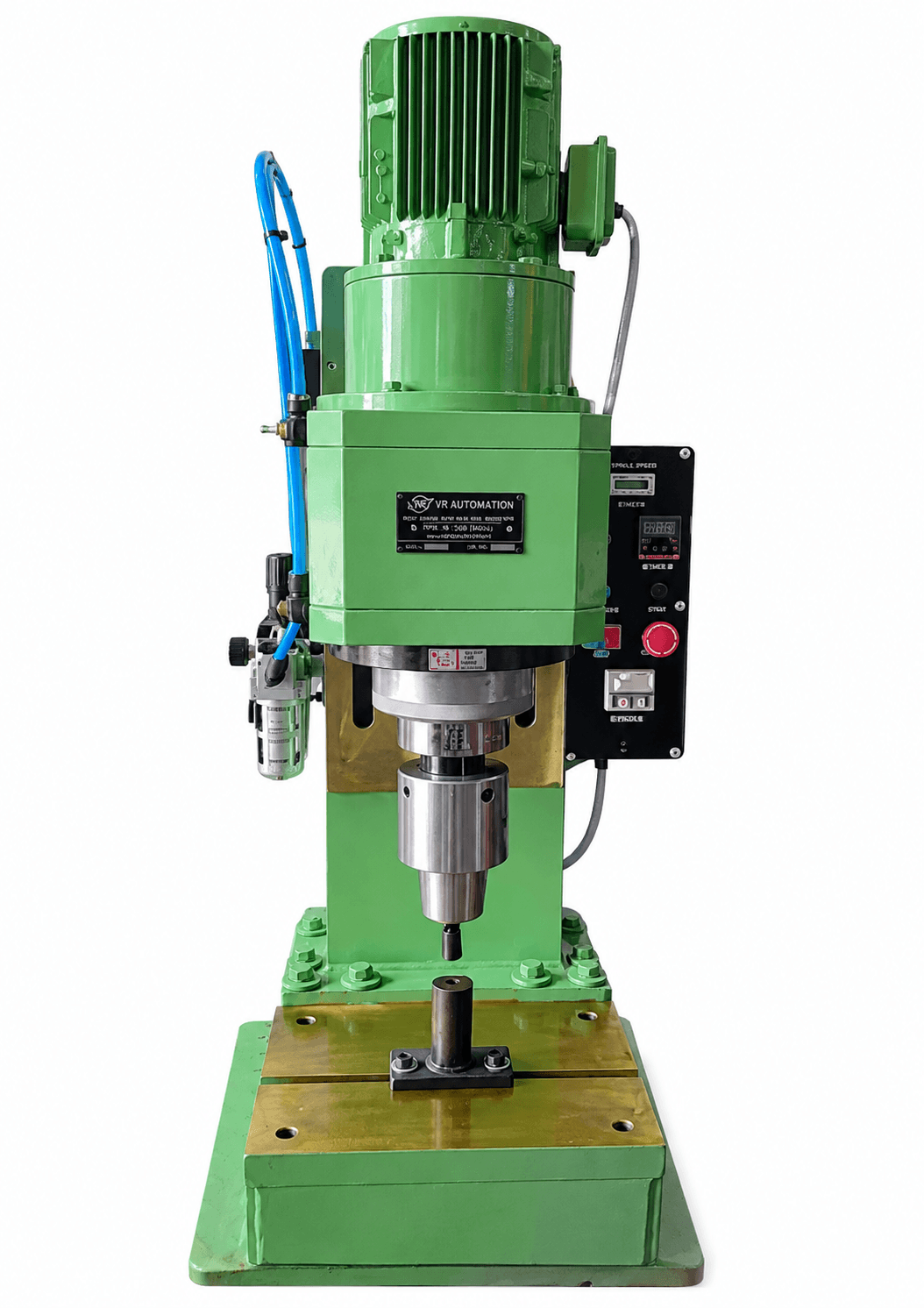
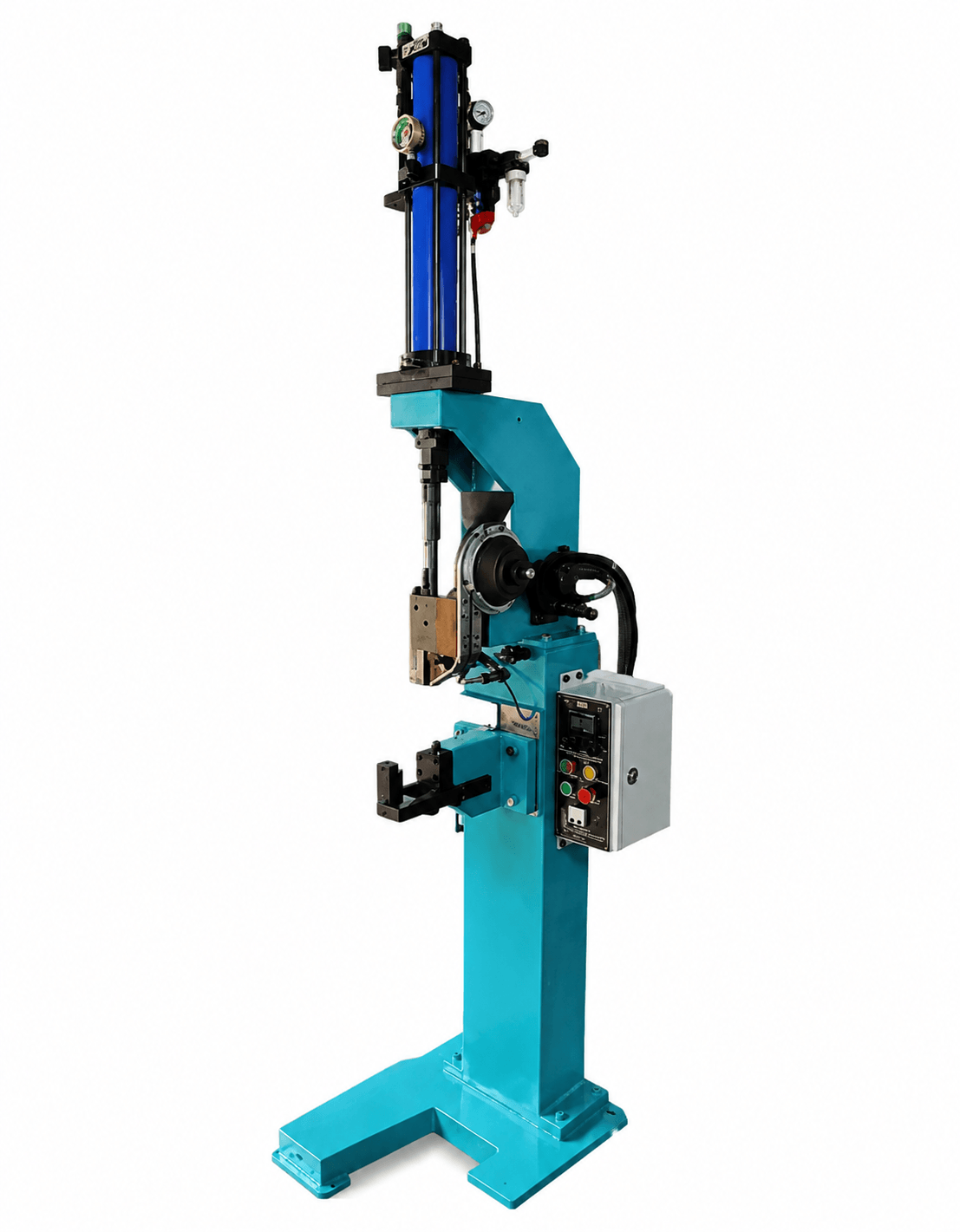
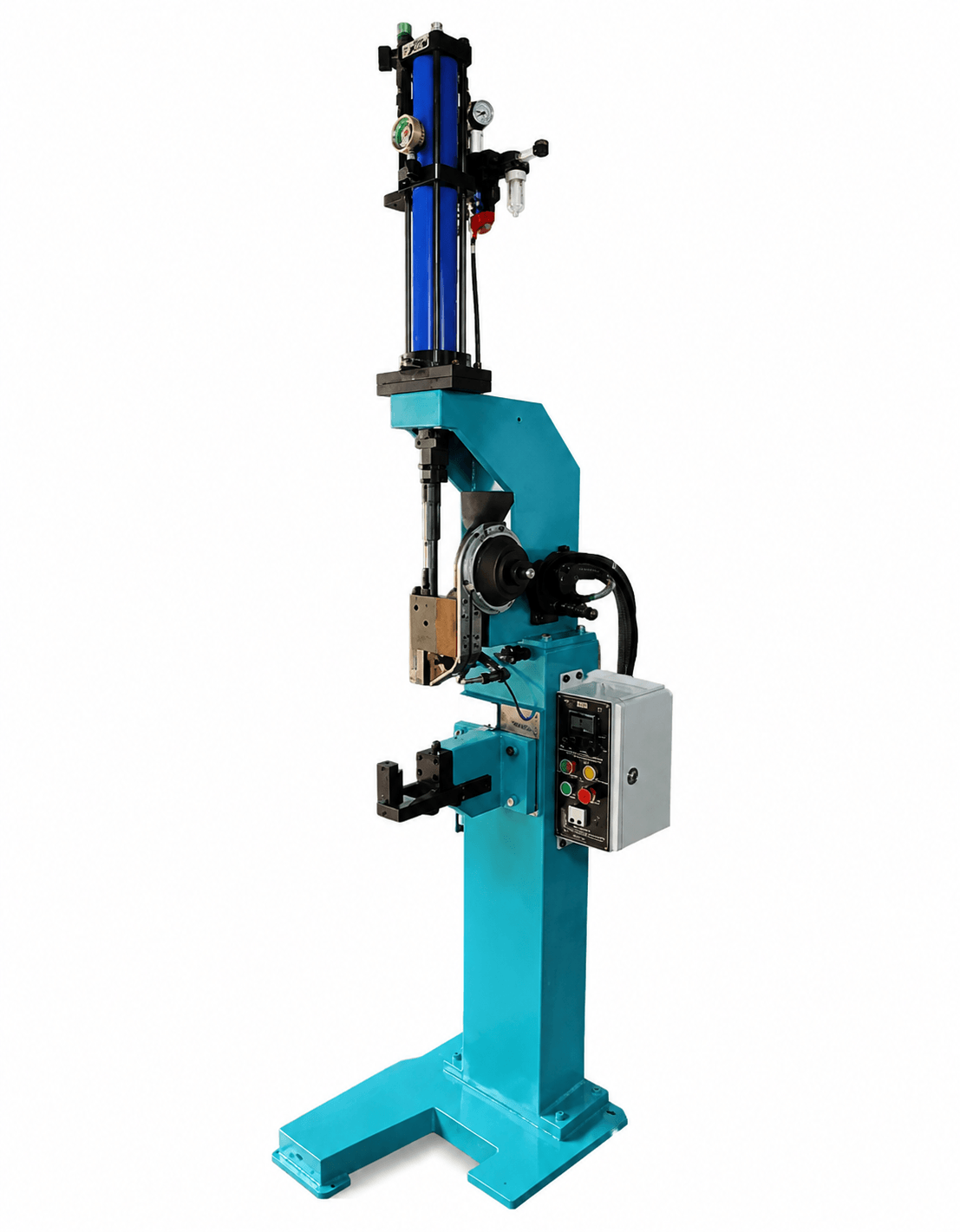
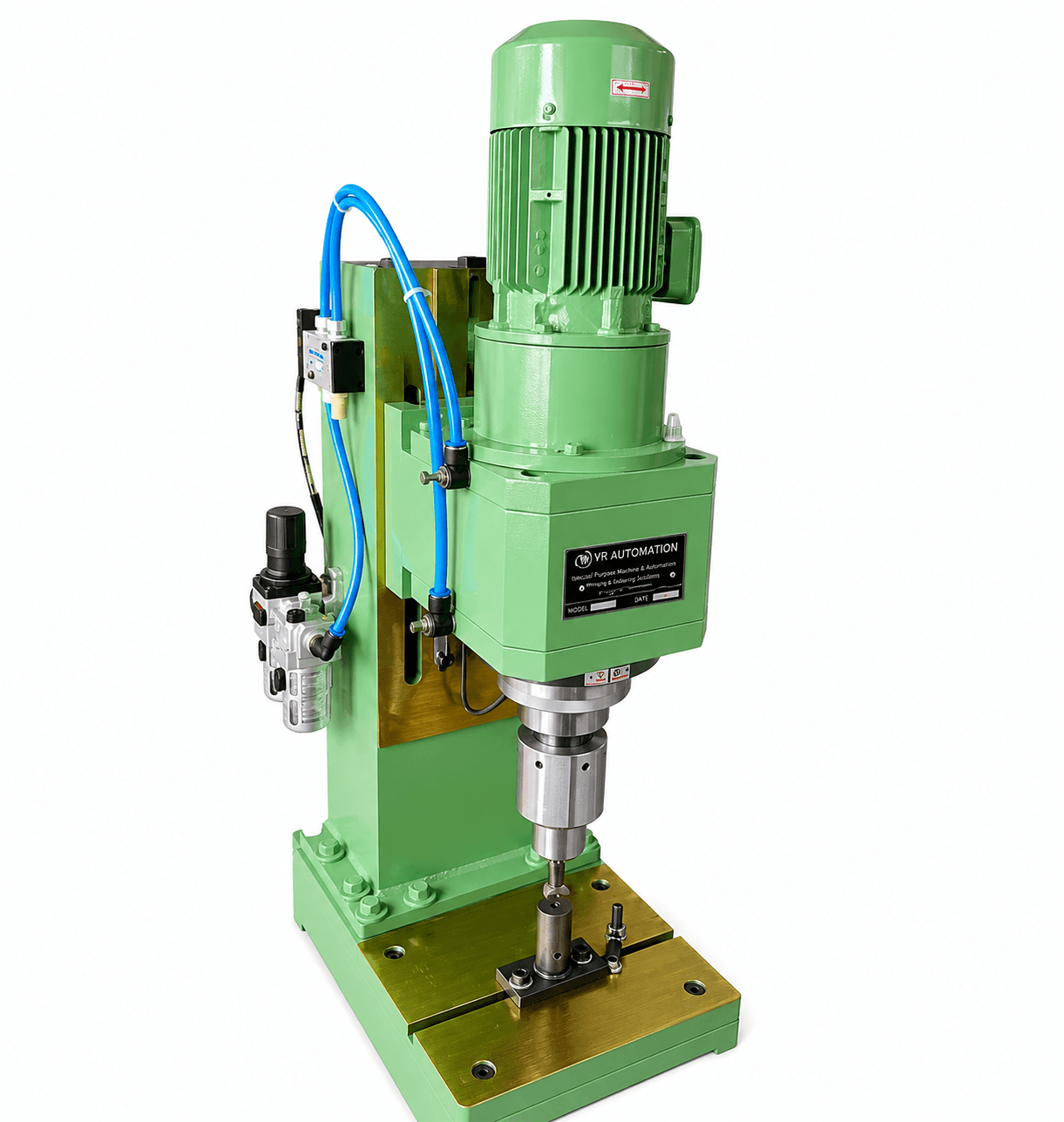
Our Riveting Machine Range
20 products in this category. Prices are indicative and ex-works — tooling and component fixture are quoted against your part.
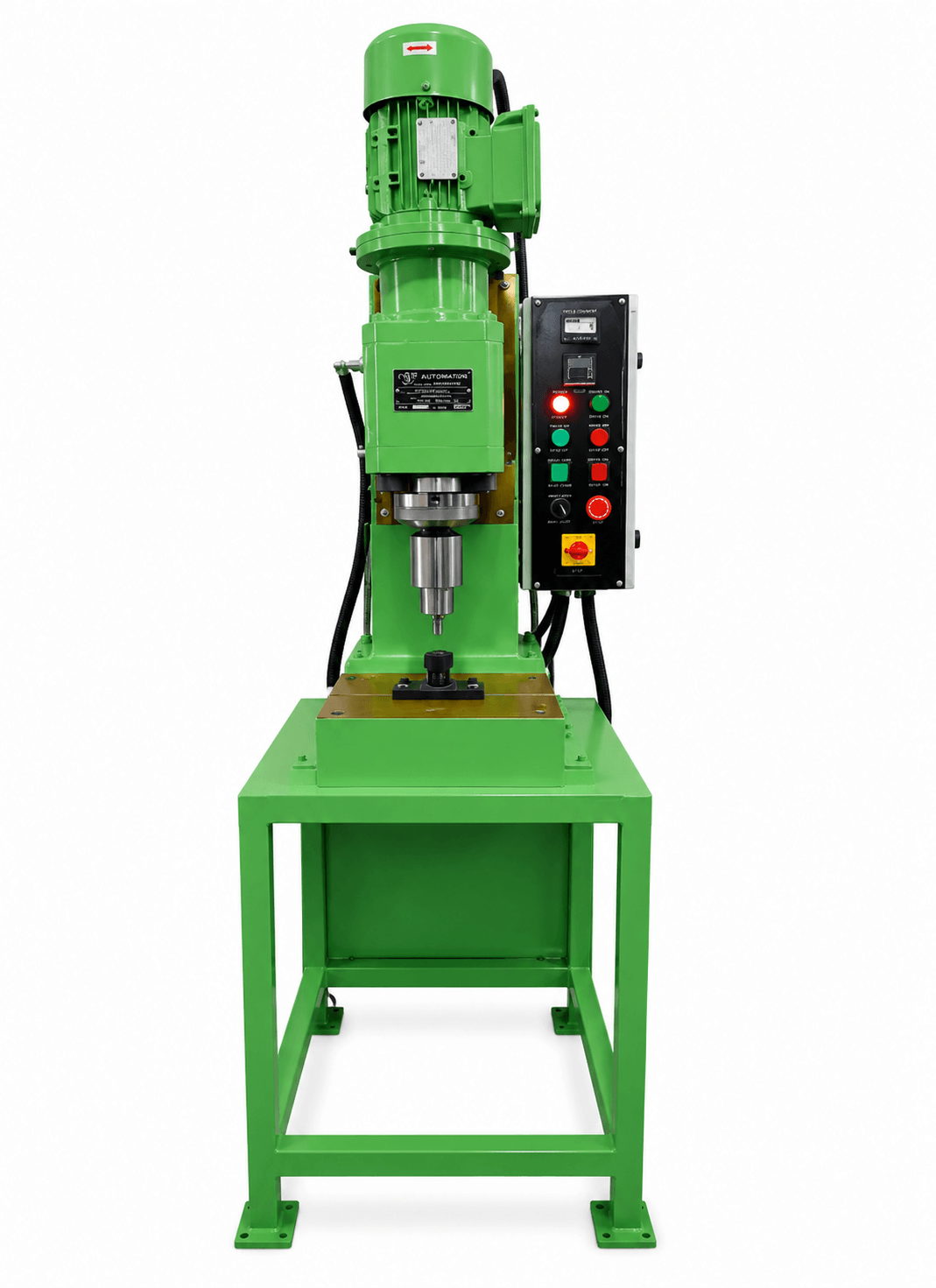
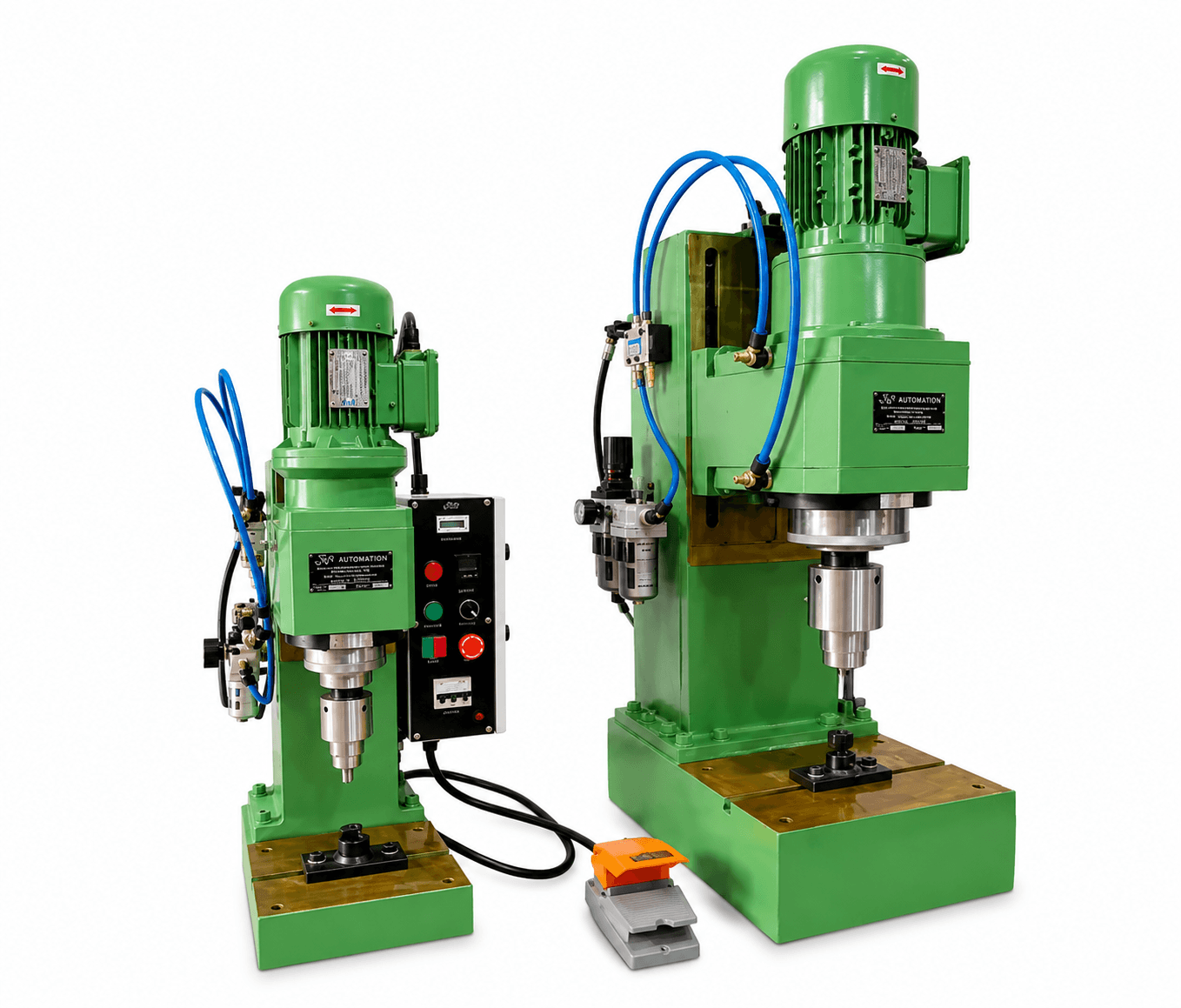
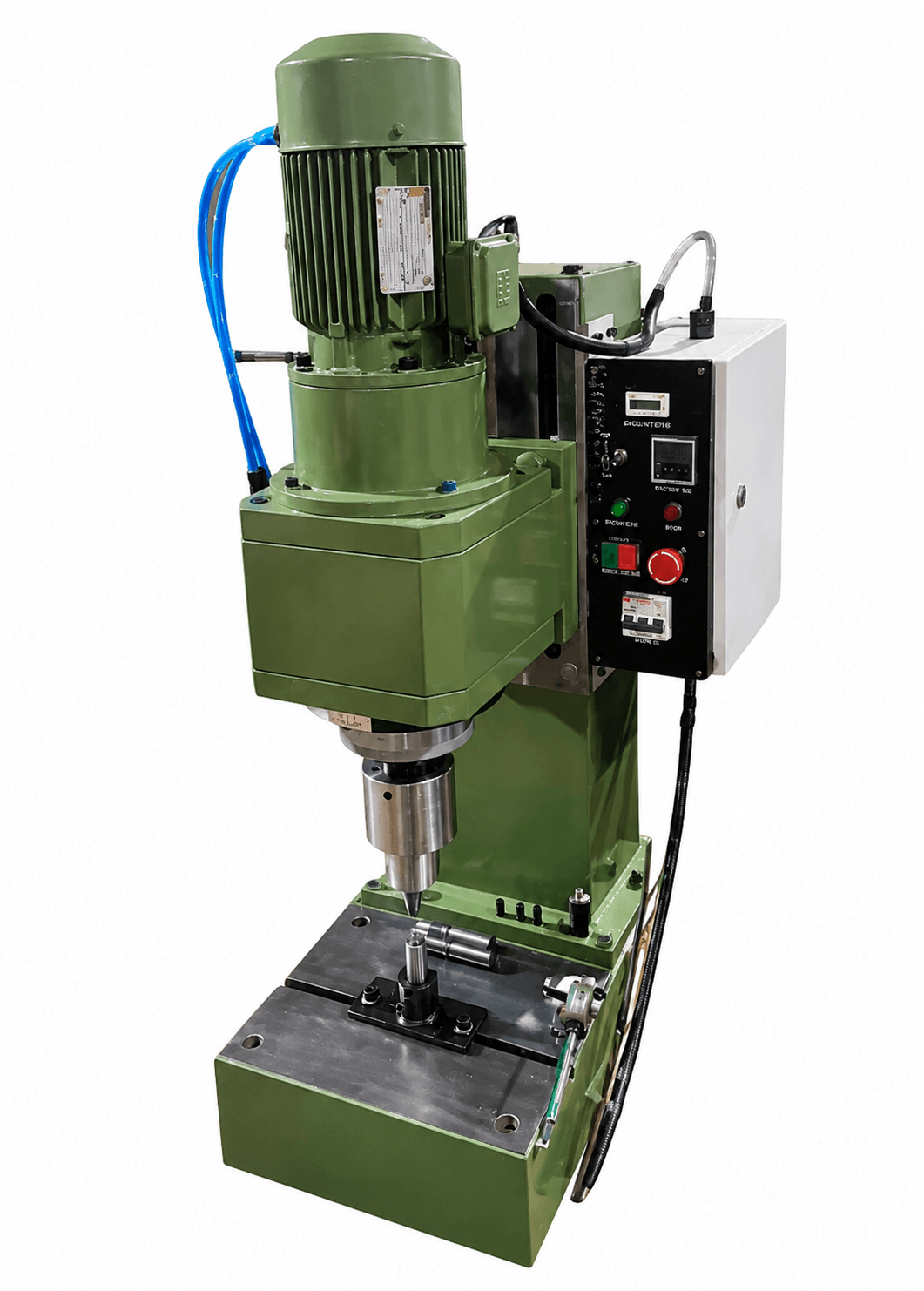
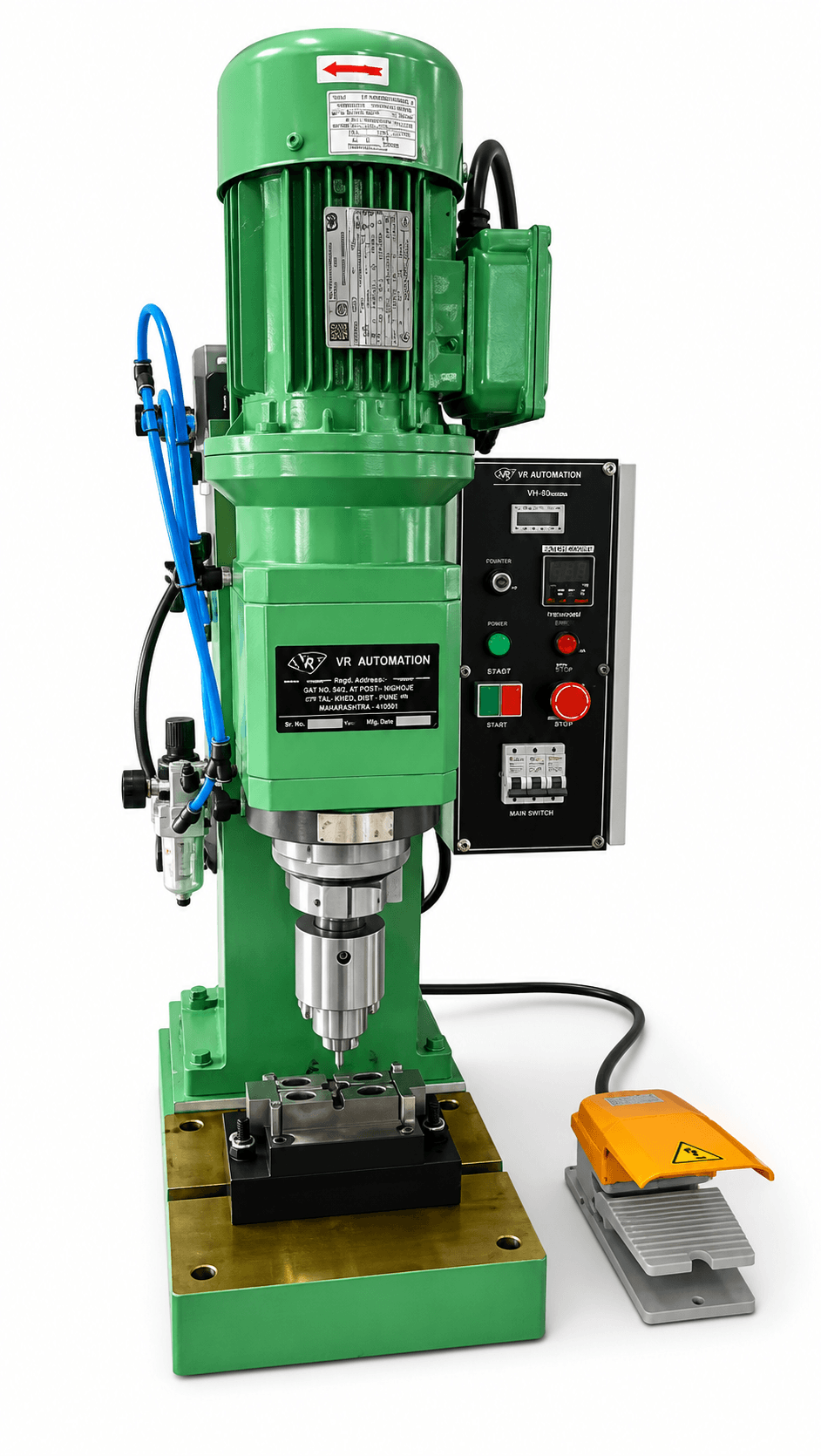
How It Works
Load
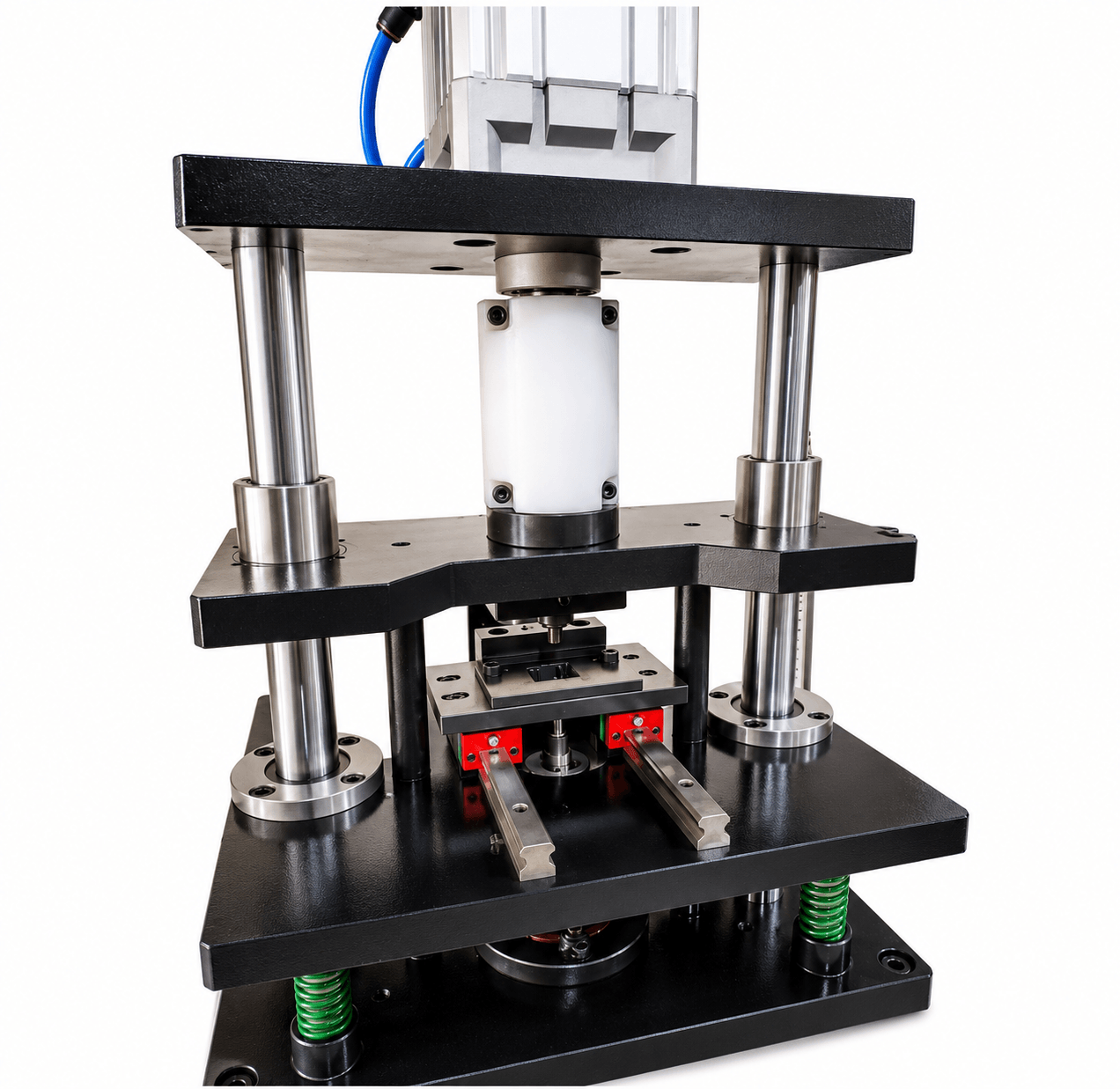
Component is located in a fixture built to your part, so the hole sits under the tool the same way every cycle.
Feed
Rivet is placed by hand or presented automatically from the feeder, depending on machine type.
Set
The head forms the rivet under controlled force — orbital, spin, pneumatic or hydraulic to suit the joint.
Unload
Formed joint is consistent piece to piece; poka-yoke features can prevent wrong-way loading.
Industries We Serve
Automotive Components
Brake shoes, clutch plates, linkages, brackets and friction assemblies on volume lines.
General Engineering
Fabricated assemblies, frames, panels and sheet metal sub-assemblies.
Electrical & Switchgear
Contacts, terminals, busbar assemblies and enclosure hardware.
Appliance & White Goods
Cosmetic assemblies where a smooth formed head matters.
Hardware & Hinges
Hinges, latches, castors and pinned joints that must stay captive yet move freely.
Furniture & Fittings
Repetitive multi-rivet patterns in volume production.
Applications & Components
Tooling and fixture are engineered per component. These are the applications we are asked for most often:
Brake shoeBrake liningClutch plateFriction discHingesLatchesCastor wheelsLevers & linksBracketsElectrical contactsTerminalsBusbarsDoor fittingsScissor mechanismsWiper linkagesSeat bracketsPanel assembliesPlastic-to-metal joints
Why Buy From VR Automation
Built to Your Drawing
Tooling and component fixture are engineered around your part, so the machine arrives ready to run rather than needing development on your floor.
Repeatable Output
Force, stroke and cycle are set by the machine, so joint quality stops depending on operator strength or fatigue late in a shift.
Made in India
Locally engineered and locally supported, priced against Indian production cost rather than import landed cost.
Installation & Service
Commissioning, operator training, spares and service support across India, since 2019.
Designed, machined, assembled and tested in-house at our Bhosari, Pune facility. You deal with the engineers who build the machine, not a trading intermediary — which keeps lead times short and spares available for the working life of the machine.
Price & Quotation
Price depends on force, capacity, tooling, automation level and the component fixture, so a catalogue figure would be misleading. We quote against your actual part.
To receive a quotation, send us:
- Component drawing or sample details
- Material, thickness and joint or feature positions
- Target cycle time and production volume per shift
- Whether you need standalone, semi-automatic or fully inline operation
Frequently Asked Questions
What is a riveting machine used for?
A riveting machine permanently joins two or more components by deforming a rivet to form a head. It is used where a joint must be permanent, vibration-resistant and made without heat — brake shoes, clutch plates, hinges, brackets and sheet metal assemblies.
What is the difference between orbital and impact riveting?
Impact riveting forms the head in one blow. Orbital riveting forms it progressively with a peening tool that sweeps in an orbit, so forming force is far lower. That lets you rivet brittle, thin or plastic parts that would crack under a press, and it gives a smoother head.
Which riveting machine should I choose?
It depends on rivet diameter, material, stack-up thickness and cycle time. Pneumatic suits most general work; hydraulic or hydro-pneumatic for larger rivets and thicker sections; orbital or spin where the part is delicate or the joint must stay free-moving. Send your drawing and we will recommend.
What is the price of a riveting machine in India?
Our riveting range spans roughly ₹ 44,000 to ₹ 3.7 lakh depending on type, force, automation and tooling. Custom SPMs are quoted against the component. Prices shown are indicative and ex-works.
Can you build a riveting machine for my component?
Yes — most of what we ship is custom. Send the component drawing, material, rivet specification, joint positions and target cycle time and we will propose a configuration.
Do you supply automatic riveting machines?
Yes. Auto-feed machines, dual-head machines and indexed riveting SPMs are all built in-house for high-volume production.
Get a Quotation
Send your component drawing and requirement. Our engineers will recommend a configuration and quote a price.